Florida’s roads demand constant attention. Between heavy traffic, unpredictable weather, and distracted driving laws that carry real penalties, staying focused behind the wheel isn’t optional-it’s essential.
We at DriverEducators.com know that distractions cost lives. This guide walks you through proven techniques to keep your mind on the road and your hands on the wheel.
What Really Distracts Drivers on Florida Roads
The Three Types of Distractions and Why Texting Is Deadliest
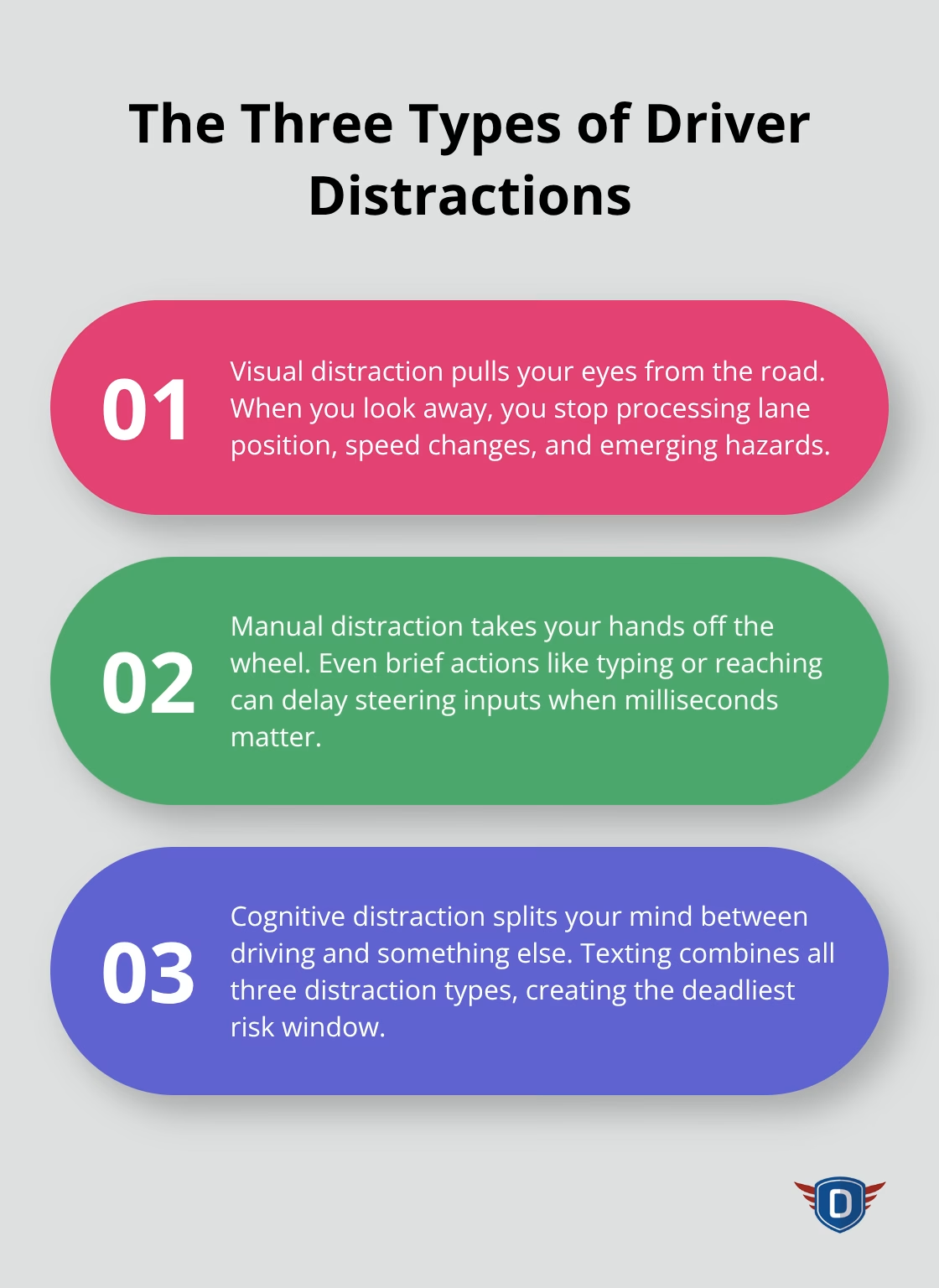
Distractions fall into three distinct categories, and texting attacks all three at once. Visual distraction pulls your eyes from the road, manual distraction takes your hands off the wheel, and cognitive distraction splits your mind between driving and something else. Texting combines all three, which is why sending or reading a text takes your eyes off the road for 5 seconds-at 55 mph, that’s like driving the length of an entire football field with your eyes elsewhere.
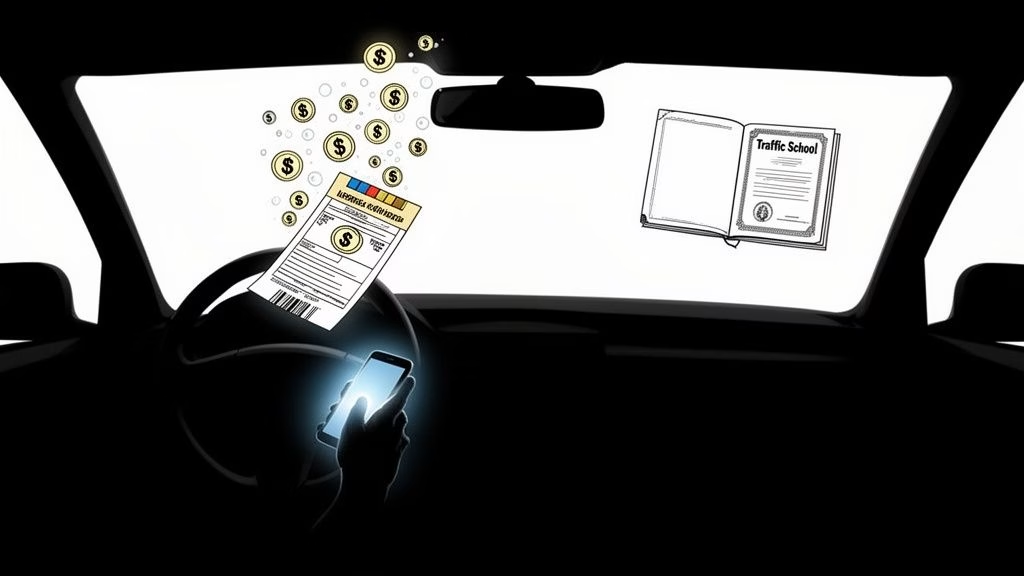
Florida’s Wireless Communications While Driving Law recognizes this danger, making texting a non-moving violation with a base $30 fine on the first offense and a moving violation with 3 points and a $60 fine on the second offense within five years.
School Zones and Work Zones Carry Stricter Penalties
The law becomes stricter in school zones and active work zones, where any handheld wireless device use is prohibited and carries 3 points plus a $60 fine immediately. This isn’t theoretical-the numbers show drivers aged 16–24 have higher distraction rates than other age groups, and distracted driving remains a leading cause of crashes among teen drivers. Beyond texting, passengers create cognitive distractions, eating or drinking demands manual attention, adjusting controls requires your eyes to leave the road, and daydreaming splits your focus entirely. Most drivers underestimate how quickly these distractions degrade reaction time.
How Distractions Expand Your Stopping Distance
At 50 mph, even a fully focused driver travels nearly the length of a football field before stopping once they perceive a hazard and react. Add distraction into the equation, and that distance expands dramatically. Your perception distance stays the same, but your reaction distance grows because your brain processes information from two sources instead of one. This is why the National Safety Council recommends a minimum three-second following distance under normal conditions-and that assumes your full attention is on the road. Increase that distance in rain, at higher speeds, or when driving larger vehicles (the risk compounds with each variable).
The Real Cost of Distraction
No text message, social media notification, or in-car adjustment is worth the risk of not having those extra seconds to avoid a collision. Distracted driving endangers not just you but also passengers, pedestrians, and bicyclists sharing the road. Florida’s enforcement efforts through the Highway Patrol and FLHSMV’s Put It Down: Focus on Driving campaign exist because the data proves focused driving saves lives. Understanding these dangers sets the stage for the practical techniques that actually work to keep your attention where it belongs-on the road ahead.
How to Actually Stay Focused While Driving
Eliminate Distractions Before You Start the Engine
Set up your GPS, music, and climate control before you drive, not while moving. If you must adjust something mid-trip, pull over to a safe location first. Your phone represents your biggest threat to focus, and the solution isn’t willpower-it’s removal.

Place your phone in the trunk or glove compartment, not in your lap or cup holder where you can see notifications. If you can’t resist checking messages, you’ve already lost the battle. The Florida 511 app provides real-time traffic information before you hit the road, which eliminates one reason to look at your device while driving.
Manage Passengers and Eating Habits
If you’re carpooling or driving with passengers, designate one person as the texter to handle any incoming messages while you stay focused on the road. Eating or drinking while driving forces you to manage food, napkins, and steering simultaneously. Consume your meal before you leave, or pull over if hunger strikes during your trip. These aren’t suggestions-they’re non-negotiable steps that directly reduce your crash risk.
Combat Fatigue on Long Drives
Fatigue impairs you almost as much as alcohol does. Take breaks every two hours on long drives, and if you feel your attention drifting, pull over immediately. Your body sends clear signals when it needs rest; ignoring those signals puts everyone on the road at risk.
Fight Mental Distraction and Daydreaming
Daydreaming while driving represents cognitive distraction at its worst because you’re physically present but mentally absent. Stay actively engaged by scanning the road ahead for hazards, anticipating other drivers’ moves, and narrating road conditions to yourself. On Florida highways where traffic moves at 70 mph, those extra seconds of mental engagement could mean the difference between avoiding a collision and causing one.
Recognize When You Shouldn’t Drive
If your mind keeps wandering to work stress or personal problems, that’s a sign you shouldn’t be driving right now. The road demands your full cognitive load, and splitting your attention between emotional concerns and driving is exactly how preventable crashes happen. Your mental state directly affects your ability to respond to the unexpected hazards that appear on Florida’s busiest roads-which is where we turn our focus next.
What Makes Florida Roads Uniquely Hazardous
Weather Shifts and Visibility Collapse
Florida’s weather shifts without warning, and unlike most states, your visibility can collapse in seconds. Afternoon thunderstorms drop rain so heavy that even new windshield wipers struggle to keep up, and the asphalt becomes slick enough that your tires lose grip at speeds you’d normally consider safe. Reduce your speed by 10 mph in heavy rain and increase your following distance to at least five seconds instead of three. Fog rolls in along coastal areas and over bodies of water, particularly in early morning hours, and low-beam headlights work better than high beams in fog because high beams reflect off the moisture and reduce visibility further.
Heat and Tire Performance
Heat affects your vehicle’s performance in ways many drivers overlook. Tire pressure increases in extreme heat, which changes your braking response, so check tire pressure regularly during Florida’s summer months. This simple maintenance step prevents surprises when you need maximum stopping power on congested highways.
Interstate Congestion and Lane Discipline
Interstates 75, 95, and 4 experience congestion that forces rapid lane changes and aggressive driving from impatient motorists. On Interstate 4 between Tampa and Daytona, traffic density reaches dangerous levels during peak hours, and the road’s curves combined with high speeds create a collision-prone environment. Never attempt to merge or change lanes without checking your blind spot twice; one glance isn’t enough when vehicles travel at 70 mph. Stay in the right lanes on interstates unless actively passing, and avoid the left lane entirely during heavy traffic periods-that’s where speed-related crashes concentrate.
Defensive Positioning in High-Traffic Areas
High-traffic areas around Miami, Orlando, and Jacksonville demand defensive positioning. Assume other drivers won’t signal before changing lanes, won’t check their mirrors before merging, and won’t leave adequate space between vehicles. This mindset keeps you alert and ready to react when someone cuts in front of you or drifts into your lane without warning.
Wildlife and Unexpected Road Hazards
Wildlife presents a serious but often underestimated hazard. Deer, alligators, and wild boar cross Florida highways unpredictably, especially near dawn and dusk. Hit a large animal at highway speed and you face catastrophic vehicle damage and potential rollover.

If you spot an animal on the road ahead, brake firmly but don’t swerve sharply-swerving often causes worse crashes than hitting the animal itself. Unexpected obstacles like debris, potholes, and disabled vehicles appear constantly on Florida roads. Construction zones on highways change daily, sometimes creating hazards that weren’t there yesterday. Scan the road 15 to 20 seconds ahead, not just immediately in front of your vehicle, so you have time to react to sudden obstacles or stopped traffic.
Final Thoughts
Staying focused while driving in Florida requires three interconnected commitments: you must eliminate distractions before you start, understand the specific hazards Florida’s roads present, and build habits that stick long-term. Distracted driving laws exist because the data proves they work-removing your attention from the road for just five seconds at highway speed creates a collision window you cannot recover from. Every technique in this guide addresses one simple goal: keeping your cognitive, visual, and manual attention on driving and nothing else.
The strategies that work are not complicated. You remove your phone from reach, set up your vehicle before moving, manage passengers intentionally, and recognize when fatigue or stress compromises your judgment. On Florida’s interstates and high-traffic corridors, defensive positioning and scanning 15 to 20 seconds ahead give you the reaction time that separates safe arrivals from preventable crashes. Weather shifts, wildlife, and construction hazards demand constant vigilance, but that vigilance becomes automatic once you practice it consistently.
Your brain adapts to repeated behavior, so the more you drive with full attention, the more natural focused driving becomes. Professional driver education makes a measurable difference in how you apply these principles on real roads. DriverEducators.com provides comprehensive programs that go beyond traffic school requirements-our courses teach the defensive techniques and behavioral patterns that reduce your crash risk for years to come.