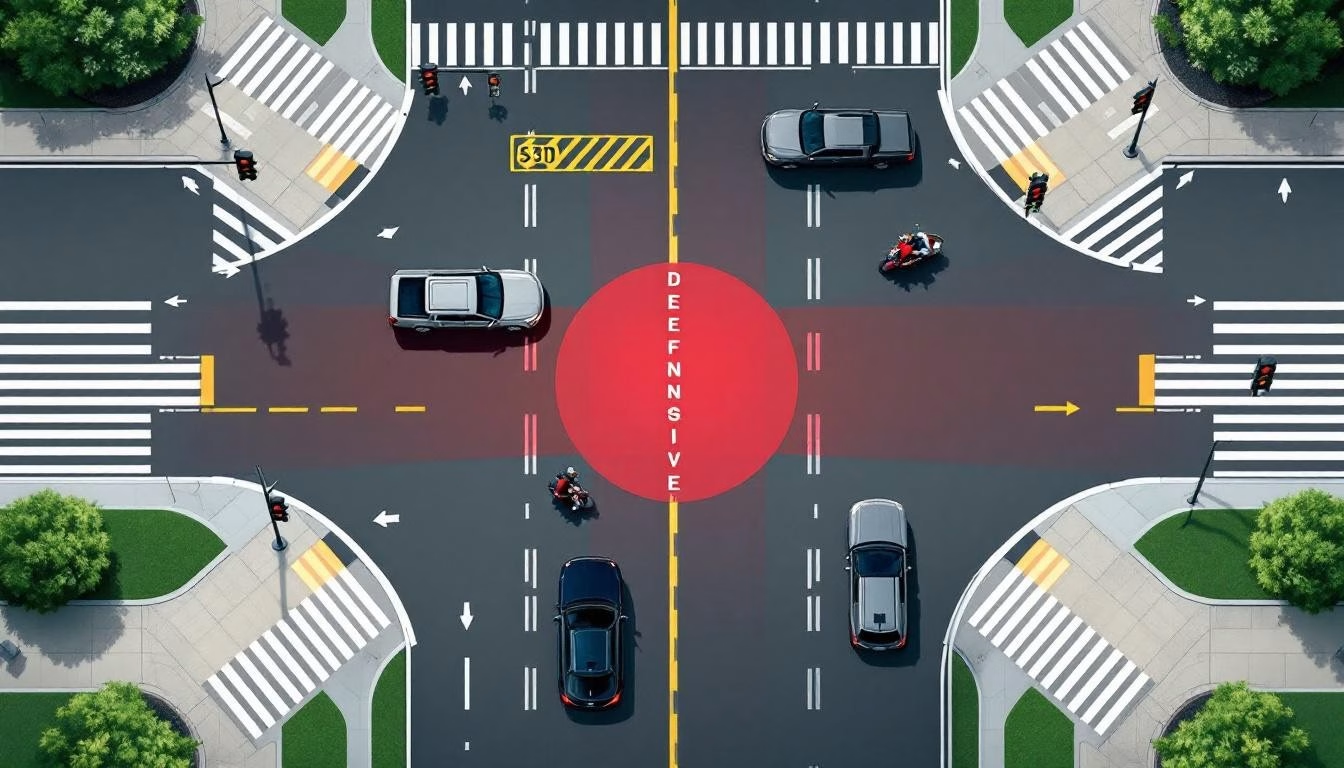
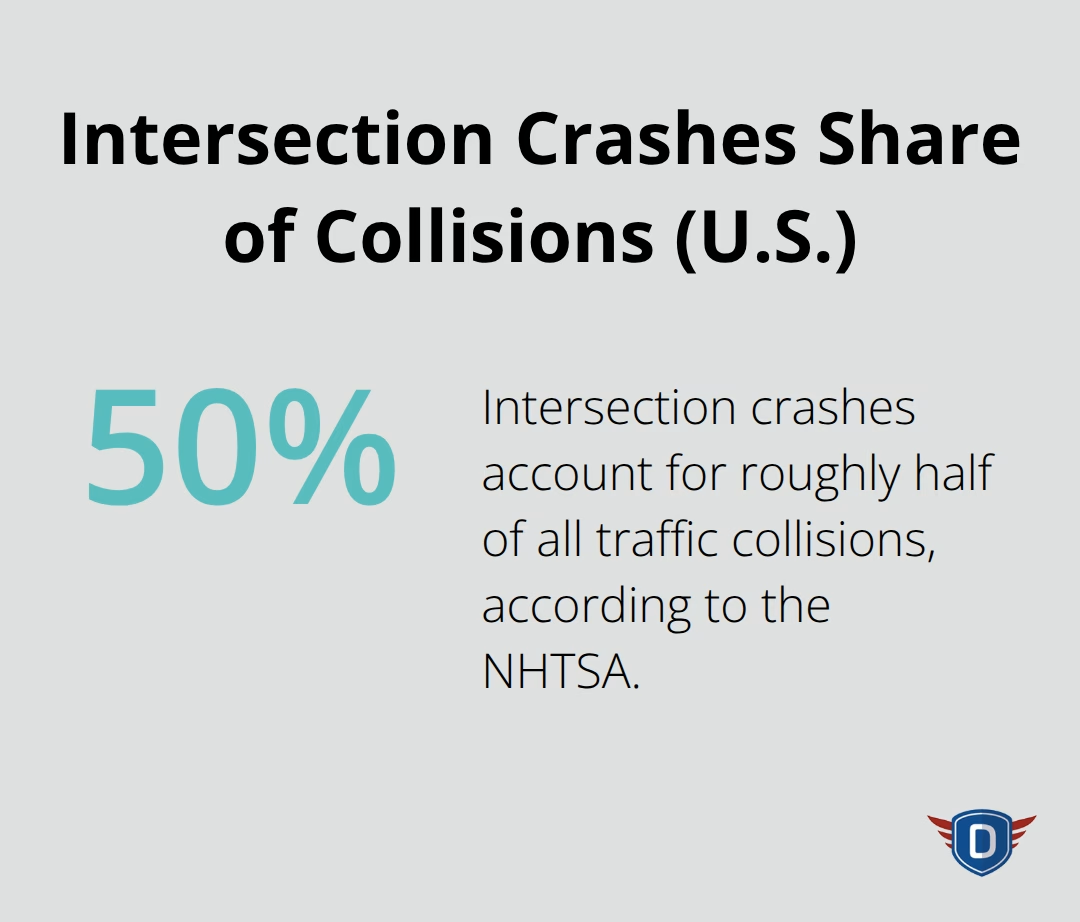
Intersections are where most accidents happen. The National Highway Traffic Safety Administration reports that intersection crashes account for roughly 50% of all traffic collisions, with many caused by poor vehicle positioning.
We at DriverEducators.com believe defensive positioning is the skill that separates safe drivers from those who get lucky. This guide shows you exactly where to place your vehicle at every intersection type to stay out of danger.
What Defensive Positioning Actually Means
Position Your Vehicle for Escape, Not Convenience
Defensive positioning is not about where you want to be at an intersection-it’s about where you need to be to survive what other drivers do wrong. Most drivers position their vehicles based on habit or convenience, not safety. They drift into the center of their lane, sit too close to the vehicle ahead, or angle their wheels in ways that trap them if another car runs a red light or cuts them off. Defensive positioning means placing your vehicle where you have the most escape options and the clearest view of hazards.
The Federal Highway Administration found that older drivers position more defensively at late yellow and early red intersections, slowing earlier and scanning more because they anticipate unpredictable behavior from other drivers. This isn’t caution-it’s intelligence. Your vehicle position determines whether you can brake, accelerate, or swerve to safety when something goes wrong.
How Position Changes Everything at Different Intersection Types
At an all-way stop, defensive positioning means stopping clearly before the crosswalk, then moving forward only after you check your left blind spot and confirm no hidden vehicles will conflict with your movement. At traffic-light intersections, it means keeping your wheels straight while you wait for a left turn gap, so if a rear-end collision happens, you can roll forward out of danger instead of being pushed into oncoming traffic. The difference between a close call and a crash often comes down to these small positioning choices.
The NHTSA reports that nearly half of all vehicle crashes occur at intersections, and many of those crashes happen because drivers positioned themselves in blind spots, too close to other vehicles, or in lanes where they couldn’t react to sudden changes.
Common Mistakes That Destroy Your Safety Margin
Many drivers stop too far back from intersections, reducing their visibility and signaling to other drivers that they’re hesitant or unsure, which invites aggressive behavior. Others position themselves in the center of their lane during a left-turn wait, wheels angled toward their target, which locks them into a collision course if hit from behind. Drivers frequently fail to check their blind spots before positioning for turns, missing vehicles in adjacent lanes.
Some drivers pull partially into the intersection on yellow and sit there with their wheels turned, creating a trap where they cannot escape if the light changes or cross traffic runs the red. Defensive driving instruction emphasizes the three-second following distance rule, yet most drivers ignore it, especially near intersections where rear-end collisions happen frequently. Drivers also position too close to semi-trucks and heavy vehicles, not accounting for the fact that these vehicles need significantly more space to stop-an 18-wheeler on I-85 near the Anderson-Oconee county line illustrated this danger when it closed all northbound lanes, showing how stopping distance compounds when larger vehicles are involved.
Another critical mistake is failing to position where you can see the traffic signal clearly; some drivers position behind pillars, other vehicles, or at angles where glare blocks their view of signal changes. The worst mistake is assuming your position is safe because you have the right of way-right of way means nothing if you’re positioned where another driver cannot see you or where you cannot escape their violation.
Understanding these positioning principles sets the foundation for the specific techniques you’ll apply at every intersection type. The next section shows you exactly where to place your vehicle in your lane before you even approach the intersection, and how to adjust that position based on what traffic around you is doing.
Positioning Your Vehicle in Your Lane Before You Reach the Intersection
Stay Center-Right and Keep Your Wheels Straight
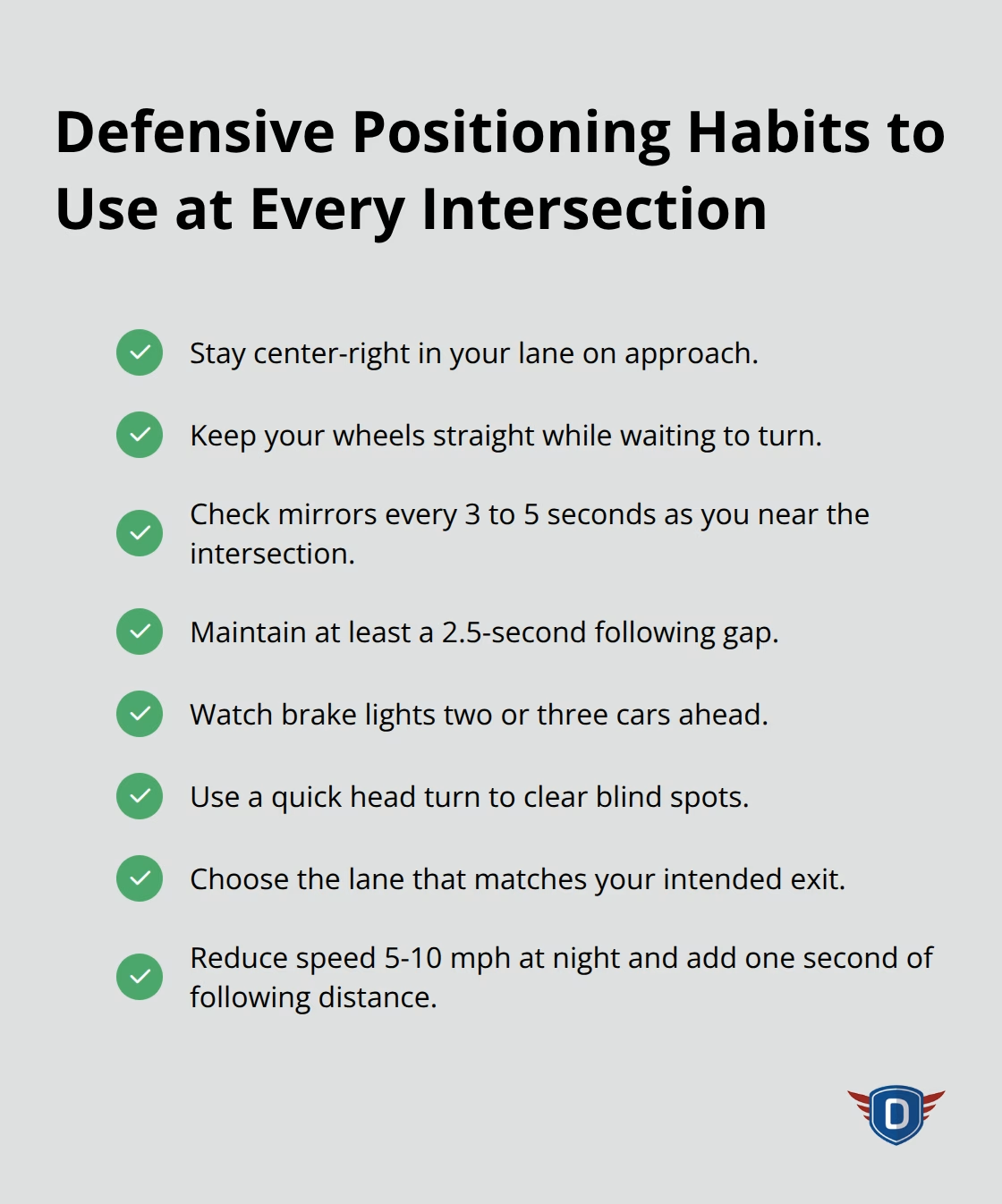
Position yourself in the center-right area of your lane well before you approach any intersection. This placement gives you room to brake hard without drifting into adjacent lanes, and it keeps you visible to drivers in neighboring lanes who might not check their mirrors. Most drivers drift left naturally because they watch the traffic ahead, but this pulls you toward the centerline and into the sightline of oncoming traffic. Research shows that drivers who maintain center-right positioning report fewer close calls because they avoid fighting the natural pull toward the center.
When you reach 50 feet from an intersection, your wheels must stay straight, not angled toward your intended direction. Angled wheels commit you to a path; straight wheels give you options. If a vehicle runs the red light from your left, straight wheels let you accelerate forward or brake without being pushed sideways. If a rear-end collision happens while you wait to turn, straight wheels let you roll forward instead of being shoved into cross traffic.
Monitor the Vehicle Behind You Every Few Seconds
Check your mirrors every 3 to 5 seconds as you approach the intersection. Look at the vehicle behind you-not just its distance but its speed and whether the driver is braking or accelerating. If that vehicle closes the gap between you, start slowing slightly earlier than you normally would. With a standard of 2.5 seconds, highway engineers use time, rather than distance, to represent how long it takes a driver to perceive and react to hazards. Use a fixed object like a road sign or tree as your reference point. Count the seconds between when the car ahead passes it and when your bumper reaches it. If you hit two seconds or less, you are too close, especially near an intersection where traffic changes suddenly.
Adjust Your Position Based on Traffic Patterns Around You
Stay in the right lane even if the left lane moves faster, and let aggressive drivers pass. Aggressive lane changes near intersections cause sideswipe crashes, and your goal is to be predictable and stable, not to match the speed of impatient drivers. Watch the brake lights of vehicles two or three cars ahead, not just the car directly in front of you. Brake lights signal your earliest warning that traffic is slowing; younger drivers often miss this cue and react only when the car directly ahead brakes, losing critical reaction time.
If you see brake lights lighting up ahead, begin slowing your vehicle immediately, even if the car in front of you has not braked yet. This gives drivers behind you more warning and creates a buffer zone. In heavy urban congestion, position yourself slightly left of center in your lane so that vehicles turning from side streets or driveways see you clearly. Drivers emerging from driveways often misjudge gaps and assume they can fit into spaces they cannot; if you position where they can see you early, they are more likely to wait.
Position Fully in Your Lane and Check Your Blind Spots
At intersections with multiple lanes turning in the same direction, position in the lane that matches your intended path. If you turn left, use the left-turn lane fully, not halfway between lanes. Half-positioning creates blind spots for other drivers and makes your intention unclear. Use your mirrors and check your blind spots by turning your head slightly before you move into any turn position. The blind spot on your left rear requires a head turn to see; mirrors alone do not show you vehicles in that zone. One head turn takes less than a second and eliminates the crash risk from a hidden vehicle.
Nighttime positioning requires the same discipline but with extra caution: reduce speed slightly and increase your following distance because visibility drops and glare from oncoming headlights can obscure traffic signal colors and vehicle movements. These positioning habits form the foundation for how you handle the specific demands of left turns, right turns, and multi-lane intersections-each scenario requires you to apply these principles in different ways, which the next section covers in detail.
Positioning for Left Turns, Right Turns, and Multiple Lanes
Master Left-Turn Positioning with Straight Wheels
Left turns demand the most aggressive positioning because you cross opposing traffic with incomplete information about driver intent. Position your vehicle fully in the left-turn lane at least 100 feet before the intersection, keeping your wheels straight while you wait. The Federal Highway Administration research shows that drivers execute left turns in five segments: Approach, Deceleration, Intersection Entry, Prepare for Turn, and Execute Turn. Your positioning directly controls multiple steps in this process.
While waiting, pull forward only when you have a clear view of oncoming traffic and the intersection beyond. Many drivers position too far back, which forces them to inch forward repeatedly and signals uncertainty to other drivers. Instead, position where you can see the entire intersection without moving your vehicle. If the light turns red while you’re already in the intersection with your wheels straight, right-of-way rules protect you to complete your turn. Never position with wheels angled toward your target because a rear-end collision will push you into cross traffic with no escape.
Read Traffic Depth and Use Eye Contact
Watch the brake lights of oncoming vehicles two or three cars deep, not just the car closest to you, because that gives you 2-3 extra seconds of warning if traffic is slowing. Use eye contact with drivers in the oncoming lane when you’re ready to turn. Most drivers will acknowledge your presence with a slight nod or by not accelerating, which confirms the gap is safe.
Position Right Turns for Pedestrian Visibility
For right turns, position in the rightmost lane well before the intersection and stay tight to the right edge of your lane, not the center. This positioning lets pedestrians in the crosswalk see you clearly and gives you direct sight lines to the corner. Watch for pedestrians and cyclists crossing your path because they have right of way over your turn, regardless of signal color.
Navigate Multi-Lane Intersections with Precision
At multi-lane intersections where multiple vehicles turn in the same direction, position in the specific lane that matches your intended exit. Drivers frequently position between lanes, which creates blind spots and makes other drivers uncertain about your direction. Stay fully in your chosen lane and check your blind spot with a head turn before you commit to any turn movement. In heavy urban traffic, position slightly left of center in your lane so vehicles emerging from side streets see you early and don’t misjudge gaps.
Adjust Positioning for Nighttime Conditions
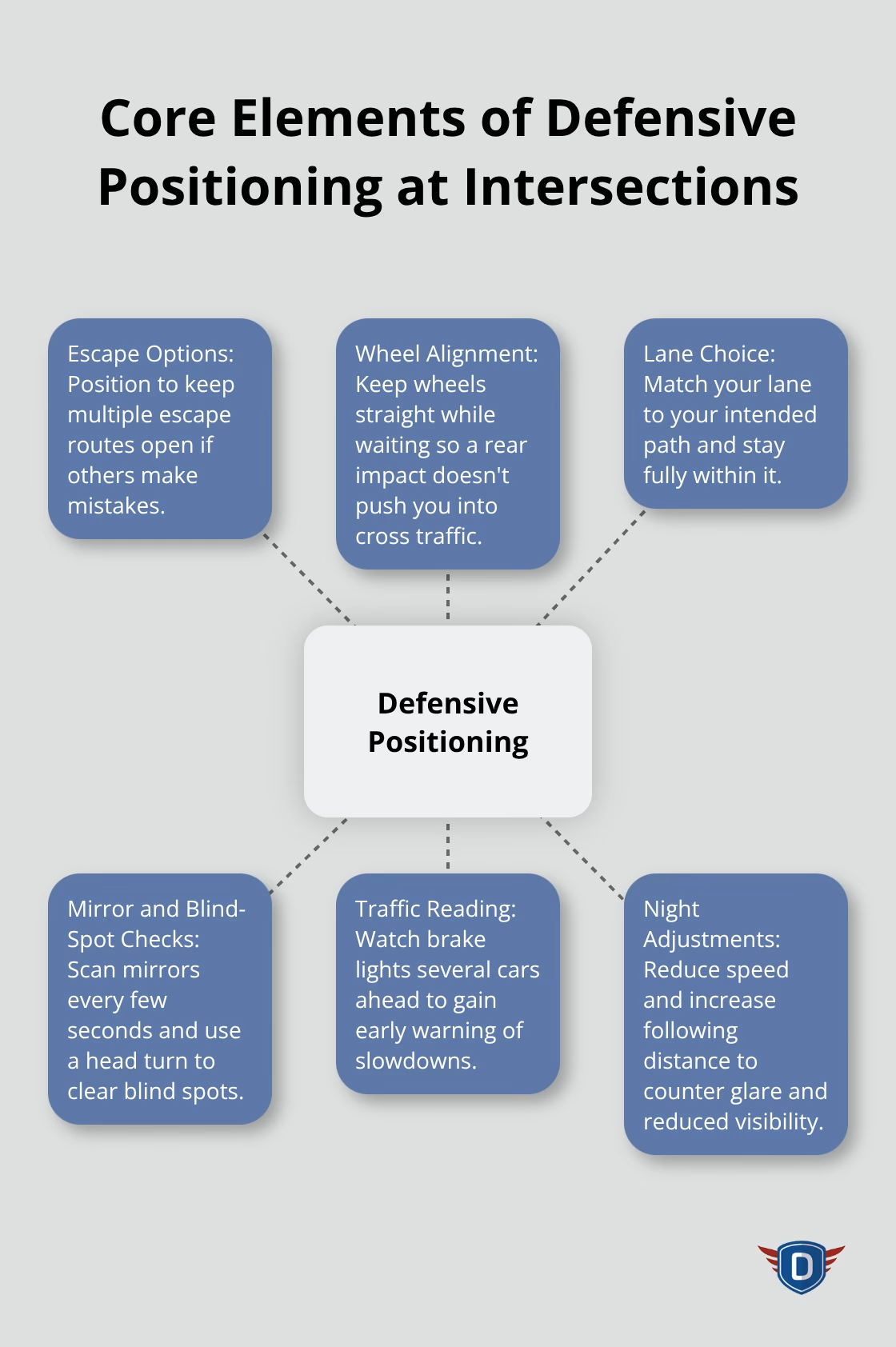
Nighttime positioning at multi-lane intersections requires you to reduce speed by 5-10 mph and increase your following distance by at least one full second because headlight glare reduces your ability to see signal changes and vehicle movements. Research shows that intersection crashes account for roughly one-half of all traffic injuries in the United States, and improper positioning in multi-lane situations contributes significantly to sideswipe and turning crashes. Position defensively at every intersection type, and you eliminate the single biggest variable that turns a normal intersection crossing into a collision.
Final Thoughts
Defensive positioning is not a single technique you apply once and forget-it becomes automatic through repetition at every intersection. You control where your vehicle sits in your lane, how far back you stop, whether your wheels stay straight, and how you monitor traffic around you. Nearly half of all vehicle crashes occur at intersections, and many stem directly from poor positioning choices that you can prevent.
The practical steps are straightforward: stay center-right in your lane, keep your wheels straight at intersections, check your mirrors every few seconds, and position fully in the lane that matches your intended direction. Watch brake lights two or three vehicles ahead, use eye contact with other drivers when turning, and adjust your positioning for nighttime conditions by reducing speed and increasing following distance. These habits take seconds to execute but prevent crashes that would take years to recover from.
DriverEducators.com offers comprehensive driver education programs that teach defensive positioning alongside other critical safety skills. Our courses cover right-of-way rules, safe following distances, and real-world intersection scenarios so you can practice these positioning principles before you need them on the road. Start applying defensive positioning today, and intersections will feel less chaotic because you prevent danger instead of reacting to it.