A driver remedial course isn’t just a box to check off-it’s your chance to genuinely improve your driving skills and keep yourself and others safe on the road.
At DriverEducators.com, we’ve helped thousands of drivers navigate these courses successfully by giving them clear strategies and practical guidance. This guide walks you through everything from understanding your specific requirements to mastering the content and passing your final exam.
Know Your Specific Course Requirements
Identify the Right Program for Your Situation
The first mistake drivers make is assuming all remedial courses are identical. They’re not. Florida offers different programs depending on your violation history and court orders, and enrolling in the wrong one wastes time and money. At DriverEducators.com, we provide four distinct courses tailored to different driver profiles.
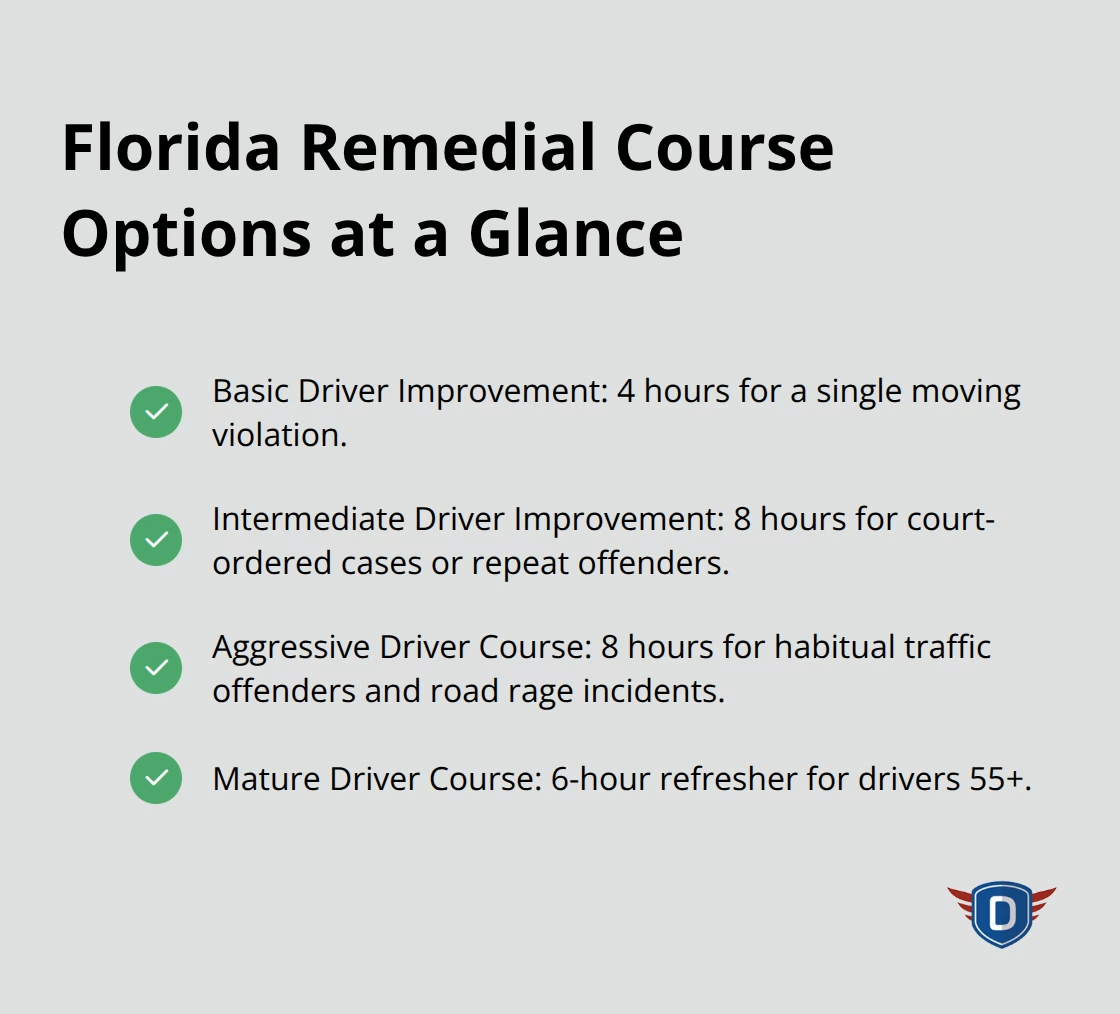
Our Basic Driver Improvement course runs 4 hours and targets drivers with a single moving violation. The Intermediate Driver Improvement program stretches to 8 hours for court-ordered cases or repeat offenders. Our Aggressive Driver Course also spans 8 hours and is designed specifically for habitual traffic offenders involved in road rage incidents. If you’re over 55, our Mature Driver Course offers a 6-hour refresher tailored to your needs.
Check your suspension notice or court order carefully-it specifies which program you must complete. The Florida Department of Highway Safety and Motor Vehicles requires you to take the exact course listed, not a shorter or longer alternative. Contact your local court or review your FLHSMV notification letter to confirm. This step alone prevents costly enrollment mistakes and keeps you on track for reinstatement.
Mark Your Deadline and Work Backward
Missing your deadline creates real consequences that extend your suspension unnecessarily. Most drivers have 30 days from their suspension start date to complete their course, though some court orders impose tighter deadlines. The clock starts immediately, not when you enroll. We recommend completing your course within the first two weeks of your suspension to build in a safety buffer for certificate processing.
The FLHSMV needs time to receive and verify your completion certificate before reinstating your license. Delays in submission can extend your suspension unnecessarily. Know the exact deadline in writing, mark it on your calendar, and plan backward from there to establish your study schedule.
Understand What Content You’ll Master
Your course content focuses on Florida traffic laws, defensive driving techniques, safe following distances, right-of-way rules, and the dangers of aggressive or distracted driving. Special emphasis falls on crash avoidance strategies and how attitude shapes driving decisions. This practical knowledge directly applies to the roads you drive every day, not abstract theory. The curriculum also covers impaired driving prevention and the behavioral changes that lead to safer decision-making behind the wheel.
With your specific course identified, your deadline locked in, and your content expectations clear, you’re ready to build a study plan that fits your life while meeting state requirements.
Building Your Study Schedule to Actually Finish
Calculate Your Daily Commitment
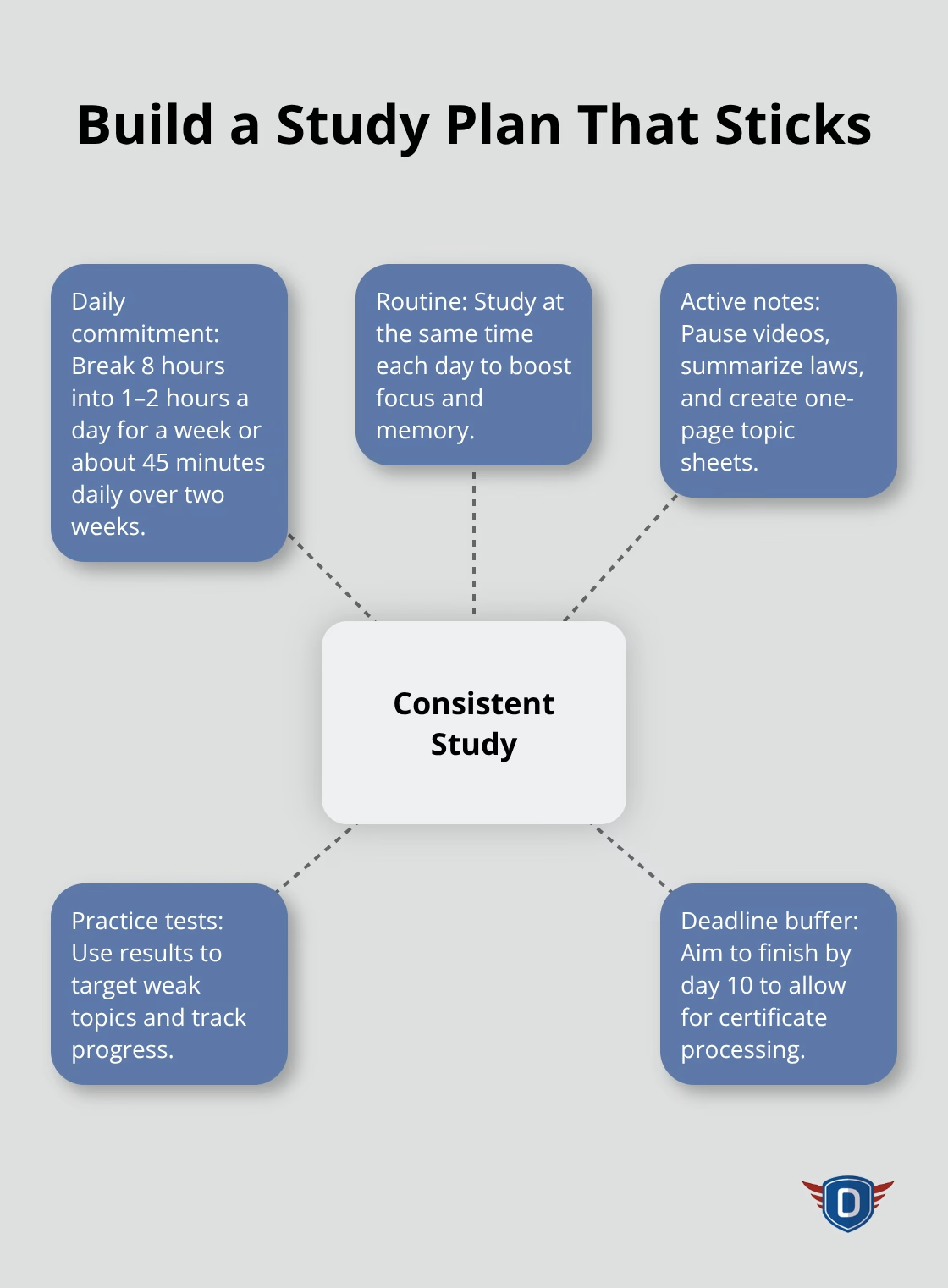
The biggest reason drivers fail remedial courses isn’t lack of intelligence-it’s poor planning. You need a schedule that matches your real life, not some fantasy version where you study four hours daily. If you’re taking an 8-hour Intermediate Driver Improvement course, that breaks down into manageable chunks. Commit to 1 to 2 hours daily over a week, or 45 minutes daily over two weeks. The key is consistency, not marathon sessions.
Create a Non-Negotiable Study Routine
Study at the same time each day-morning before work, lunch break, or evening after dinner. Your brain performs better with routine. Write your study sessions into your calendar as non-negotiable appointments. Treat them like court dates, because missing your course completion deadline carries real consequences including extended suspension and potential reinstatement fees. Set a completion target for day 10 of your suspension window, giving yourself a 20-day buffer before your final deadline for certificate processing delays.
Transform Passive Watching Into Active Learning
Active note-taking converts passive video watching into genuine learning. Pause frequently and write down the key concepts in your own words. Florida traffic laws on right-of-way, safe following distances, and aggressive driving penalties stick better when you physically document them. Create a simple one-page summary for each major topic covered in your course, highlighting the rules you’re most likely to forget or that directly apply to your daily driving routes. If you drive downtown frequently, emphasize right-of-way rules at intersections. If you commute on highways, focus on safe following distances and lane-change protocols. This targeted approach beats generic note-taking. Before your final exam, review your summaries rather than rewatching entire video modules. This cuts study time in half while improving retention.
Use Practice Tests as Your Diagnostic Tool
Practice tests included in your course aren’t optional-they serve as your diagnostic tool. Take them seriously, identify which topics you missed, and restudy those sections specifically. Your practice test results reveal exactly where your knowledge gaps exist, allowing you to spend remaining study time on weak areas rather than reviewing material you already understand. This strategic approach maximizes your preparation efficiency and builds confidence heading into your final exam.
How to Master the Content and Pass Your Exam
Focus on Florida Traffic Laws With Precision
Florida traffic laws demand precision, especially around right-of-way rules at four-way stops and uncontrolled intersections where driver confusion causes real collisions. Intersections account for roughly one-quarter of traffic fatalities in the United States, making this topic worth extra study time. Your course presents scenarios that mirror actual road situations you’ll encounter on Florida highways and city streets. When your course module shows a driver approaching a red light with a green turn arrow, that’s not theoretical-it’s the exact intersection behavior that determines whether you cause a crash or prevent one.
Master Defensive Driving Techniques
Defensive driving isn’t about being timid; it’s about anticipating what other drivers will do before they do it. Study the 2.5-second rule for following distances because it’s the single most practical tool you’ll learn. At 60 miles per hour on a Florida highway, you need roughly 176 feet to stop safely, which translates to maintaining adequate seconds between your bumper and the vehicle ahead. When you see course content about distracted driving, connect it to your own habits immediately. If you check your phone while driving, that behavior needs to change before you take your final exam, because the knowledge only matters if you apply it.
Learn From Real-Life Scenarios
Real-life scenarios embedded in your course aren’t filler material-they’re your roadmap for the final exam. Your course provider selected those specific scenarios because they appear in the test questions. If the module shows a driver merging onto a busy interstate during rush hour, study that exact situation type. When you encounter a practice test showing an aggressive driver tailgating you, know that the correct answer involves slowing down gradually and letting them pass, not matching their aggression.
Use Practice Tests to Identify Weak Spots
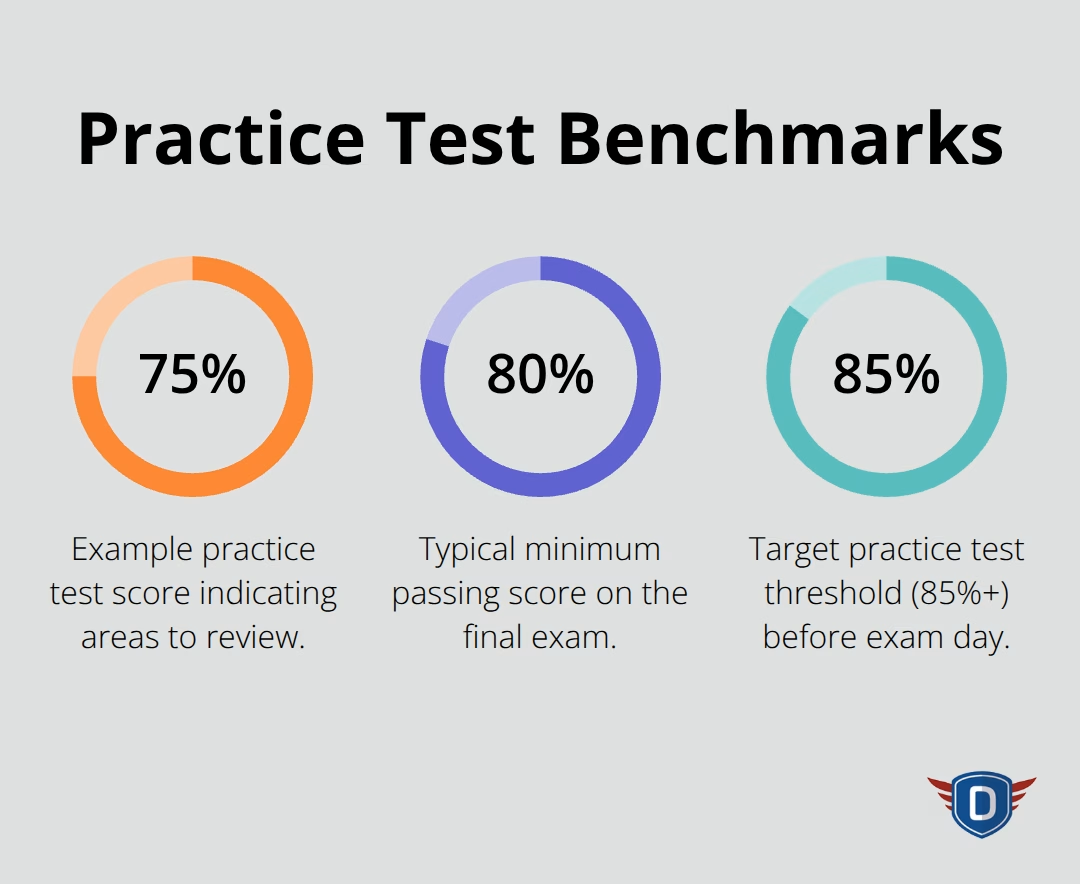
Practice tests reveal your weak spots with brutal honesty, and that’s their purpose. Take each one as seriously as your final exam because the gaps you identify now are exactly where you’ll lose points later. If you score 75 percent on a practice test covering Florida traffic laws, spend your remaining study time on those specific law sections rather than rewatching videos you already understand. The final exam typically requires an 80 percent passing score, meaning you can miss roughly four questions out of twenty, so targeted review beats broad repetition.
Build Your Final Week Strategy
Finish your course content by day ten of your suspension window, then spend your final week taking practice tests repeatedly until you consistently score above 85 percent. This buffer prevents last-minute panic and confirms you’re genuinely prepared for your exam (and protects you against any certificate processing delays that could extend your suspension unnecessarily).
Final Thoughts
Completing your driver remedial course successfully means more than passing an exam and submitting your certificate to the FLHSMV. The strategies throughout this guide work because they address real obstacles: time pressure, competing priorities, and converting video content into genuine knowledge retention. Your study plan, built around 1 to 2 hours daily with active note-taking and practice tests, gives you the structure to finish strong.
Safe driving habits stick when you apply them consistently on actual roads. The 2.5-second following distance rule, defensive anticipation techniques, and right-of-way knowledge you studied aren’t just exam material-they’re tools that protect you and everyone sharing Florida’s roads. Drivers who treat their driver remedial course as a genuine learning experience, not just a requirement, report feeling more confident behind the wheel and making better split-second decisions when unexpected situations arise.
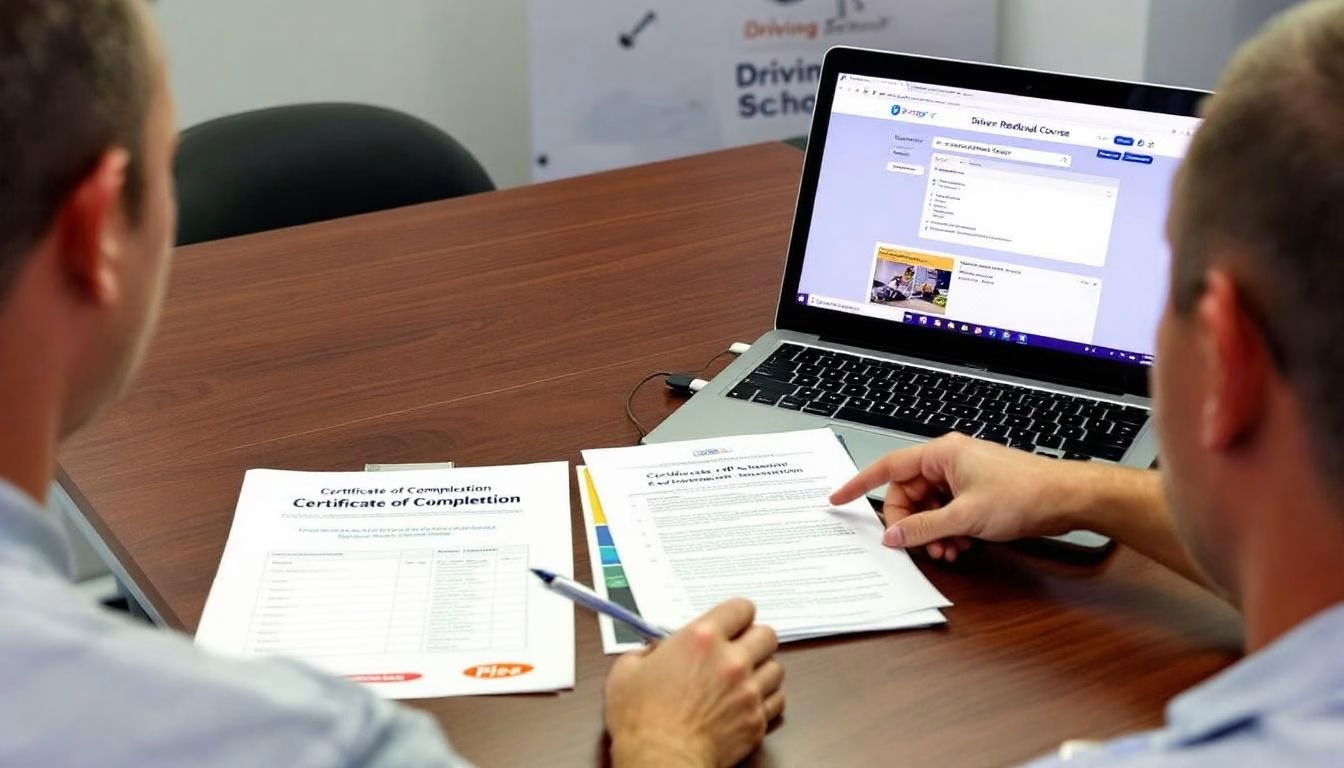
At DriverEducators.com, we’ve designed our courses to make this transition seamless by blending clear explanations with real-life scenarios that mirror situations you’ll actually encounter. When you complete one of our programs, your certificate goes directly to the FLHSMV, eliminating paperwork delays and keeping your reinstatement on track.