A traffic ticket can feel like a setback, but handling traffic tickets effectively means understanding your options and taking action quickly. The choices you make in the days after receiving a citation directly impact your driving record, insurance rates, and wallet.
At DriverEducators.com, we’ve helped thousands of drivers navigate this process and come out ahead. This guide walks you through your resolution options and shows you how traffic school can protect your record from points that stick around for years.
What Happens When You Get a Traffic Ticket in Florida
Florida’s Points-Based System and License Suspension Thresholds
Florida’s traffic ticket system operates on a points-based framework that directly affects your driving privileges and insurance costs. The state assigns points to moving violations, and accumulating too many points triggers license suspension. A single speeding ticket adds 3 to 4 points to your record depending on how far over the limit you were driving. Running a red light or stop sign adds 4 points, and reckless driving carries 4 points as well. Non-moving violations like parking tickets or equipment failures don’t add points but still require payment. The Florida Department of Highway Safety and Motor Vehicles tracks all violations, and points stay on your record for 3 to 5 years depending on the violation type.
The escalating penalty structure means your first ticket carries serious long-term consequences if left unaddressed. Accumulating 12 points within 12 months results in a 30-day license suspension. Reaching 18 points in 18 months triggers a 3-month suspension, and 24 points in 36 months means a mandatory year-long suspension.
How Insurance Companies Calculate Your Premium After a Ticket
Insurance companies use Florida’s point system to calculate your premiums, and the financial impact can be severe. A single 3-point speeding ticket can increase your annual insurance premium by $300 to $600 for three years, totaling $900 to $1,800 in extra costs before you even factor in the original fine. Drivers with points on their record become classified as higher-risk, and insurers adjust rates accordingly.
The worst part is that paying the ticket constitutes an admission of guilt, locking that violation into your record permanently. This decision affects your rates for years to come.
Your 30-Day Response Window and Available Options
You have roughly 30 days from the ticket date to respond, and missing that deadline can result in automatic payment, late fees, and potential license suspension. Your immediate options are straightforward: pay the fine and accept the points, contest the ticket in court, or attend traffic school to reduce or eliminate the points.
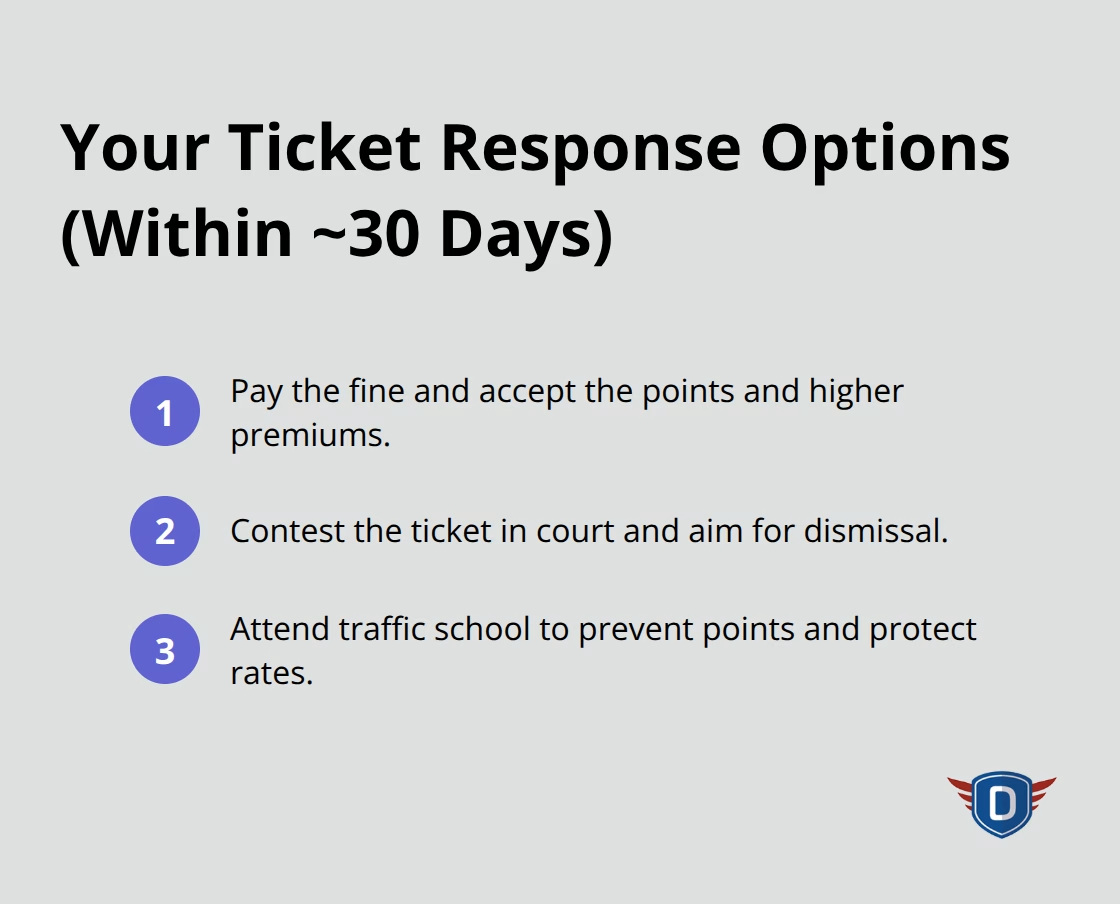
Traffic school is the most practical path for most drivers because it prevents points from reaching your record while also satisfying court requirements and protecting your insurance rates from jumping. Our Florida-approved Basic Driver Improvement course is specifically designed to help drivers in your situation avoid these long-term financial and legal consequences. Understanding how traffic school works and what it can do for your record is the next step in protecting yourself from the full impact of this ticket.
How to Resolve Your Traffic Ticket
The True Cost of Paying the Fine
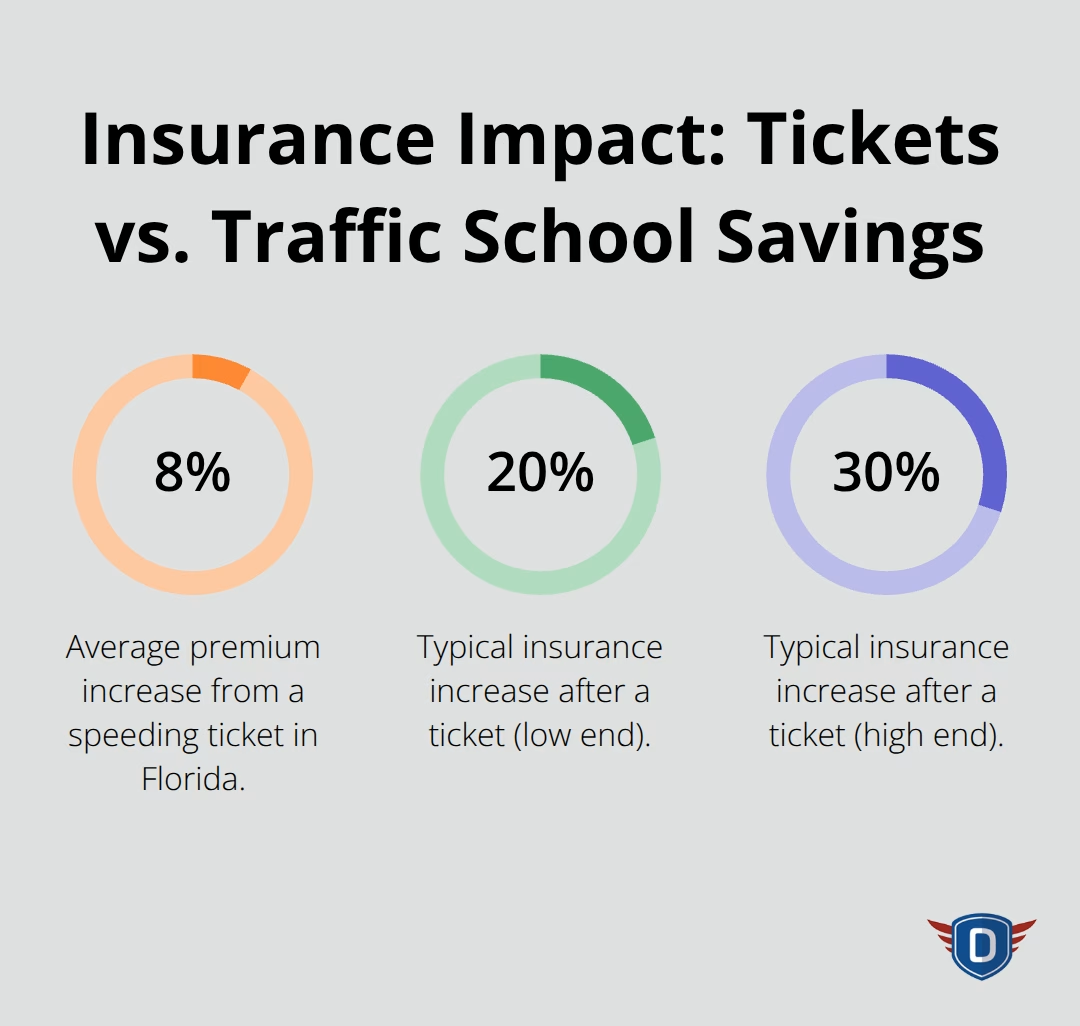
Paying a traffic ticket in Florida might seem like the quickest option, but it’s actually the most expensive decision you can make. When you pay, you plead guilty and lock that violation onto your permanent driving record. The fine itself is just the beginning. A speeding ticket raises an insurance premium by 8%, averaging $26 more per month on your car insurance bill. You also accept all the points that come with it, pushing you closer to license suspension thresholds. If you accumulate 12 points within 12 months, Florida suspends your license for 30 days. Paying the ticket eliminates any chance of removing the violation from your record later, and your insurance company will use it to classify you as higher-risk for years. This option only makes sense if the ticket is for a non-moving violation like a parking or equipment issue that carries no points.
Fighting the Ticket in Court
Contesting the ticket in court requires solid evidence and realistic expectations about your odds. You need specific documentation from the traffic stop, including the officer’s radar readings, calibration records, or dashcam footage that contradicts the citation. Most drivers who contest without professional help lose because they lack the technical knowledge to challenge radar accuracy or police procedure violations. If you win, the ticket disappears from your record entirely, which is why it’s worth fighting if you have genuine evidence of an error. However, hiring a traffic attorney costs $300 to $500, and court dates mean taking time off work. The better path for most drivers is traffic school, which eliminates points without the uncertainty and expense of court.
Traffic School: The Practical Solution
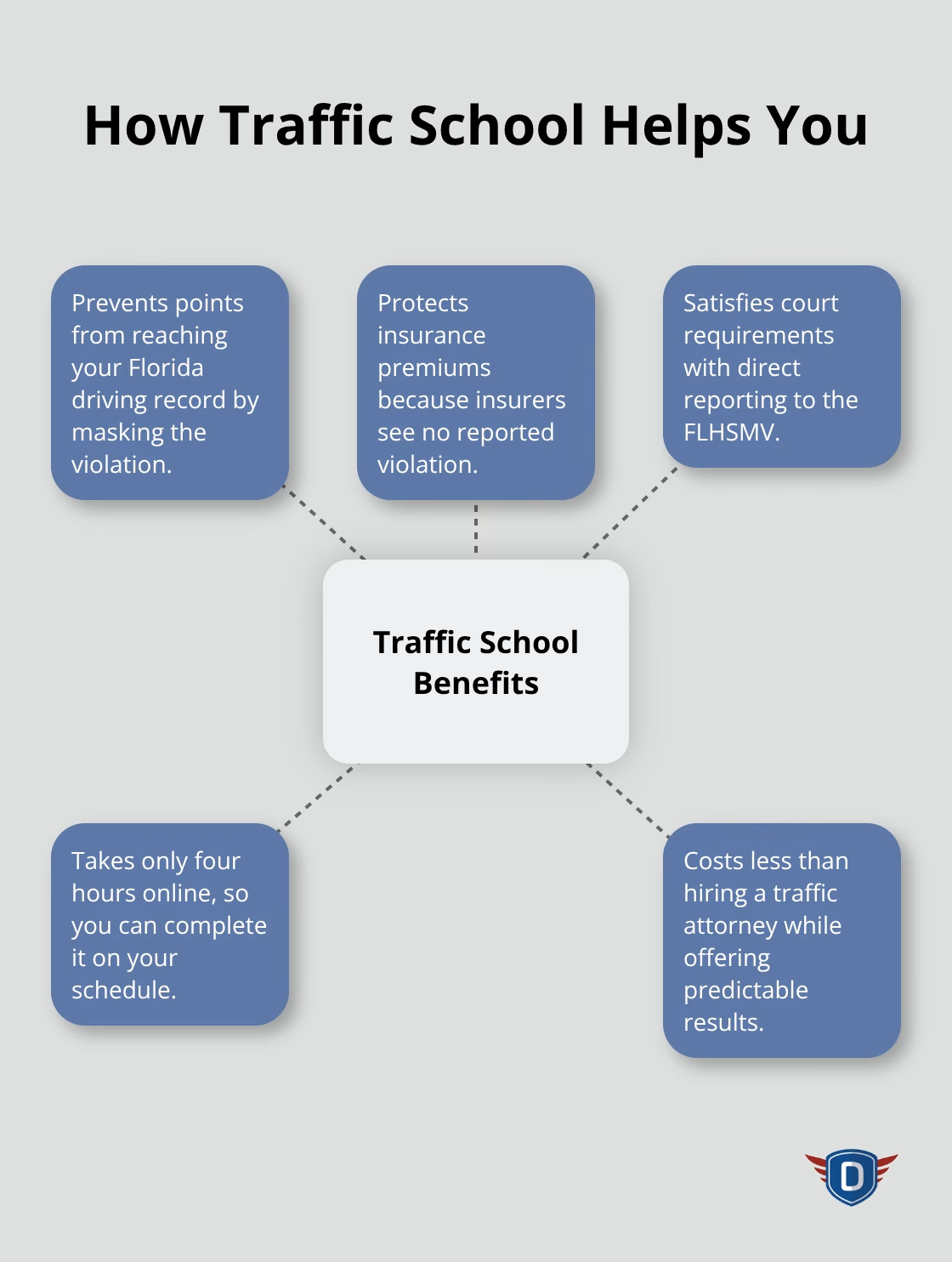
Traffic school works because Florida law allows first-time offenders to attend an approved course and have points removed before they ever reach your driving record. You still pay the fine, but you avoid the insurance premium increases and the points accumulation that leads to suspension. A Florida-approved Basic Driver Improvement course takes just four hours to complete online and gets reported directly to the FLHSMV, satisfying court requirements and protecting your insurance rates simultaneously. This option costs far less than an attorney and delivers guaranteed results.
How Traffic School Protects Your Driving Record
Points Prevention and Record Protection
Traffic school prevents points from ever reaching your Florida driving record, which is why it’s the smartest choice for most drivers facing a moving violation. When you complete an approved course before the court deadline, the FLHSMV receives your certificate and the violation gets masked, meaning no points are added to your record. This immediate benefit stops the clock on license suspension thresholds and keeps your driving history clean for insurance purposes. The 3-point or 4-point speeding ticket that would normally haunt you for years simply disappears from the equation.
Florida law allows first-time offenders one traffic school attendance every 12 months, and the course must be completed within 60 days of your ticket date to qualify. A Basic Driver Improvement course takes just four hours online and satisfies this requirement entirely, reporting your completion directly to the state so you don’t have to worry about paperwork or follow-up steps.
Insurance Premium Protection and Savings
The financial advantage of traffic school extends far beyond avoiding points on your record. Insurance companies check driving records when calculating premiums, and when they see no violation reported, they have no reason to raise your rates. Traffic tickets increase insurance 20-30% on average in Florida, with costs compounding over 3-5 years. Traffic school eliminates this penalty entirely because your record stays clean.
You still pay the original fine to the court, but you avoid the years of inflated insurance premiums that follow a paid ticket. The course costs between $50 and $150 depending on the provider, making it an investment that pays for itself within a few months when compared to the insurance increases you’d otherwise face. Many insurers offer safe driver discounts when you complete an approved traffic school course, which can reduce your premium by 5 to 10 percent.
Eligibility Requirements and Registration
Eligibility for traffic school requires that the violation be a moving violation, that you have a valid Florida driver’s license, and that you haven’t attended traffic school within the past 12 months. Your ticket citation will specify whether you’re eligible, and the court clerk can confirm this when you receive your citation. Non-moving violations like parking tickets or equipment failures don’t qualify for traffic school since they carry no points.
Once you confirm eligibility, registering for an online course takes minutes, and you can complete it on your own schedule without missing work or arranging childcare. The certificate arrives electronically within 24 hours of completion, and the state receives notification automatically, meaning your record protection begins immediately.
Final Thoughts
Handling traffic tickets effectively requires you to act within 30 days and choose the option that protects your long-term financial interests. Traffic school costs $50 to $150 and eliminates points before they reach your driving record, while paying the ticket locks in insurance increases of $300 to $600 annually for three years. The math strongly favors traffic school over both payment and court litigation.
Your driving record stays clean when you complete an approved course, which means insurance companies see no violation and have no reason to raise your rates. You satisfy court requirements without the uncertainty of litigation, and you gain practical knowledge about Florida traffic laws and defensive driving that actually reduces your risk on the road. Confirm your eligibility through your ticket citation or by contacting the court clerk, then register for a Florida-approved Basic Driver Improvement course and complete it within 60 days.
At DriverEducators.com, our Basic Driver Improvement course helps drivers avoid points and insurance increases while meeting all state requirements. Take action today to protect your driving record and your wallet from the long-term consequences of a traffic ticket.