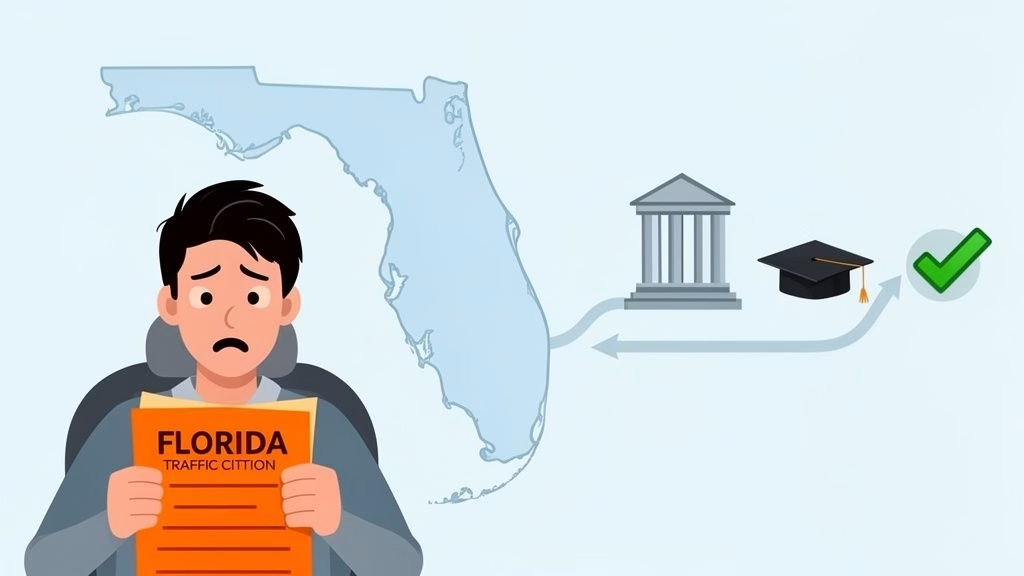
Seeing those flashing lights in your rearview is a feeling every Florida driver dreads. That piece of paper the officer hands you—the Florida traffic ticket—is more than just a fine. It’s a legal notice that kicks off a 30-day countdown for you to make a choice. You've got three basic moves: pay up and take the points, head to court to fight it, or elect traffic school to keep your record clean.
What to Do After Getting a Florida Traffic Ticket

The moment you get a ticket, the clock starts ticking. You have exactly 30 days to notify the Clerk of Court in the county where the violation occurred and tell them how you're going to handle it. Don't just toss it in your glove box and forget about it—ignoring that deadline can lead to a suspended license and a pile of extra fees.
So, what's your next move? You're essentially at a crossroads with three very different paths ahead. Each one has a direct impact on your driving record, your insurance rates, and your bank account.
Your Three Core Choices
Making the right decision starts with knowing what you’re up against. Your choice determines whether you get points on your license, how much this mistake will ultimately cost you, and how your insurance company will see you for years to come.
The biggest mistake we see drivers make is rushing to pay the fine without thinking it through. Paying is the same as pleading guilty. It guarantees points on your record, and you can almost certainly expect your insurance premiums to go up at your next renewal.
To help you see the options clearly, we've put together a simple comparison.
Your Three Immediate Choices for a Florida Traffic Ticket
This table lays out the three main options you have for a moving violation and what the outcome of each choice really means for you.
| Your Option | What It Means for You | Impact on Your Driving Record |
|---|---|---|
| Pay the Fine | You admit guilt and pay the full civil penalty listed on the ticket. | Points are added to your license, and the violation is officially on your record. |
| Fight the Ticket | You plead "not guilty" and schedule a court date to argue your case. | You only get points if the judge finds you guilty. A dismissal means no points. |
| Elect Traffic School | You pay the ticket fine but agree to complete a state-approved course. | The court withholds "adjudication," which means no points go on your license. |
As you can see, each path has distinct consequences. Choosing wisely now can save you a lot of money and headaches down the road.
For more complex situations or specific violations like lane splitting, a resource like this Florida Motorcycle Lane Splitting Legal Guide can offer specialized insight. By fully understanding https://bdischool.com/what-happens-when-you-get-a-traffic-ticket/, you can make an informed choice that best protects your driving record.
How Florida's Point System Impacts Your License and Insurance
When you get a Florida traffic ticket, it's easy to focus on the fine staring back at you from the paper. But that's just the immediate sting. The real, long-term financial pain comes from something you can't see: the points added to your driving record.
Think of these points as a red flag for both the Florida Highway Safety and Motor Vehicles (FLHSMV) and your insurance company. Each moving violation adds points, and the more points you have, the riskier you look in their eyes. This isn't just a number on a screen; it’s a system that has very real and often expensive consequences that can stick with you for years.
Understanding Point Values for Common Offenses
Not all tickets are created equal. The state assigns different point values based on how serious the offense is, with more dangerous mistakes carrying a heavier penalty. A minor speeding ticket, for example, is viewed very differently than causing an accident.
Here’s a quick look at how points are assigned for some common violations in Florida:
- Speeding less than 15 mph over the limit: 3 points
- Speeding 15 mph or more over the limit: 4 points
- Running a red light: 3 points
- Passing a stopped school bus: 4 points
- Leaving the scene of an accident with property damage: 6 points
As you can tell, it doesn't take many mistakes to get into hot water. For a full breakdown of offenses, we've put together a guide on the complete Florida traffic ticket point system.
The Two Major Consequences of Points on Your Record
Once points start piling up, you’re facing two major headaches: the threat of losing your license and the near certainty of paying more for car insurance. The FLHSMV doesn’t mess around; it will automatically suspend your license once you hit a certain number of points in a given timeframe.
The suspension thresholds are strict. If you rack up 12 points in 12 months, your license is gone for 30 days. Hitting 18 points in 18 months means a 3-month suspension, and getting 24 points in 36 months will cost you your driving privileges for an entire year.
On top of a potential suspension, every single point is a signal to your insurance provider. When it's time to renew your policy, they’ll pull your driving record. If they see new points from a Florida traffic ticket, you can almost always expect a serious rate hike because, statistically, you're now more likely to file a claim.
This is why it's so important to understand car insurance basics and how your driving habits directly affect your premiums.
And the risk is only growing. Traffic citations in Florida have been on the rise for four years straight. In fact, 2026 saw a 5.6% increase over 2025, which translates to 155,824 more tickets handed out statewide. The surge is particularly noticeable in Miami-Dade County, which was responsible for 51% of that increase and saw its own speeding tickets shoot up by 32% in just two years. With enforcement clearly ramping up, knowing how to handle a ticket is more crucial than ever. You can see more details about these rising ticket trends on theticketclinic.com.
A Step-By-Step Guide to Electing Traffic School in Florida
So, you’ve decided that keeping points off your license is the smart play. Good call. Electing traffic school is definitely the best way to do that, and while the process might seem a little intimidating, it's actually pretty straightforward once you know the steps. The most important thing is to act fast and follow the process correctly to protect your driving record.
Your first move—and this is the most time-sensitive one—is to tell the Clerk of Court you want to take traffic school. You have exactly 30 days from the date on your Florida traffic ticket to make this happen. Miss that deadline, and the option is off the table. You can usually do this right on the county clerk's website, send it in by mail, or show up in person.
Pay Your Fine and Make Your Election
Once you notify the court, you also have to pay the fine. This is a common point of confusion. A lot of drivers think choosing traffic school means they don't have to pay the ticket, but that’s not how it works in Florida. You must pay the full civil penalty listed on your citation.
Think of it like this: the fine is for the violation itself. The traffic school is what you do to avoid the long-term consequences, like points on your record and insurance hikes. The easiest way to handle both the election and the payment is online through your county clerk’s portal. It’s the quickest method to ensure you don’t miss that critical 30-day window.
Choosing to attend a driver improvement course is an investment in your driving record. While you still pay the ticket fine, you are effectively buying peace of mind by preventing points from being assessed, which in turn saves you from potentially massive insurance rate increases.
After you've paid up, the court will give you a new deadline, typically between 60 and 90 days, to get the course done and show them your completion certificate. That's more than enough time to find a course and finish it without feeling rushed.
Enroll in a State-Approved Online Course
Next up, you need to find a course that's officially approved by the Florida Highway Safety and Motor Vehicles (FLHSMV). Don't just pick any random course online; if it's not state-approved, the court won't accept your certificate. The great news is that modern online courses are built for real life.
- Self-Paced Learning: You can log in and out whenever you want, doing a little bit here and there to fit it into your schedule.
- Mobile-Friendly Access: Complete the course on your phone during your lunch break, on a tablet from your couch, or on your computer.
- Multiple Languages: Many providers offer courses in English, Spanish, and Portuguese to make them accessible for everyone.
This chart really drives home what’s at stake. It shows how a single ticket can snowball, leading to more points and, eventually, a suspended license if you don't take action.

As you can see, electing traffic school is the key step that breaks that cycle. When you’re ready, you can enroll in a fully DMV-approved online traffic school that checks all the state's boxes. Once you finish the course and pass the final exam, you'll get a certificate of completion. Just submit that to the Clerk of Court, and you’re all set—the ticket is handled, and your record stays clean.
Choosing The Right Florida-Approved Driver Improvement Course

Okay, you've decided to elect traffic school. That's a smart move. But now comes a critical step: picking the right course. In Florida, not all driver improvement programs are created equal, and choosing the wrong one is a mistake you can't afford to make.
Think of it this way: you wouldn't use your house key to start your car. Each lock requires a specific key. The same goes for traffic school. The course you take must match the specific requirement set by the state or a judge for your particular situation. Get it wrong, and the court won't accept your completion certificate, leaving you with points on your license and a wasted afternoon.
Let's break down the different Florida Highway Safety and Motor Vehicles (FLHSMV) approved courses so you can pick the right one the first time.
Which Florida Driver Improvement Course Do You Need?
To cut through the confusion, this table gives you a quick snapshot of the most common courses and why you might need to take them. Always double-check your citation or court order, but this is a great place to start.
| Course Name | Course Length | Common Reason for Taking | Main Outcome |
|---|---|---|---|
| Basic Driver Improvement (BDI) | 4 Hours | First-time moving violation (e.g., speeding, stop sign) to avoid points. | No points on your license, which helps prevent insurance hikes. |
| Intermediate Driver Improvement (IDI) | 8 Hours | Court-ordered for more serious offenses or repeat violations. | Satisfy a judge's specific order and meet legal requirements. |
| Aggressive Driver Course | 8 Hours | Court-ordered for a citation related to aggressive driving or road rage. | Address specific dangerous driving behaviors as required by the court. |
| Mature Driver Program | 6 Hours | Voluntary course for drivers aged 55+ to refresh skills. | Qualify for a potential auto insurance discount. |
As you can see, the reason you're taking the course is what really matters. Now, let's dive a little deeper into what each one entails.
The 4-Hour Basic Driver Improvement (BDI) Course
This is the go-to course for the vast majority of drivers. If you received a standard, non-criminal Florida traffic ticket for something like speeding a few miles over the limit, running a stop sign, or making an improper turn, the 4-Hour Basic Driver Improvement (BDI) course is almost certainly what you need.
By electing traffic school and completing this course, you keep the points from that ticket off your driving record. This is the single biggest benefit, as it's what keeps your insurance company from seeing the violation and raising your rates.
More Specialized Florida Driving Courses
Sometimes, a situation calls for something more than the standard BDI course. A judge may order a longer or more targeted program, especially if the offense was serious or if you have a history of violations.
8-Hour Intermediate Driver Improvement (IDI): You'll typically take this course only if a judge orders it. It’s often assigned for more significant incidents or if you've had other tickets recently, signaling to the court that you need a more thorough refresher on defensive driving.
8-Hour Aggressive Driver Course: This program is designed for a very specific offense. If you were cited for aggressive driving or a "road rage" incident, a judge will order this course to directly address the behaviors and mindset that lead to dangerous confrontations on the road.
6-Hour Mature Driver Program: This one is completely voluntary and designed for drivers aged 55 and older. It’s a fantastic way to sharpen your driving skills, stay updated on new traffic laws, and often qualifies you for a discount on your car insurance.
An analysis of over 363,000 traffic tickets in Florida shows just how important avoiding points is. In areas with heavy enforcement, a single ticket can cause insurance premiums to jump by 20-30%. This is where making the right choice becomes so crucial. You can see more about Florida's traffic enforcement patterns on tickettoro.ai.
Choosing the correct course isn't just about checking a box; it's about making sure your time and money actually protect your driving record. Always, always double-check your citation or court order to confirm which course you are required to take.
To make things even easier, our Florida driver improvement course online page breaks down every option in even greater detail. Picking the right course ensures you satisfy the court and get back on the road with peace of mind.
What You Will Learn in an Online Traffic School Course
Let's be honest, no one is thrilled to get a Florida traffic ticket. The first thought is often about the fine and the points, and traffic school can feel like just another chore to check off the list. But a modern, FLHSMV-approved course is designed to be much more than that—it’s a practical toolkit for navigating Florida’s increasingly busy roads.
The whole point isn't to lecture you for a few hours. It's to give you real-world skills that can genuinely prevent the next ticket or, more importantly, an accident. Think of it as learning the playbook for staying safe in traffic, rather than just memorizing the rulebook.
Core Skills for Safer Driving
These courses cut straight to the chase, focusing on the skills that make the biggest difference on the road. The material is designed so you can use it the very next time you get behind the wheel, turning abstract concepts into concrete actions.
You’ll walk away with a solid handle on:
- Defensive Driving Tactics: This is the heart of the course. You'll learn how to actively scan for hazards, manage your blind spots, and keep a safe cushion of space around your car. It’s all about anticipating what other drivers might do, so you’re ready to react calmly.
- Florida Traffic Laws: It's easy for the details to get fuzzy over time. You’ll get a straightforward refresher on the rules that cause the most confusion, like who has the right-of-way, when you legally have to stop for a school bus, and how to navigate complex intersections.
- Managing Your Own Driving Habits: We all have our moments. The course helps you recognize how things like stress, fatigue, or even a quick glance at your phone can drastically affect your judgment. More importantly, you'll learn simple strategies to stay focused and in control.
Turning Statistics into Lifesaving Habits
The lessons you learn aren't just random tips; they're based on hard data. State agencies like the FDOT and FLHSMV track every crash, citation, and driver outcome to see what’s really happening on our roads. This information reveals where and why accidents happen most often.
Courses from providers like BDISchool use this data to target the most common mistakes drivers make on roads that see over 400 million miles traveled daily. By understanding these trends, you’re better equipped to avoid the same pitfalls. If you're curious, you can explore Florida's public traffic data yourself on the state's DOT website to see how it shapes safety initiatives.
An approved online traffic school isn't just about getting a ticket dismissed. It's an opportunity to hit the reset button on your driving habits, turning a negative event into a positive investment in your own safety.
With interactive quizzes and clear, engaging lessons, the information is designed to stick. You won’t just get a certificate at the end; you'll leave with a renewed sense of confidence and control every time you start your car.
Answering Your Top Florida Traffic Ticket Questions
Even when you have a handle on the basics, that little piece of paper from the officer can still leave you with some nagging questions. Getting straight answers is the only way to make the right call for your driving record and your wallet. Let's clear up some of the most common concerns Florida drivers have.
How Many Times Can I Take Traffic School in Florida?
This is usually the first question people ask, and for good reason—your eligibility isn't endless. In Florida, you can choose to take a Basic Driver Improvement (BDI) course to dodge points on your license once every 12 months.
But there's also a lifetime cap. You're allowed to use this option a maximum of five times in your entire life. It helps to think of these as five "get out of points free" cards you can play throughout your driving career.
Here’s the most important part: you absolutely must confirm your eligibility with the Clerk of Court before you officially elect to take the course. Once you use up one of your five lifetime elections for a ticket, it’s gone for good. You can't get it back, even if you decide later to fight the ticket in court.
Do I Still Have to Pay the Fine if I Go to Traffic School?
Yes, you do. This is a huge point of confusion that trips up a lot of drivers. Opting for traffic school does not, under any circumstances, get you out of paying the fine (the civil penalty) listed on your citation.
It's really a two-step deal:
- You pay the fine to the county Clerk of Court. This settles your debt for the violation itself.
- You complete traffic school as a separate action. This is what stops the points from ever hitting your driving record.
Both are required. If you forget to pay the fine on time, you'll be hit with extra fees and could even have your license suspended, no matter if you finished the course or not.
What Happens if I Miss the Traffic School Deadline?
Don't let this happen. Missing your court-ordered deadline for traffic school creates a serious and immediate mess. When you tell the court you're taking a driver improvement course, they give you a firm deadline, usually between 60 and 90 days, to turn in your certificate of completion.
If that deadline comes and goes:
- The points for the ticket are slapped onto your license automatically. Your chance to avoid them is gone.
- The FLHSMV will very likely suspend your driver's license for failing to follow through.
- You'll be on the hook for late fees and license reinstatement fees to get your driving privileges restored.
Procrastination is your worst enemy here. The moment you make your election with the clerk, sign up for a course and knock it out. Getting it done early is the best way to avoid these completely preventable headaches.
Will My Insurance Go Up if I Complete Traffic School?
No—and this is easily the biggest financial win of taking traffic school. When you pass a state-approved BDI course for a valid Florida traffic ticket, something important happens legally: the court "withholds adjudication."
In simple terms, this means you are never officially found guilty of the moving violation. And if there's no conviction, no points can be added to the official driving record that your insurance company sees.
Since your insurer never gets notified about the ticket and sees no new points, they have no reason to raise your rates. This simple move can save you hundreds, if not thousands, of dollars in premium hikes over the next few years. It makes the small cost of the course an incredibly smart investment.
Completing the right course is the key to protecting your record. At BDISchool, we offer a fully FLHSMV-approved online BDI course that is self-paced, mobile-friendly, and designed to make the process simple and stress-free. Enroll today at https://bdischool.com to keep your record clean and your insurance rates down.