Your first driving lessons in Florida set the foundation for safe, confident driving. We at DriverEducators.com know that understanding state requirements and avoiding common beginner mistakes makes all the difference.
This guide walks you through what to expect, Florida’s specific standards, and how professional instruction accelerates your progress on the road.
What Happens in Your First Lesson
How Your Instructor Assesses Your Skills
Your instructor’s first job is to assess where you stand right now. Within the first 10-15 minutes, they watch how you adjust the seat, mirrors, and steering wheel, then observe your initial movements to measure your comfort level and any prior experience. This assessment determines the pace and focus of your lesson-a complete beginner needs different attention than someone who has sat behind the wheel before. Florida’s Driver Education Traffic Safety (DETS) course for teens aged 15-17 requires 50 hours of supervised driving because instructors need time to evaluate individual skill gaps and build foundational safety habits.
Understanding Vehicle Controls and Safety
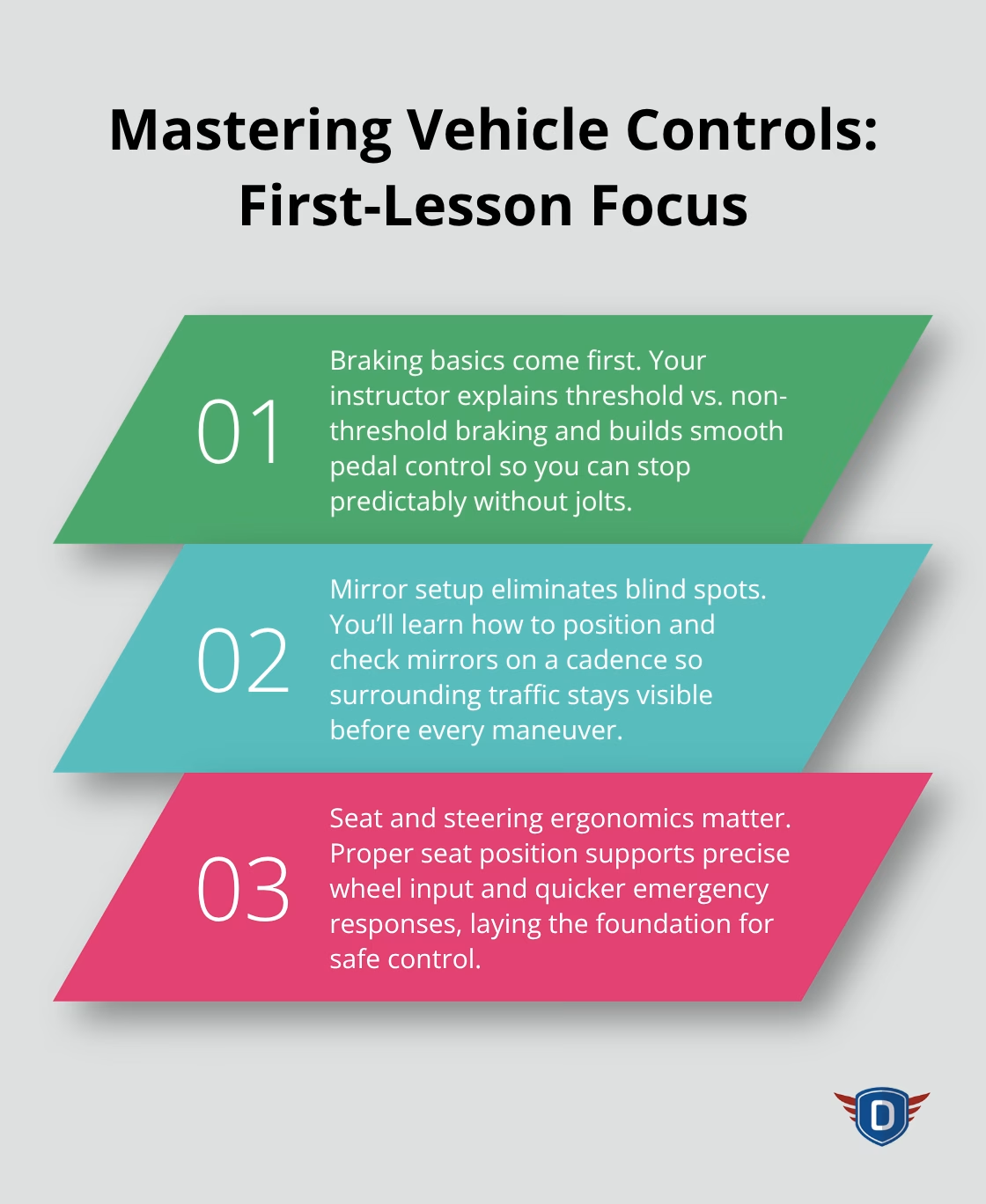
Your instructor explains vehicle controls methodically: the difference between threshold and non-threshold braking, why proper mirror positioning eliminates blind spots, and how seat position affects steering control and emergency response time. They won’t rush through these basics because poor habits formed early are hard to break. You’ll practice smooth acceleration and braking in low-traffic areas first, which research shows reduces anxiety and builds muscle memory faster than jumping straight into complex traffic situations.
Building Confidence Through Progression
Confidence grows through repetition and small wins, not through sink-or-swim approaches. A good instructor structures lessons so you master parking lot maneuvers before handling intersections, then progresses to busier roads only after you demonstrate consistent control. They explain why following distance matters-the 3-second rule prevents rear-end collisions-and have you practice it repeatedly until the spacing feels natural.
Handling Panic and Unexpected Situations
Your instructor watches for panic responses and teaches you how to handle them calmly: what to do if you miss a turn, how to recover from a wide turn, or how to safely pull over if you feel overwhelmed. This controlled progression with immediate feedback is why structured professional instruction accelerates your progress significantly compared to learning only from family members. Once you master these foundational skills and responses, you’re ready to tackle Florida’s specific driving requirements and standards.
Florida’s Driving Lesson Requirements and Standards
Teen Drivers Face Stricter Standards for Good Reason
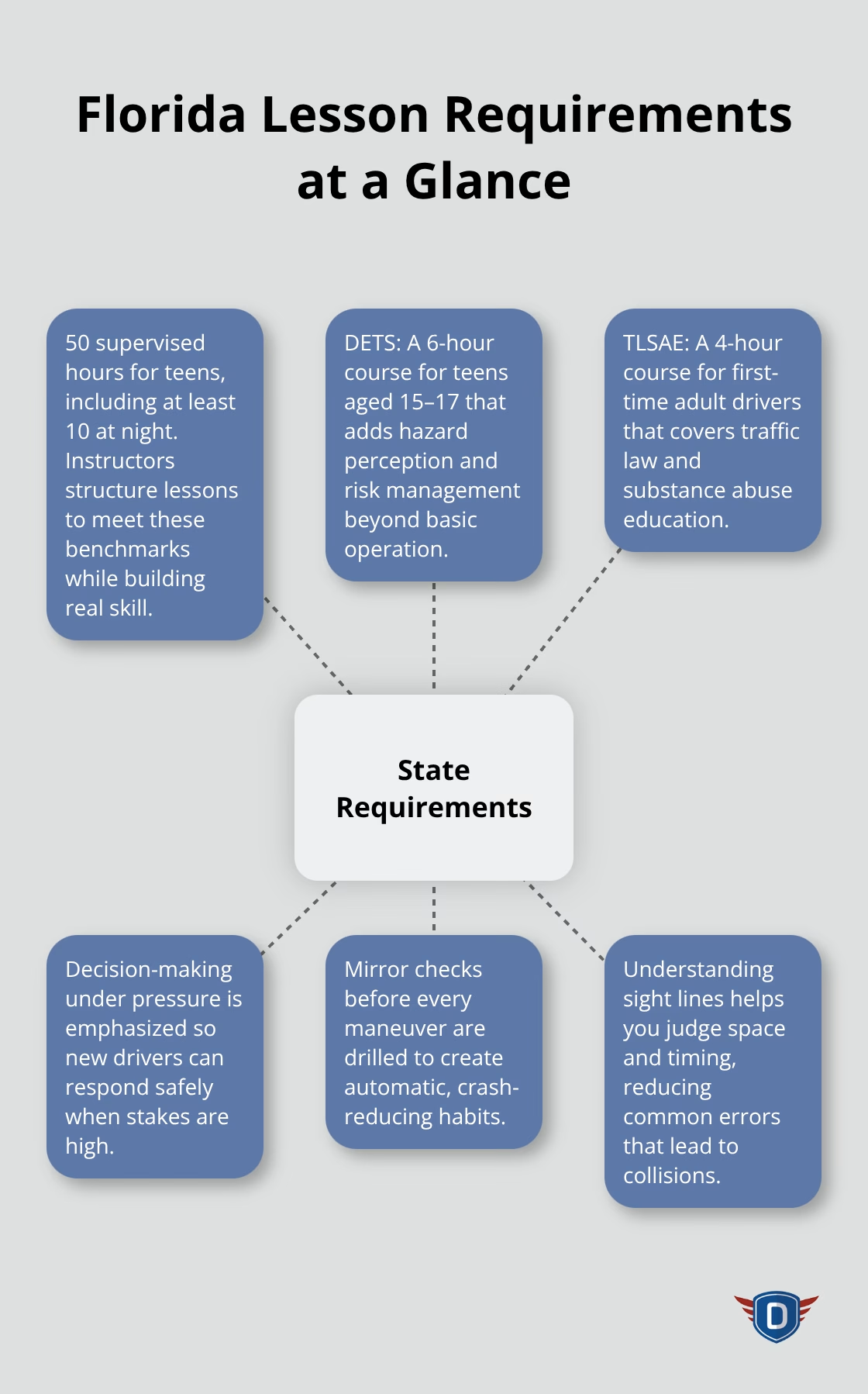
Florida doesn’t treat all new drivers the same, and that’s exactly how it should be. Teens aged 15-17 must complete Driver Education Traffic Safety (DETS), a 6-hour course that goes beyond basic vehicle operation into hazard perception and risk management. Adults taking their first license need only the 4-hour Traffic Law and Substance Abuse Education (TLSAE) course. This distinction matters because crash rates peak between ages 16-19, according to the Insurance Institute for Highway Safety, so Florida’s stricter teen requirements directly address that risk.
How State Mandates Shape Your Lesson Plan
Your instructor’s lesson plan flows directly from these state mandates. They’re not teaching randomly; they’re covering specific competencies that FLHSMV requires. For teens, that means 50 hours of supervised driving, with at least 10 of those hours happening at night. Your instructor structures lessons to hit these benchmarks while building genuine skill, not just checking boxes.
Florida Traffic Laws Become Your Driving Habits
Florida’s traffic laws shape every single lesson you take because your instructor must prepare you to follow them correctly. You’ll practice right-of-way rules at intersections because misunderstanding who has the right of way causes collisions. You’ll learn the three-second following distance rule and practice it repeatedly because rear-end crashes rank among the most common. Your instructor explains why Florida prohibits handheld phone use in school and work zones, then watches you demonstrate you can drive without that distraction.
Understanding Consequences Motivates Better Driving
Your instructor teaches you how Florida’s points system works-so you understand why certain violations matter more than others. This isn’t abstract instruction. When your instructor tells you to check your mirror before changing lanes, they’re teaching you to avoid a violation that costs points and raises insurance. When they drill stopping distance at different speeds, they’re preparing you to avoid a crash that could suspend your license entirely. The best instructors connect every lesson to real consequences, making the rules stick as habits rather than rules you memorize and forget.
Moving Into Advanced Driving Scenarios
Once you master these foundational skills and understand how Florida’s legal framework applies to your driving, your instructor introduces more complex traffic situations. You’ll handle busier intersections, navigate highway merges, and practice decision-making in real-world conditions where the rules you’ve learned actually protect you.
What Mistakes Cost You Most on Florida Roads
Poor Vehicle Setup Hides Dangers You Can’t See
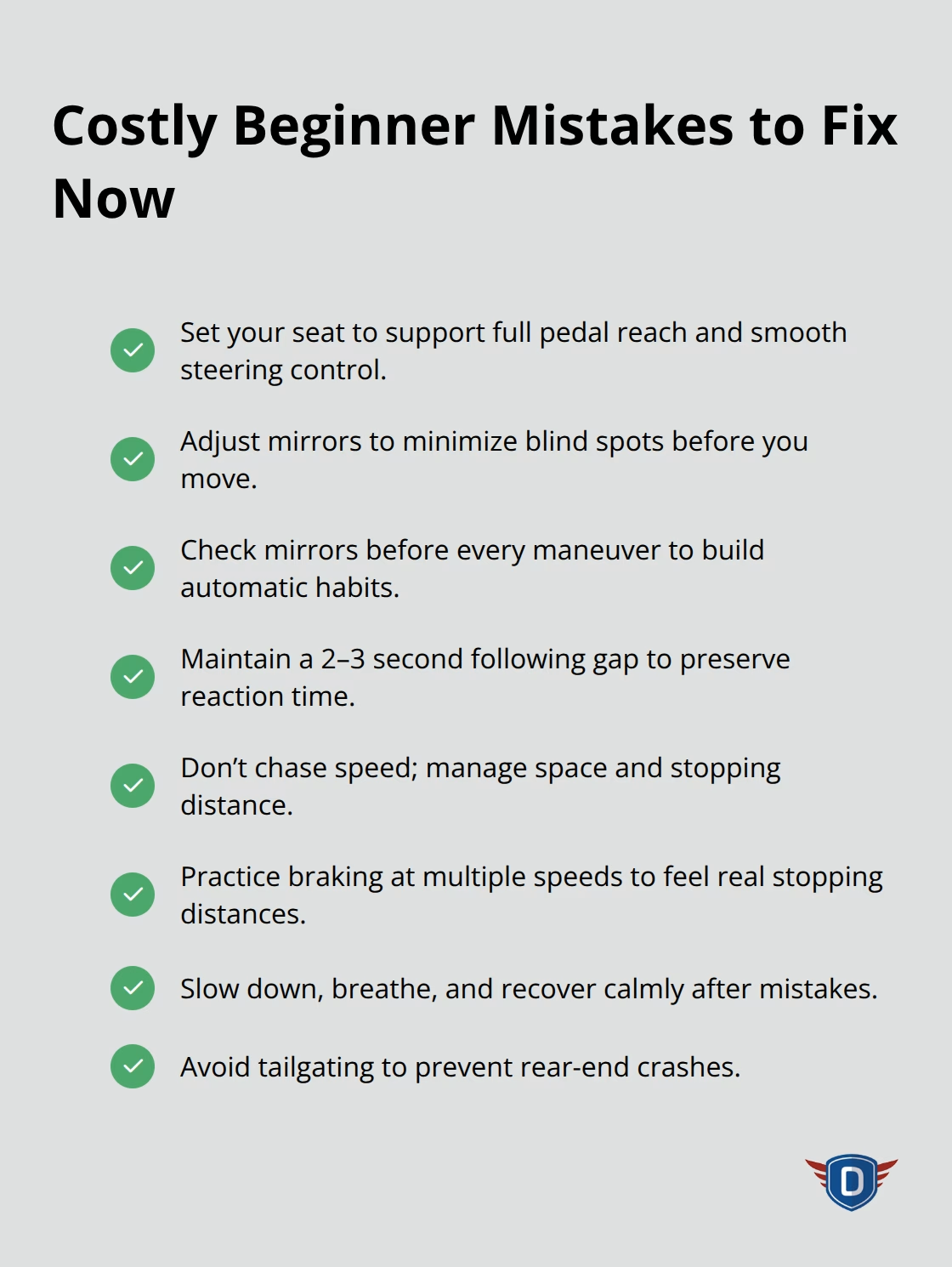
Seat position matters far more than most beginners realize because it directly affects your ability to reach pedals smoothly, grip the steering wheel at the proper angle, and see your blind spots. Position your seat about 10 inches from the steering wheel, with your arms slightly bent at full lock, so you can turn the wheel fully without your shoulders lifting off the seat. Mirrors adjusted incorrectly create blind spots that hide entire vehicles-this isn’t a minor cosmetic issue. The IIHS reports that blind-spot crashes cause thousands of injuries annually.
Your side mirrors should show the edge of your car in the inner third of the mirror, and your rearview mirror should frame the entire rear window. Many new drivers fail to check mirrors before every maneuver because they haven’t built the habit yet. Your instructor will drill this relentlessly until checking mirrors becomes automatic rather than something you consciously remember to do.
Speed and Following Distance Errors Have Real Consequences
Speed and following distance errors kill more new drivers than any other mistake because they’re invisible until impact happens. Maintain at least a 2-second gap behind the vehicle ahead: pick a fixed object, count the seconds between when the car in front passes it and when you do, and if you count fewer than three seconds, you’re too close. Most new drivers follow at one second, which means zero reaction time if braking becomes necessary.
Rear-end collisions represent a significant portion of all traffic crashes nationally, making this the single most preventable error you can correct. Speed misjudgment happens because new drivers confuse how fast they’re actually traveling with how fast they feel they’re going; a 35-mph road feels slow until you need to stop suddenly and discover your stopping distance is far longer than you estimated. Your instructor will have you practice braking at different speeds so you feel the actual distance required, not the distance you imagine.
Panic Responses Derail Drivers Who Haven’t Practiced Recovery
Panic responses in unexpected situations-missing a turn, stalling at a light, or encountering unexpected traffic-derail new drivers because they haven’t practiced recovery. The best instructors deliberately create mild stress scenarios so you learn that mistakes aren’t catastrophic and that slowing down, checking mirrors, and calmly correcting course works every single time.
Final Thoughts
Your first driving lessons in Florida work best when you combine structured professional instruction with state-approved coursework rather than relying on either approach alone. In-vehicle instruction builds muscle memory and teaches you how to handle real traffic situations, while online components like DETS or TLSAE give you the legal foundation and defensive driving knowledge you need before you sit behind the wheel. This systematic approach prevents the common mistakes that derail self-taught drivers and accelerates your progress significantly.
The skills and habits you develop during your first driving lessons in Florida determine how you respond to emergencies, how you handle distractions, and whether you become the kind of driver who avoids crashes. Professional instructors follow a proven sequence: they assess your current skills, teach foundational vehicle control, build your confidence through progression, and prepare you for Florida’s specific traffic laws and consequences. When you combine quality instruction with required courses, you build habits that keep you safe for decades rather than just checking boxes for licensing.
We at DriverEducators.com offer comprehensive driver education programs designed to help you master necessary skills and adopt lifelong safe driving habits. Visit DriverEducators.com to explore programs that match your learning style and Florida’s requirements. Your investment in quality instruction now pays dividends every single time you get behind the wheel.