Your first behind the wheel practice sets the tone for your entire driving journey. The difference between a confident driver and an anxious one often comes down to proper preparation and smart practice strategies.
At DriverEducators.com, we’ve seen firsthand how new drivers thrive when they focus on fundamentals before tackling complex road situations. This guide walks you through the essential steps to build real competence from day one.
Setting Up Your Car Before You Drive
Adjust Your Seat, Mirrors, and Steering Wheel
The first thing you need to do before touching the pedals is adjust everything around you. Seat position matters far more than most beginners realize. Your seat should be close enough that you can press the brake pedal all the way down without your leg fully extending, and your back should rest firmly against the seat. The steering wheel should be positioned so your arms bend slightly at the elbows when you grip it at the 9 and 3 o’clock positions, which also keeps you in the safest position for airbag deployment. Mirrors are equally non-negotiable. Your side mirrors should show just a sliver of your car’s body on the inside edge, angled outward to eliminate most blind spots. Your rearview mirror should frame the entire rear window. These adjustments take two minutes and prevent you from developing bad habits that become muscle memory. Start every single drive with this ritual, not just your first one.
Locate Your Controls Before Starting the Engine
Locate your headlights, windshield wipers, turn signals, and emergency brake before you start the engine. Many new drivers fumble with controls mid-drive, which splits attention at dangerous moments. Know where the gas, brake, and clutch pedals sit (if driving manual). Understand which pedal does what without thinking about it. Spend five minutes just sitting in the car with the engine off, practicing the motions. Press each pedal slowly. Feel the resistance. Adjust the steering wheel through its full range. This mental rehearsal shrinks the learning curve significantly when you actually start driving.
Master Starting, Acceleration, and Braking in a Parking Lot
Your first practice session should happen in an empty parking lot, not on a street. An empty lot lets you focus purely on engine start, smooth acceleration, and gentle braking without traffic pressure. Spend at least 30 minutes on these basics. Start the car, move forward slowly for 20 feet, stop smoothly, and repeat. Most new drivers brake too hard because they panic slightly; practice progressive braking for smooth, gradual stops. Stop at least 10 times during this session so the motion becomes automatic. Only when stopping feels controlled and natural should you attempt turns or more complex maneuvers.
Essential Skills for Your First Drive
Master Smooth Acceleration and Braking
Acceleration and braking separate confident drivers from nervous ones. The key is restraint, not aggression. Press the gas pedal with steady, deliberate pressure rather than jabbing it. Your goal during early practice is smooth forward motion, not speed. Try for a gentle increase in velocity that feels controlled and predictable. Most new drivers brake too hard because they associate the brake pedal with emergency stops rather than gradual deceleration. Practice progressive braking by applying light pressure first, then increasing it gradually until the car stops. This technique prevents the jerky, uncomfortable stops that shake passengers and signal inexperience. Spend multiple sessions practicing acceleration and braking in isolation before combining them with turns or lane changes. Smooth vehicle control is foundational to safe driving, and this skill directly reduces crash risk for new drivers who haven’t yet developed hazard prediction abilities.
Perfect Your Steering Technique and Hand Position
Steering technique matters more than most beginners think. Position your hands at 9 and 3 o’clock on the wheel, which keeps your arms relaxed and positions you safely relative to airbag deployment. Avoid gripping the wheel tightly; tension in your hands translates to jerky steering inputs that make the car feel unstable. Turn the wheel smoothly and deliberately, avoiding sudden movements. Practice turns on quiet residential streets where you can focus on steering without traffic pressure. Look through the turn, not at the curb directly in front of you, which helps you anticipate the path ahead.
Execute Lane Changes and Parking Maneuvers
When changing lanes, execute the mirror-signal-blind spot sequence without rushing. Check your side mirror first, signal your intention, then quickly glance over your shoulder to verify the blind spot is clear. Only then steer into the new lane with a smooth, confident motion. Parallel parking and backing into spaces require separate practice until you can execute them without stress. Start with wider spaces and gradually work toward tighter ones. The goal is precision and control, not speed. These fundamentals take practice sessions to feel automatic, but that investment prevents bad habits from forming and prepares you to handle the more complex traffic situations ahead.
Mistakes That Derail New Drivers
Overconfidence and Speed in Unfamiliar Areas
Overconfidence kills more new drivers than lack of skill ever will. The National Highway Traffic Safety Administration reports that young drivers are substantially over-involved in crashes, and overestimating your abilities ranks among the top reasons. New drivers often feel invincible after passing their test, then speed through unfamiliar neighborhoods at 40 mph when they should be doing 25. Unfamiliar roads hide hazards-unexpected pedestrians, parked cars, or hidden driveways-that require slower speeds and sharper attention. Your first 100 hours of practice should happen in areas you know well, at speeds 5 to 10 mph below the posted limit. This isn’t timidity; it’s tactical. Lower speed gives you reaction time you desperately need before your hazard prediction skills mature.
Mirror Checks and Blind Spot Awareness
Mirror checks and blind spot awareness separate drivers who crash from those who don’t. The Insurance Institute for Highway Safety reports that blind spot crashes account for a significant portion of sideswipe collisions among inexperienced drivers, yet many beginners glance at their mirror once and assume the lane is clear. Mirrors show you what was there a fraction of a second ago, not what’s there now. A car traveling at highway speed covers 88 feet per second-plenty of distance to enter your blind spot between mirror checks. Execute the mirror-signal-blind spot routine every single time you change lanes, and do it slowly enough that you actually see what’s beside you. Turn your head fully and pause for a full second during your shoulder check. Don’t rush this motion; the extra second saves your life.
Following Distance and Reaction Time
Following distance compounds these errors and creates the most dangerous scenario for new drivers. The three-second rule works in ideal conditions, but most new drivers follow at one second or less, leaving zero margin for error. At 30 mph, a minimum two-second gap gives you over 100 feet of reaction space. If that driver brakes hard, you crash before your brain even registers the brake lights. Extend your following distance to four or five seconds during your first months of driving (count it out: one-one-thousand, two-one-thousand, three-one-thousand). This feels excessive until you realize how much time you actually need to stop safely.
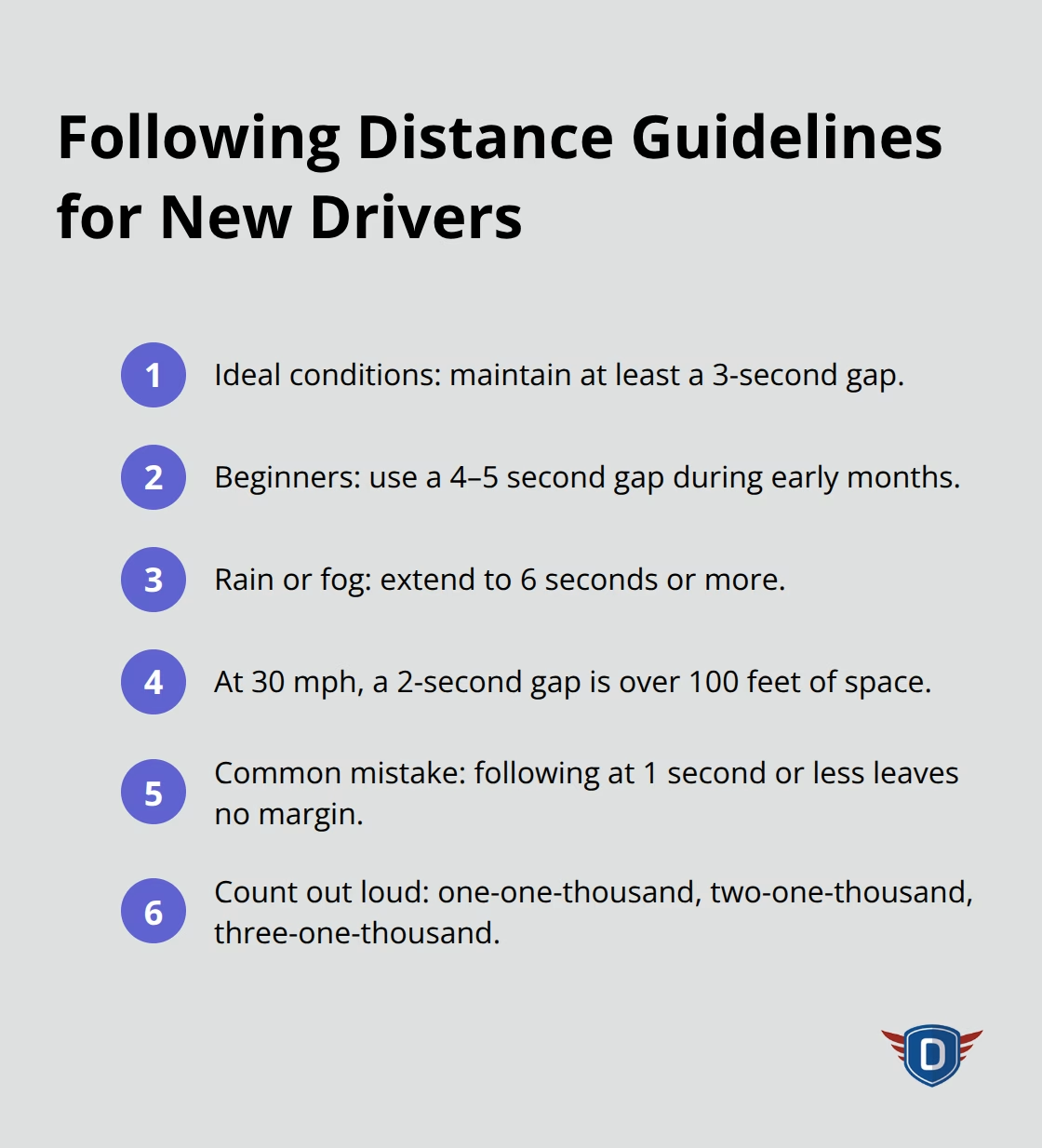
Rain and fog demand even longer distances-six seconds or more-because your tires grip the road less effectively and your visibility shrinks dramatically.
Final Thoughts
Your first behind the wheel practice determines whether driving becomes second nature or remains stressful. Start on quiet residential streets where traffic moves slowly and pedestrian activity stays minimal. These streets let you focus on fundamentals without the cognitive overload that busy intersections create, and you should spend your first 10 to 15 practice sessions exclusively in these low-pressure environments before you attempt busier roads.
Consistency matters far more than marathon sessions. Driving twice weekly for one hour builds muscle memory faster than one four-hour weekend drive, since your brain consolidates motor skills during rest periods between sessions. Try for at least three practice sessions per week during your first month, with each session targeting a specific focus like smooth acceleration and braking, turns and lane changes, or parking skills.
An experienced driver or professional instructor accelerates your development significantly by catching bad habits before they become automatic and providing real-time feedback that self-practice cannot match. At DriverEducators.com, our certified instructors work with new drivers to build confidence through personalized guidance tailored to your specific needs and pace, transforming your first behind the wheel practice from trial-and-error into structured skill development.