A DETS course in Florida isn’t optional if you’ve received certain traffic violations or suspensions. Getting the right information before enrolling in a DETS course can save you time, money, and frustration.
We at DriverEducators.com have created this guide to walk you through every step of the enrollment process. From understanding requirements to completing your course, you’ll find practical answers here.
What DETS Is and Who Needs It
Driver Education Traffic Safety (DETS) is a 6-hour course approved by the Florida Department of Highway Safety and Motor Vehicles (FLHSMV) that has replaced the older TLSAE program. As of August 1, 2025, anyone under 18 who has never held a driver license must complete DETS before applying for a Florida license. This is a hard requirement, not a suggestion. If you completed TLSAE before August 1, 2025, you remain grandfathered in for one year after your completion date, but if that year passes without you obtaining a license, DETS becomes mandatory. The only exceptions are drivers who already held a valid out-of-state license or those who had a Florida learner’s license before the August 1 cutoff.
Who Must Enroll in DETS
Florida law requires all drivers under 18 without a prior license to complete DETS before they can apply for their first license. The state implemented this requirement to standardize driver safety education across all new teen drivers. If you fall into this category, you cannot skip this step-no alternative exists unless you’re enrolled in an approved FDOE Traffic Safety Classroom course (1900300/1900310) or a DELAP course through your county school board. Verify with your local school board whether a DELAP course can substitute for DETS in your area.
How DETS Differs from Behind-the-Wheel Training
DETS focuses entirely on knowledge and decision-making, not practical driving skills. You won’t practice parallel parking or learn how to operate pedals in this course. Instead, you study Florida traffic laws, road signs, defensive driving strategies, DUI awareness, substance abuse prevention, night driving safety, and weather-related hazards. The course aligns with Florida Department of Education standards for Traffic Safety Classroom 1900300 and 1900310, meaning the content meets state educational benchmarks. This distinction matters because DETS prepares your mind for the road, while behind-the-wheel training develops your physical driving abilities-both are necessary for safe driving.
The Non-Negotiable 6-Hour Requirement
The 6-hour requirement is firm, and providers cannot compress or shorten it regardless of how quickly you work through the material. Florida law mandates this duration to ensure all students receive comprehensive coverage of safety topics. Some students complete the course faster than others, but the clock runs for the full 6 hours.
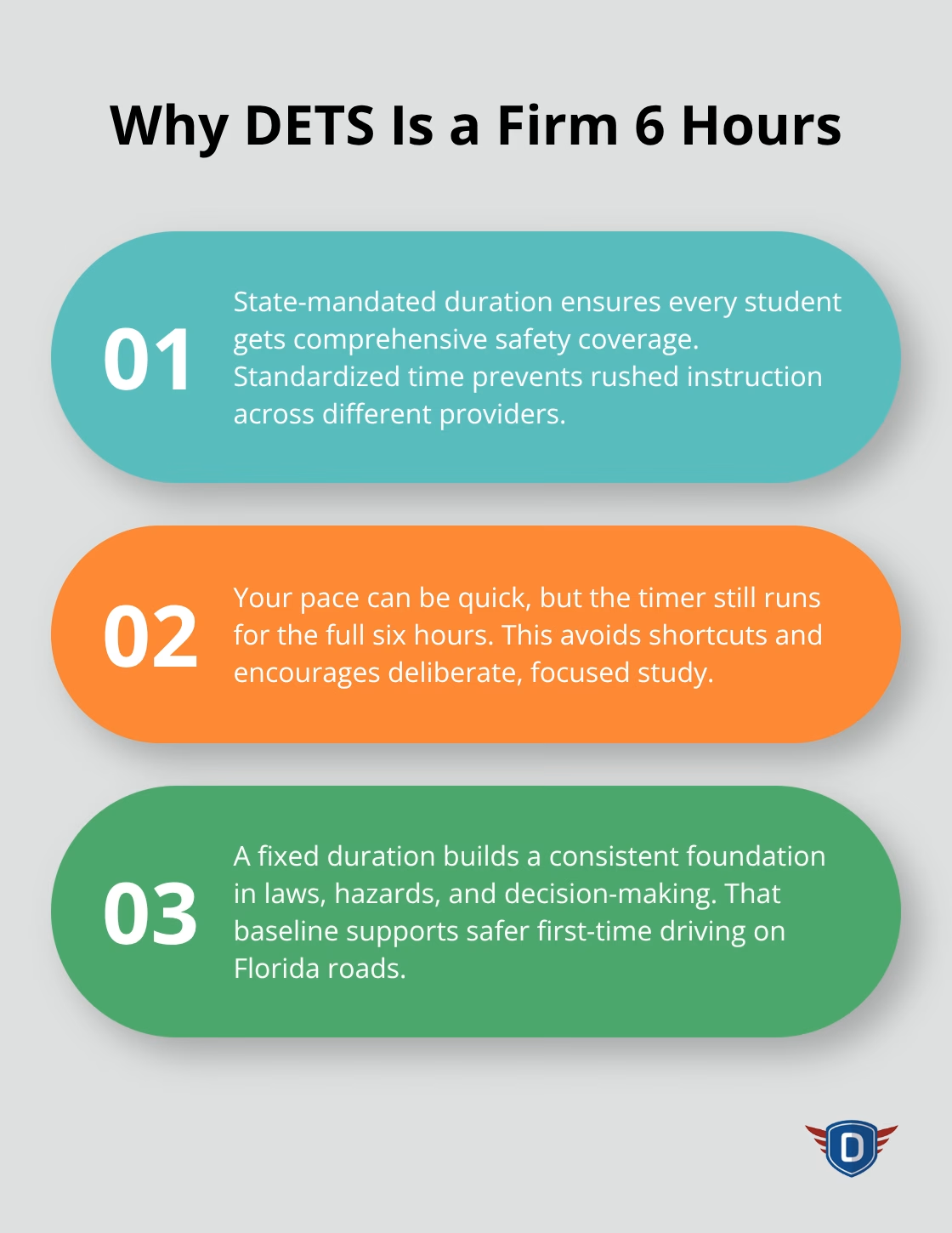
This standardization protects new drivers by guaranteeing they all receive the same depth of instruction before they hit the road.
Now that you understand what DETS is and why Florida requires it, the next step is figuring out how to enroll and what to expect during the process.
How to Enroll in a DETS Course
Select an Authorized Provider
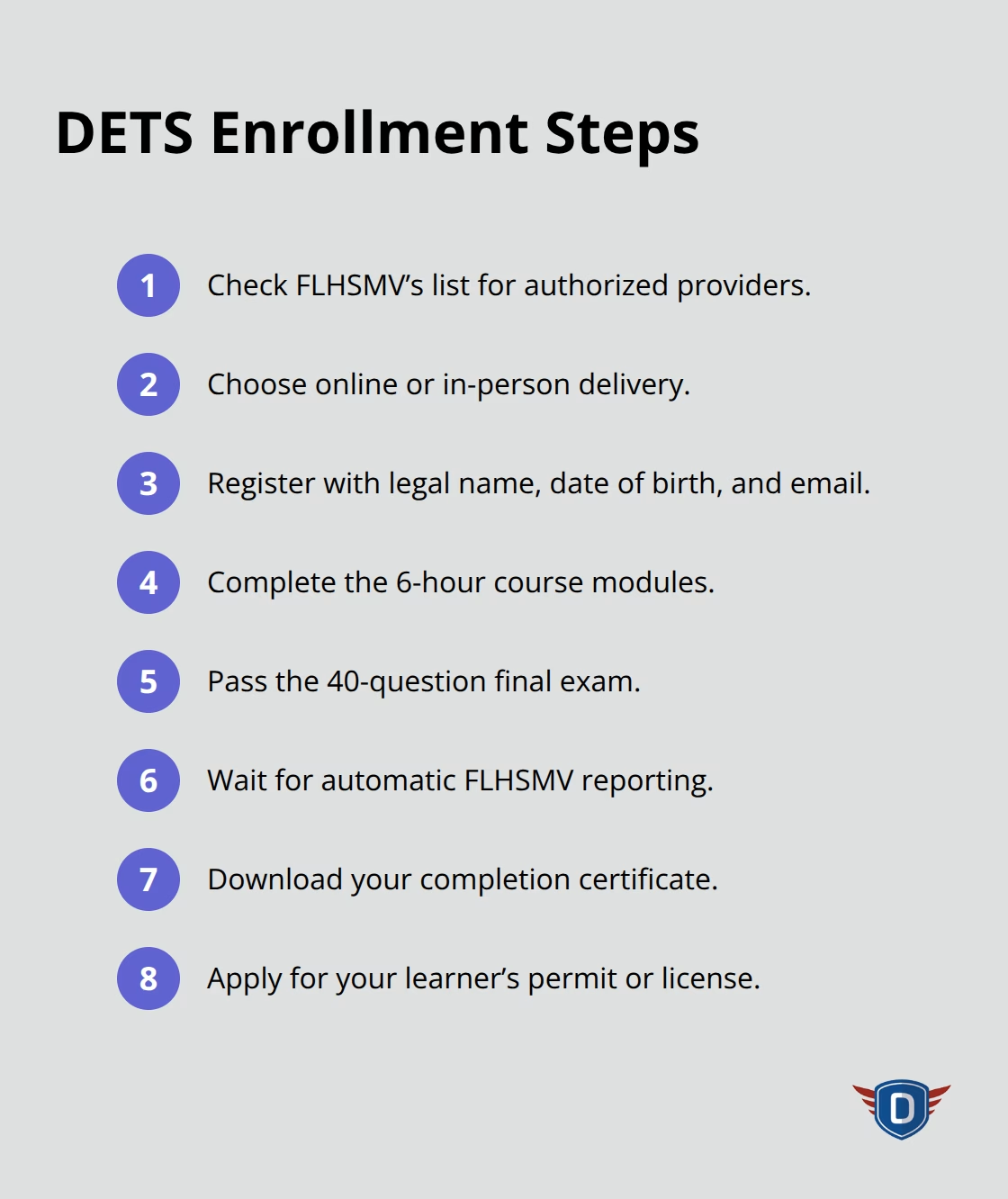
You must choose an authorized DETS provider from Florida’s official list on the FLHSMV website. Taking a course from an unauthorized provider means your completion won’t count toward your licensing requirement. Approved providers include DriverEducators.com, DriversEd.com (IASI), Metro Traffic School, American Safety Institute, Florida Virtual School (FLVS), Aceable, I Drive Safely, AAA Driver Training, and others. When you select a provider, verify whether they offer online or in-person delivery, since this affects your schedule flexibility. Online DETS courses are self-paced and accessible 24/7 on phones, tablets, or computers, while in-person courses require you to attend scheduled sessions at a physical location. Most new drivers choose online delivery because it eliminates travel time and lets them work through the 6 hours on their own timeline.
Complete Your Registration
You’ll need your full legal name, date of birth, and email address to register. These details must match the information on your permit application because the provider reports your completion electronically to the FLHSMV through the Driver Improvement Certificate Issuance System (DICIS). No paper certificates need to be mailed; the state verifies your completion automatically when you apply for your license.
Understand Costs and Payment
DETS courses typically cost between $15 and $32 for a standard 4-hour Basic Driver Improvement course. The FLHSMV charges a $3.00 certificate fee on top of the course price. Most providers accept credit cards, debit cards, and sometimes PayPal, though you should confirm accepted payment types when registering. After you complete all six hours and pass the final exam (40 multiple-choice questions with an 80% passing threshold), you receive a downloadable completion certificate instantly. Providers usually allow up to three attempts to pass the exam, so a single failure won’t derail your progress.
Timeline and Certificate Delivery
The entire enrollment-to-completion timeline typically takes 7 to 14 days if you work through the material consistently, though you can take longer since most providers don’t impose strict deadlines beyond state requirements. Once you finish, the provider automatically reports your completion to FLHSMV, and you can download your certificate for your records. When you apply for your learner’s permit or license at the DMV, the FLHSMV will electronically verify your DETS completion-you don’t need to present the certificate unless the examiner asks for it.
With enrollment complete and your course timeline set, you’re ready to understand what actually happens inside the classroom (whether virtual or physical) and what topics you’ll encounter.
Inside the DETS Course
How the Course Structure Works
The DETS experience unfolds through a structured online format that you control completely. When you log in, you’ll find the curriculum divided into modules covering specific topics: Florida traffic laws and road signs, defensive driving techniques, DUI awareness, substance abuse prevention, night driving safety, and weather-related hazards. Each module takes roughly 45 minutes to 90 minutes depending on how carefully you read and interact with the material. The course uses interactive video lessons, clear text with graphics, and short quizzes at the end of each section to reinforce what you learned.
Quiz and Practice Sections
These quizzes aren’t graded passes or failures; they’re designed to help you identify weak spots before the actual final exam. You can retake any quiz as many times as you need, and you’ll receive immediate feedback showing which answers you missed and why. The content emphasizes practical decision-making rather than memorization, so you’ll study real-world scenarios like handling sudden thunderstorms, aggressive drivers, and the heavy tourist traffic common in Florida.
Your Pace and Timeline
Most students work through modules at different speeds, which is why there’s no strict daily schedule. Some finish in a few days if they dedicate several hours each day, while others spread it across two or three weeks. The state doesn’t penalize slower completion as long as you finish within your provider’s timeframe (typically 30 to 90 days from enrollment). The entire process from enrollment to certificate takes 7 to 14 days if you work consistently, though you control the pace.
The Final Exam and Passing Requirements
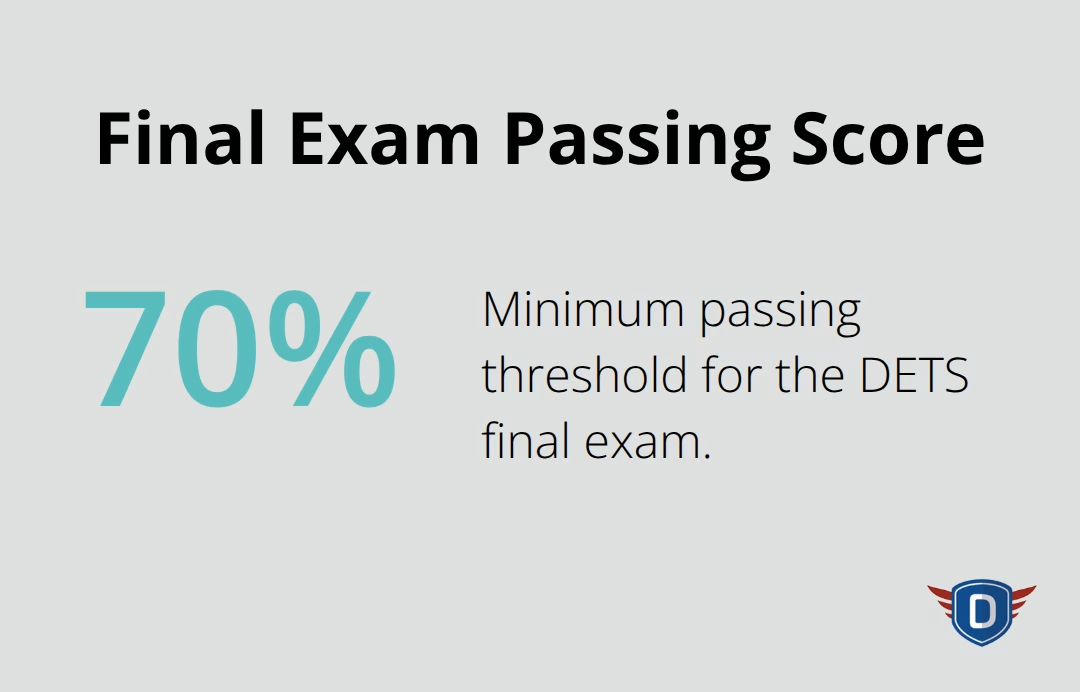
The final exam arrives after you complete all modules and consists of 40 multiple-choice questions with a passing threshold of 70% or higher. This means you need 28 correct answers to pass, and you get up to three attempts if your first try doesn’t work out.
The exam covers material directly from the modules, so if you paid attention during quizzes, you’ll recognize most questions. Once you pass, the provider automatically reports your completion to the FLHSMV through the Driver Improvement Certificate Issuance System (DICIS), and you receive a downloadable certificate immediately.
Certificate Verification and Identity Confirmation
When you apply for your learner’s permit or license at the DMV, the FLHSMV electronically verifies your DETS completion in their system, so you don’t need to carry the certificate unless an examiner specifically asks for it. The identity verification process ensures the person who enrolled is the person completing the course, protecting the integrity of the requirement and confirming you actually received the instruction Florida mandates.
Final Thoughts
Enrolling in a DETS course removes the main barrier between you and your Florida driver’s license. The process flows smoothly: you select an authorized provider, register with your basic information, work through six hours of instruction at your own pace, pass the 40-question final exam, and the FLHSMV verifies your completion automatically. No paperwork arrives in the mail, and no follow-up calls are necessary-the state handles everything electronically.
The real value of DETS extends far beyond satisfying a state requirement. The curriculum teaches defensive driving strategies, hazard recognition, and decision-making skills that directly reduce your crash risk on Florida roads. You learn how to handle sudden thunderstorms, aggressive drivers, and heavy tourist traffic-situations you’ll face on actual roads, not hypothetical scenarios. The course content aligns with Florida Department of Education standards, meaning every topic serves a practical purpose in keeping you safe.
After you complete your course and receive your certificate, your next step is applying for your learner’s permit at the DMV. Bring your completion certificate or provide your name so the examiner can verify your DETS completion in the FLHSMV system. We at DriverEducators.com offer Florida-approved DETS courses designed to help you master the knowledge you need for safe driving.