You’re standing at the mailbox in Florida, holding a traffic citation that feels heavier than a single sheet of paper. You scan the violation, then the questions arrive all at once. How many points will it add? Will your insurance go up? Should you pay, contest the ticket, or choose traffic school?
The answer depends on the violation, your recent driving history, the date of conviction, and whether you’re eligible to elect a course. Florida’s system is designed to respond quickly when violations cluster, but an eligible driver may be able to prevent points from being added through an approved course.
If you’ve just received a citation, start by reviewing the court information and learning about your Florida traffic ticket options. Then use the guide below to understand the point tiers, suspension windows, insurance consequences, course choices, and the limits that now apply to traffic school.
The Moment a Florida Ticket Lands in Your Hand
Maria gets home after work, opens the mailbox, and finds a stiff white envelope among the usual advertisements. The printed citation inside lists the location, the alleged violation, and a deadline. She reads the line twice, but the document doesn’t answer the question bothering her most: what happens to her license now?
She remembers hearing that some violations carry three points, while others carry four or six. And she wonders whether paying the fine automatically means accepting points. Also she knows a friend once took traffic school, but she isn’t sure whether that option is still available, whether the course has to be completed before payment, or whether the points can be removed later.
That moment creates a dangerous temptation. A driver may pay immediately just to make the problem disappear, then discover that the payment affected the case in a way they didn’t expect. Another driver may ignore the citation while trying to decide, allowing the court deadline to become the bigger problem.
Practical rule: Don’t treat the citation as a bill alone. Treat it as a decision document that may affect your driving record, insurance risk, and eligibility for a course.
Florida assigns points after an adjudication of guilt, and the number depends on the violation’s seriousness. Points remain on the driving record for at least five years from the conviction date, according to the Florida Highway Safety and Motor Vehicles point-system guidance. That means the date printed on the citation isn’t the only date that matters.
The practical next step is to identify the violation, check the response deadline, and ask the clerk of court whether you can elect traffic school. The following rules make that conversation much clearer.
How Florida Assigns Points by Violation Type
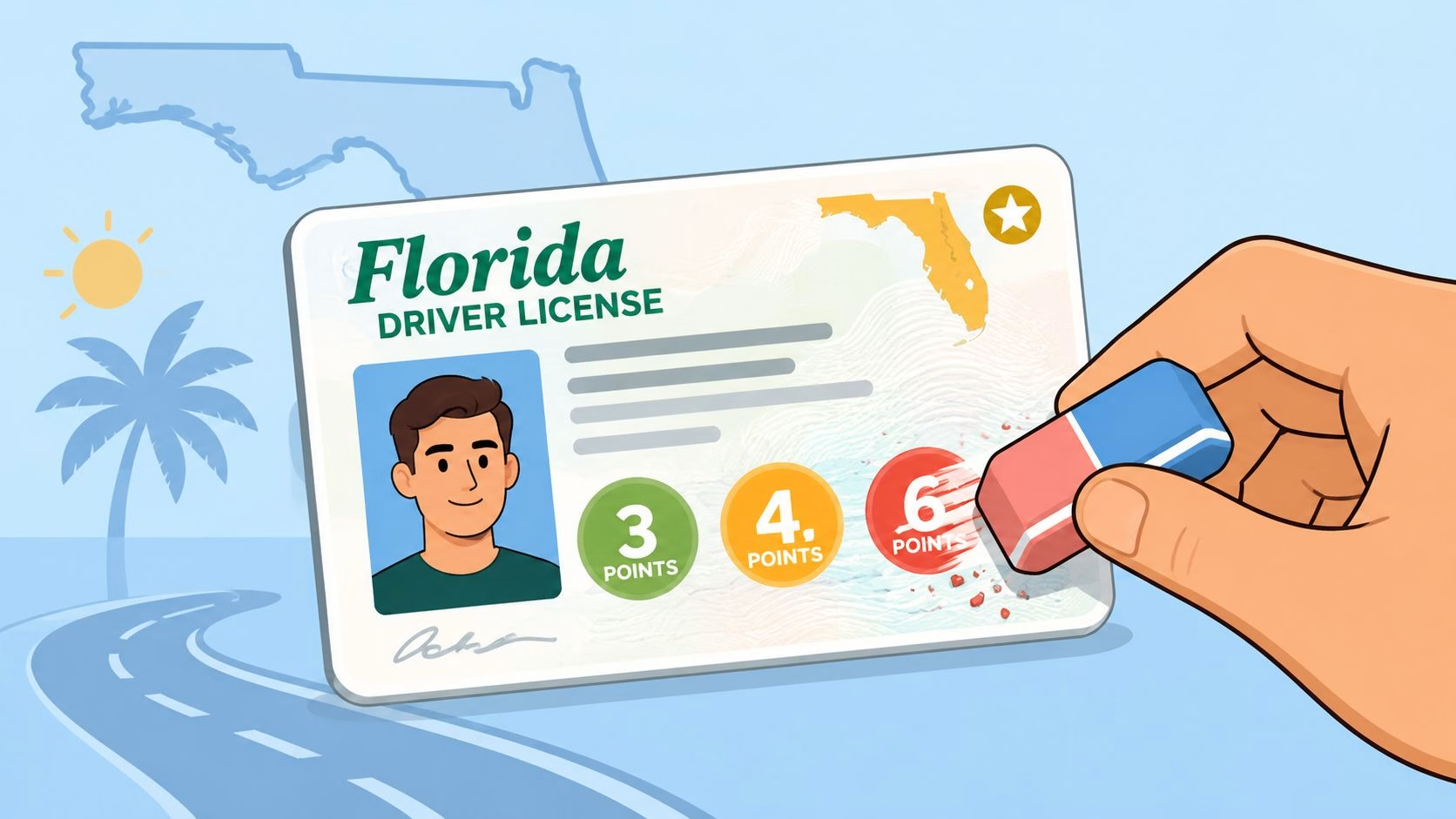
Think of Florida’s point system as a risk ladder. A three-point violation is the lower rung for many ordinary moving violations. A four-point violation signals more serious conduct, while a six-point violation usually involves a crash, leaving the scene, or another high-risk outcome.
The speed comparison helps make the difference intuitive. Speeding 15 mph or less over the limit carries three points. Speeding more than 15 mph over the limit carries four points. The jump isn’t just about the number on the speedometer. It reflects how Florida treats increasing speed and risk.
The three point buckets
Florida’s official framework includes common moving violations such as careless driving, following too closely, running a stop sign, and many routine speeding violations in the three-point category. The same category can include a standard moving violation that doesn’t involve a crash.
Four points apply to speeding more than 15 mph over the limit, reckless driving, failing to obey traffic-control signals, and passing a stopped school bus. A moving violation that causes a crash can also carry four points.
Six points represent the highest tier described here. Florida assigns six points for an unlawful-speed crash and for leaving the scene of a crash with damage. The state’s administrative guidance also treats crash-related conduct as especially serious because the behavior or outcome creates greater licensing exposure.
| Point Value | Severity Tier | Common Violations | Example |
|---|---|---|---|
| 3 points | Routine moving violation | Careless driving, following too closely, running a stop sign, speeding 15 mph or less over the limit | A driver rolls through a stop sign without a crash |
| 4 points | Higher-risk violation | Speeding more than 15 mph over the limit, reckless driving, failing to obey a traffic-control signal, passing a stopped school bus | A driver travels well beyond the posted limit |
| 6 points | Serious crash-related violation | Unlawful-speed crash, leaving the scene of a crash with damage | A driver leaves after a crash involving property damage |
The point table is a starting point, not a complete legal analysis. Violations outside the relevant Florida traffic-law chapters can carry different consequences, and an out-of-state citation may still be reported to Florida and affect the driver’s record.
For a practical explanation of how tickets translate into record consequences, review this Florida traffic ticket point system guide. Before paying or choosing a course, confirm the exact violation and whether it’s eligible for the option you’re considering.
Rolling Suspension Windows and How They Stack
Florida doesn’t use one permanent lifetime score that automatically suspends a license. It uses overlapping time windows, similar to several clocks running at once.
The shortest clock looks back 12 months. The next looks back 18 months, and the longest looks back 36 months. Each clock measures the points accumulated inside its own period, so a driver can be below one threshold while approaching another.
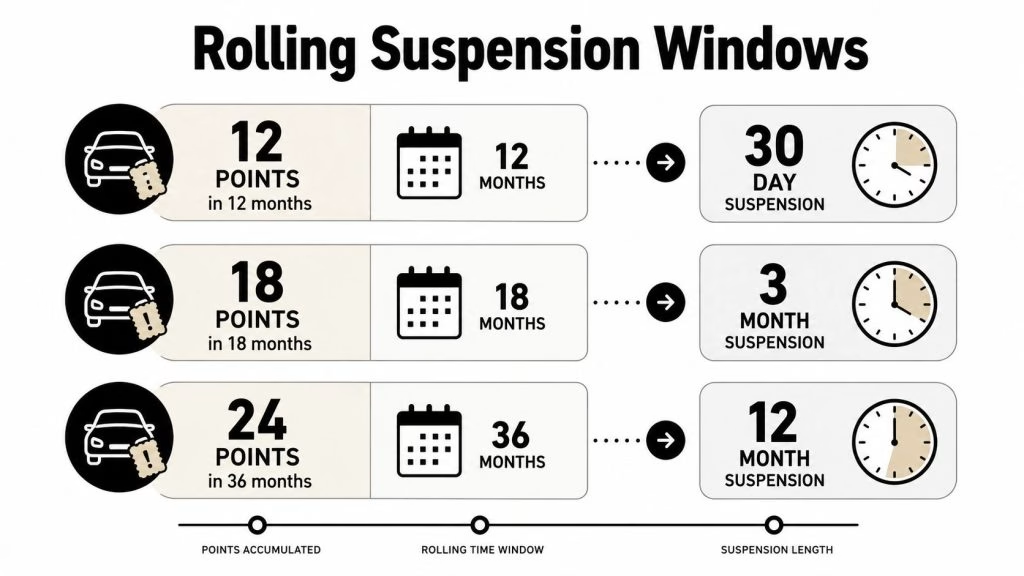
Florida’s thresholds are:
- 12 points in 12 months, a 30-day suspension.
- 18 points in 18 months, a three-month suspension.
- 24 points in 36 months, a one-year suspension.
A driver who receives several citations within six months may reach a suspension threshold quickly. Another driver with the same general pattern of violations, but spread across a longer period, may avoid the shortest window while still needing to watch the longer one.
The conviction date, rather than the citation date, drives the point timeline. That’s why a ticket’s response strategy matters before the court records an adjudication. The state’s Florida Statutes framework for driver suspensions authorizes suspension when the record reaches the applicable point level.
A driver facing a proposed suspension generally has a right to request a hearing. If the driver properly elects an eligible traffic-school option before conviction, the course process can prevent the points from being assessed for that citation, but the court or clerk must confirm the exact procedure and deadline.
Remember: A course election isn’t a substitute for responding to the citation. The election, enrollment, completion, and reporting steps all have to line up.
What Driving Points Really Cost You in Insurance
The Florida Department of Highway Safety and Motor Vehicles tracks points for licensing purposes. Insurers make their own underwriting decisions, and they may evaluate the underlying moving violation separately from the point total.
That distinction matters. A course may prevent points from being added, but it doesn’t automatically guarantee that every insurer will treat the citation as if it never existed. Before enrolling, ask the court and your insurer what documentation they require.
A driver who pays a citation without considering available options may create a record event that affects future quotes. The impact can vary by insurer, policy, driving history, and the nature of the violation, so no fixed premium increase should be assumed.
| Violation Type | Typical Surcharge | Added Annual Cost | Approx. Surcharge Duration |
|---|---|---|---|
| Routine moving violation | Varies by insurer and policy | Varies by insurer and policy | Depends on underwriting rules |
| Higher-risk moving violation | Often greater than a routine violation | Depends on the policy | Depends on underwriting rules |
| Crash-related violation | May receive heightened underwriting attention | Depends on the policy | Depends on underwriting rules |
The sensible financial comparison isn’t a made-up premium estimate. It’s the cost of acting early versus the uncertain cost of allowing a citation to affect your record and future insurance decisions.
A qualifying course can be useful because it addresses the licensing side before points are assessed. The Florida points and insurance explanation can help you understand why point prevention and insurance treatment are related but separate questions.
Contact your insurer if you’re seeking a discount or trying to understand a surcharge. A course can support a safer-record strategy, but only the insurer can explain how it will apply to your policy.
Approved Florida Courses That Can Keep Points Off Your Record
The right course depends on why you’re taking it. A driver responding to a non-criminal moving citation needs a different program from someone dealing with a suspension, an aggressive-driving requirement, or an insurance-discount request.
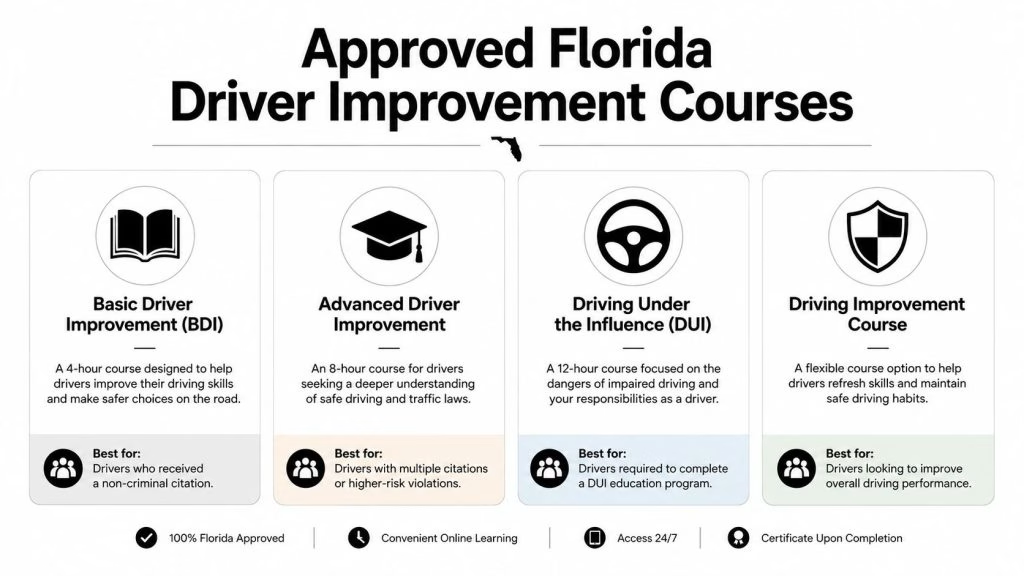
Florida recognizes several driver-improvement formats. Course length and purpose matter, so don’t enroll based only on a familiar course name.
Basic Driver Improvement
The Basic Driver Improvement, or BDI, course is four hours. It’s intended for a non-commercial driver with an eligible non-criminal moving violation who wants to elect traffic school and prevent points from being assessed for that citation.
The practical outcome is point prevention for the eligible citation, not the removal of unrelated points already on the record. The driver must complete the course and satisfy the court’s reporting requirements.
Intermediate Driver Improvement
The Intermediate Driver Improvement, or IDI, course is eight hours. It’s associated with court-directed or more advanced driver-improvement needs, including situations involving a driver who has reached a suspension-related point level.
Because eligibility can depend on the specific order or administrative action, read the notice carefully and confirm the required course with the court or FLHSMV.
Aggressive or advanced improvement
Florida also uses longer-format aggressive-driver and advanced-improvement courses for more serious or court-directed situations. These programs focus on behavior, judgment, and the risks created by aggressive or repeated unsafe driving.
The exact course assigned depends on the conviction or order. Don’t assume a BDI course satisfies an aggressive-driver requirement.
Mature Driver Course
The Mature Driver Course is six hours and is designed for drivers aged 55 and older. It may help an eligible driver seek an insurance discount, but it doesn’t dismiss points from a moving violation.
This distinction prevents a common mistake. A course can improve knowledge or support an insurance request without serving as a point-dismissal election.
Before registering, compare the citation, court order, license type, and course purpose. The approved online traffic school options can help you identify a program that matches your situation, while the official FLHSMV directory remains the place to confirm approval.
The New Limits on How Often You Can Use Traffic School
Florida drivers can’t assume traffic school is an unlimited reset button. Effective July 1, 2024, Florida limited traffic-school elections to once in a 12-month period and no more than eight lifetime elections, as explained in the state’s driving-record questions and answers.
Those are separate limits. A driver might have lifetime elections remaining but still be ineligible because another course was elected within the previous 12 months.
Consider a driver who elected BDI in 2022, 2023, 2025, and 2026. That driver has used four of eight lifetime elections and must wait until 2027 before making another election under the 12-month rule.
The lifetime count doesn’t disappear with time. Each qualifying election becomes part of the driver’s record, so traffic school should be treated as a limited resource rather than an automatic response to every citation.
The limits apply to the court-ordered point-dismissal pathway. A driver may still choose a defensive-driving course voluntarily for education or to ask an insurer about a possible discount, but that voluntary course isn’t the same as electing traffic school to prevent points on a pending citation.
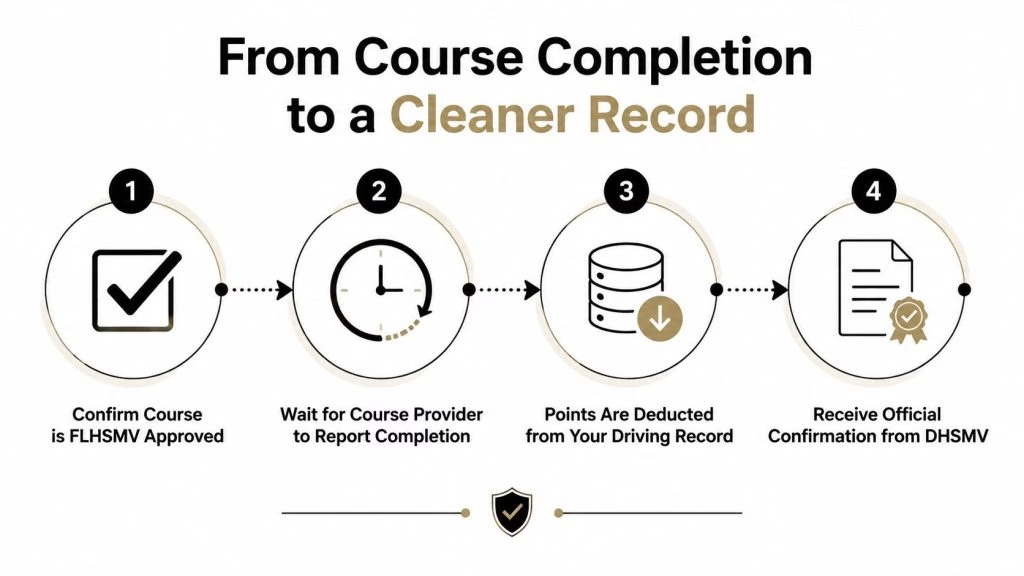
From Course Completion to a Cleaner Driving Record
Finishing a course is important, but the record changes only when the election, course, and reporting steps are handled correctly.
-
Confirm the election first. Ask the clerk of court whether the citation qualifies and whether you must formally elect traffic school before enrolling. A voluntary course taken without the required election may not prevent points.
-
Choose an approved provider. Register with the correct license information and select the course required for your citation or court order. Don’t choose an advanced or mature-driver program when the court requires BDI, and don’t assume BDI satisfies a suspension-related order.
-
Complete every course requirement. Work through the lessons, module quizzes, and final exam. Keep your completion information and follow any instructions given by the provider or clerk.
-
Confirm reporting. The provider issues the certificate electronically and reports completion to FLHSMV, with court reporting handled as required for the citation. Processing times can vary, so don’t assume the case is finished merely because you reached the final screen.
-
Check the official record. Review your Florida driving record after completion. If the citation still appears with points after a reasonable processing period, contact the course provider and the clerk of court, then ask FLHSMV what documentation is needed.
A course doesn’t erase the underlying fine or court costs. You still owe the amount required by the citation or court, even when the eligible point consequence is prevented.
Your Short Checklist Before You Sign Up
Use this checklist before entering payment information or beginning lessons:
- Check the violation: Confirm that the citation is eligible for BDI and isn’t a criminal or criminal-traffic offense.
- Check the recent course history: Confirm you haven’t elected an approved course within the past 12 months, based on the current record.
- Check the lifetime count: Confirm you haven’t reached eight lifetime course elections under the current limit.
- Check the deadline: If you’re choosing voluntary traffic school, confirm that you’re still within the 30-day election window set for your situation.
- Check provider approval: Verify that the school appears in the FLHSMV-approved provider directory.
- Check the financial obligation: Remember that completing a course doesn’t erase the citation fine or court costs.
If the answers line up, choose the course that matches the citation rather than the course with the most familiar name. Review the available BDISchool course catalog and compare the program details before you enroll.
BDISchool offers Florida-approved online driver-improvement courses for eligible citation, court, and insurance-related needs, including BDI and other program formats. Visit BDISchool to match your situation with the correct course, complete the required lessons, and take the next step toward protecting your driving record.