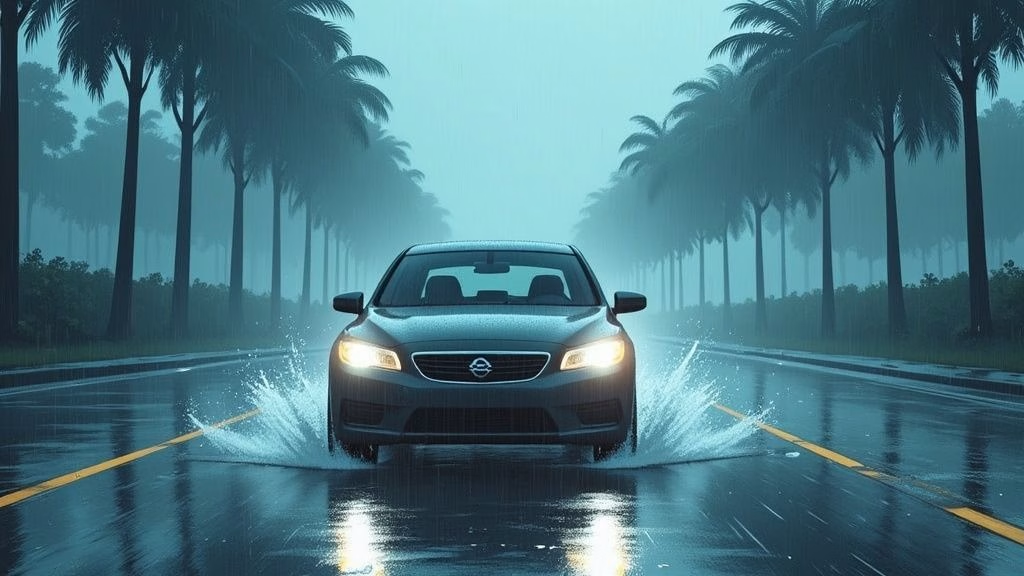
Driving in the rain here in Florida is something else entirely. It’s not just a minor hassle; it’s a completely different driving environment that demands your full attention. The single most dangerous time? The first ten minutes of a storm. That’s when all the oil and grime built up on the asphalt turns into a slick, greasy film. Getting a handle on this and other local quirks is the first real step to staying safe when the skies open up.
Understanding Florida’s Unique Rain Hazards

It’s easy to get complacent. One minute you’re driving in brilliant sunshine, and the next, you’re in the middle of a torrential downpour with almost no visibility. Too many drivers just don’t adjust for how serious that change is.
But the numbers don’t lie. Even a light drizzle is enough to dramatically increase the danger. One study looked at over 193,000 fatal crashes and found that the risk of a deadly accident jumps by 34% during any kind of rain. Even a light sprinkle increases that risk by 26%. This isn’t just about slippery roads; it’s a fundamental shift in risk.
The Treacherous First Ten Minutes
Picture the asphalt after a long, hot, dry spell typical for Florida. It’s caked with oil, grease, and fluids from thousands of cars. When the rain finally starts, it mixes with all that gunk before it has a chance to wash away.
The result is an incredibly slick, almost invisible layer on the road. During these first few moments, your tires have far less grip than they will an hour into the storm. This is the critical window when traction is at its absolute worst, and you have to be extra cautious.
From Sunny Skies to Zero Visibility
We’ve all seen it on I-4 or the Turnpike. A sudden, violent afternoon storm blows in out of nowhere. You go from cruising along under a clear blue sky to being pounded by rain so heavy it feels like you’re in a car wash. Visibility can drop to near zero in a heartbeat.
This rapid change is what catches so many drivers off guard. There’s this mental trap where people keep driving at highway speeds, completely underestimating how little they can see and how much longer it will take to react. It’s exactly why mastering driving safety during severe weather in Florida is an essential skill, not an optional one.
You have to switch from being a passive commuter to an active defender. Your best tool is anticipating the hazards—the initial slickness, the sudden loss of sight. The goal isn’t just to get through the rain; it’s to actively manage every risk it throws at you.
This kind of clear-eyed view of the dangers is the foundation for everything else we’ll cover. Once you truly respect the unique challenges of a Florida downpour, you can start building the skills to navigate it safely.
Prepping Your Car for a Florida Downpour
The secret to driving safely in a Florida downpour starts long before the first drop of rain hits your windshield. Getting your car ready isn’t just a chore; it’s your first and best defense against treacherous roads. Think of it this way: your vehicle’s condition can be the one thing that separates a routine drive from a full-blown emergency.
When the road gets slick, it all comes down to the four small patches of rubber keeping you connected to the pavement. Your tires are your number one tool for fighting hydroplaning, but they can only do their job if they have enough tread. Worn-out tires can’t properly push water away, which can lead to your car literally floating on a thin layer of water—a terrifying and dangerous situation.
Your Tires Are Your First Priority
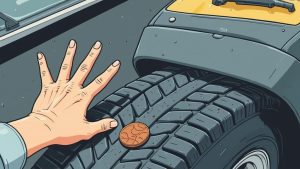
You don’t need to be a mechanic or have fancy equipment to check your tire tread. The classic penny test still works like a charm.
Just grab a penny and stick it into a tread groove with Lincoln’s head facing down. If you can see the top of his head, your tread is dangerously low—below the legal minimum of 2/32 of an inch. That’s your sign to get a new set of tires, pronto.
Tread depth is only half the battle, though. Tire pressure is just as crucial. When your tires are underinflated, they can’t hold their shape, which means less rubber is making solid contact with the road. This seriously compromises your grip. Before the rainy season kicks into high gear, make it a habit to maintain correct tire pressure.
A well-maintained tire is your primary defense mechanism in wet conditions. Proper tread depth and inflation work together to push water away from the tire, ensuring maximum grip and significantly reducing your risk of hydroplaning.
Don’t Overlook Your Wipers and Defroster
When the sky opens up, seeing clearly is non-negotiable. The brutal Florida sun bakes the rubber on windshield wipers, causing them to wear out faster than you might think. Don’t wait for a blinding storm to find out yours are shot.
Keep an eye out for these tell-tale signs that your wipers are failing:
- Streaking: They leave behind lines or sheets of water that obscure your vision.
- Skipping: The blade isn’t making smooth contact, instead chattering and bouncing across the glass.
- Squeaking: That awful noise is a clear indicator that the rubber is old, hard, and ineffective.
Finally, give your defroster a quick check. On a humid, rainy day, the inside of your windshield can fog up in seconds after you get in the car. You need your A/C and defroster to blow strong, clear air to get rid of that condensation immediately. Staying on top of these simple checks is a core part of good Florida vehicle maintenance and will keep you prepared for whatever the weather throws at you.
Mastering the Road When It’s Raining

The moment the first drops hit your windshield, your entire approach to driving needs a reset. This isn’t the time for autopilot. Getting home safely in a Florida downpour hinges on making a few simple, but critical, adjustments to how you handle your car. It’s all about creating a buffer of time and space to deal with a road that’s suddenly become far less predictable.
The single biggest change you need to make? Back off. That standard three-second following distance for dry pavement is completely inadequate. When driving in the rain, you have to double that to at least six seconds. This space is your best friend—it’s the reaction time you’ll desperately need if the car in front of you slams on its brakes.
Smooth and Steady Control Is Key
Slick roads have zero tolerance for surprises. Every move you make—steering, braking, accelerating—has to be intentional and gentle. I tell my students to drive like there’s a cup of hot coffee on the dashboard you’re trying not to spill.
Any abrupt action, like jerking the wheel or stomping on the brake pedal, can instantly break the fragile grip your tires have on the wet asphalt. That’s how skids start. This is especially true when you’re taking a curve or trying to merge onto a highway where everyone is kicking up a wall of spray. Plan your moves and execute them with a calm, steady hand.
See and Be Seen
Visibility in a downpour is a two-way street. It’s not just about what you can see, but making sure other drivers can see you. That’s why your low-beam headlights are your most important tool, even in broad daylight. Daytime running lights just don’t cut it—they don’t turn on your taillights, which makes you a ghost from behind.
This is so crucial that Florida has a “wipers on, lights on” law. It’s a dead-simple rule of thumb that makes you stand out in the grey gloom and spray, and it could be the one thing that prevents someone from rear-ending you.
Navigating a flooded intersection or merging onto a slick highway demands more than just skill—it requires a fundamental shift in your driving mindset. Slowing down, increasing following distance, and ensuring you are visible are not just suggestions; they are the core principles of proactive, defensive driving in the rain.
It’s always better to be proactive than reactive. Many drivers underestimate just how dangerous wet roads are. A study looking at over 125,000 fatal crashes revealed that even light rain boosts the risk of a fatal accident by 27%. In heavy rain? That risk shoots up by an unbelievable 250%. You can explore more data on how precipitation impacts traffic fatalities to really grasp the seriousness of these conditions. These simple techniques are your absolute best defense.
What to Do When You Hydroplane or Skid
It’s one of the most terrifying feelings you can have behind the wheel. One moment, you’re cruising along, and the next, your steering feels light and disconnected. Your car is no longer responding. That’s hydroplaning, and it’s a classic Florida driving hazard.
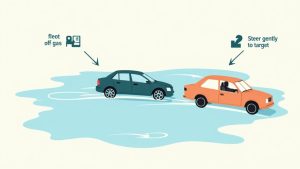
Hydroplaning happens when a thin layer of water gets trapped between your tires and the asphalt, causing you to lose all traction. In that instant, your car is basically a boat. Your gut reaction might be to slam on the brakes or yank the wheel, but that’s the absolute worst thing you can do. It’s a sure-fire way to turn a scary moment into a full-blown accident.
Staying calm is easier said than done, but it’s the key to getting your tires back in contact with the road.
Recovering From a Hydroplane
The second you feel that floating sensation, your actions need to be deliberate and smooth. Don’t panic. Just focus on these critical moves to get your car back under control.
- Take your foot off the gas pedal. Immediately. Don’t even think about the accelerator. Let the car’s natural drag slow it down. This shifts the weight forward, helping the tires push through the water and find the pavement again.
- Keep your hands off the brakes. This is the golden rule. Hitting the brakes will likely lock your wheels, upsetting the car’s balance and sending you into an uncontrollable spin. For more on handling equipment emergencies, our guide on what to do when brakes fail has some great tips.
- Steer gently toward where you want to go. Hold the steering wheel steady and look down the road in the direction you intend to travel. Make only small, smooth adjustments. Any sharp, jerky movements will just make things worse.
Remember this simple phrase: Off the gas, off the brakes, steer straight. Burn it into your brain. Repeating it can help override that natural instinct to stomp the brake pedal when panic sets in.
Correcting a Skid
A skid is a bit different. This is when your rear wheels lose their grip and the back of your car starts to swing out to one side. It can happen on any slick surface, especially when cornering or making a sudden lane change. The recovery is similar to hydroplaning but requires a very specific steering response.
You need to look and steer in the direction you want the car to go—which is the same direction the rear of the car is sliding. We call this “steering into the skid.” So, if the back of your car fishtails to the right, you gently turn the steering wheel to the right.
As you feel the car start to straighten out, you’ll need to smoothly counter-steer back toward the center to keep from overcorrecting. Just like with hydroplaning, every move—from your feet to your hands—has to be calm and measured.
Even with the best skills, accidents can happen. If a skid or hydroplane leads to a collision, knowing what to do next is crucial. You can learn more about how to file an auto insurance claim to make sure you’re prepared for the aftermath. These are maneuvers you hope you never have to use, but knowing them can be the difference between a close call and a serious crash.
Turn Safe Habits into Driving Instincts
It’s one thing to read about safe driving, but it’s another thing entirely to react correctly when your car starts sliding on a wet road. The real goal here is to turn conscious effort into pure muscle memory. That’s how you truly master driving in the rain.
When you feel that terrifying float of hydroplaning, you won’t have time to google what to do. Your reaction has to be instant and right. A proper defensive driving course drills these emergency maneuvers over and over until they become second nature—the instinct to ease off the gas, not slam on the brakes.
From Knowledge to Automatic Response
Good training takes complex situations and breaks them down so you can practice the right response. You learn to spot subtle dangers in low visibility long before they become an emergency, a key skill for surviving a classic Florida downpour.
A course hammers home the fundamentals you need for wet roads:
- Space Management: It’s not just about memorizing the six-second rule. It’s about conditioning yourself to see that gap as an absolute necessity, making it as automatic as putting on your seatbelt.
- Smooth Control: You practice gentle braking, smooth acceleration, and calm steering. This trains your hands and feet to avoid the herky-jerky movements that cause skids on slick asphalt.
- Emergency Drills: The curriculum constantly reviews the right way to handle skids and hydroplaning. This repetition builds a calm, correct response, pushing aside the panic that causes so many mistakes.
Think of it like a fire drill. You don’t just hope you remember the escape route when you see smoke. You practice it until it’s automatic. A defensive driving course is the fire drill for the road.
When you start seeing this training as professional development for a critical life skill—not a punishment—your entire mindset shifts. It gives you the confidence to handle whatever storm the Florida skies throw at you.
By understanding what causes most car accidents, you see exactly how these ingrained habits keep you safe. The ultimate goal is to make safety an instinct, not just another thing to remember when the clouds roll in.
Common Questions About Driving in the Rain
Even with the best preparation, tricky situations pop up when you’re driving through a Florida downpour. Let’s go over a few of the most common questions I hear from drivers, because knowing the right answer when you’re behind the wheel can make all the difference.
Getting these specific scenarios straight in your head is the final piece of the puzzle, helping you build the confidence to handle whatever the storm throws at you.
Should I Use Cruise Control When Driving in the Rain?
Absolutely not. Think of this as a hard and fast rule: if the road is wet, cruise control is off.
Your car’s cruise control is a fantastic tool for long, dry highway stretches, but it’s dangerously simple-minded. Its only job is to maintain a constant speed, and it has no way of knowing it’s on a slick, watery surface instead of dry asphalt.
If your tires hit a puddle and begin to hydroplane, the cruise control will keep trying to accelerate to maintain your set speed. This just makes the hydroplane worse, spinning the wheels faster and sending you into a dangerous loss of control. You need to be the one in charge, ready to lift your foot off the gas in an instant. The moment the rain starts, make it a habit to switch it off completely.
My Windshield Is Fogging Up Fast—What Do I Do?
It’s a classic Florida problem: one minute you can see fine, the next your windshield is a milky white blur. This happens when the warm, muggy air inside your car hits the cool, rain-chilled glass. Don’t panic; your climate control system is built for this.
Here’s the quickest way to clear it up:
- Hit the front defroster button and crank the fan up high.
- Turn on your air conditioner (A/C). This is the secret weapon. Your A/C is a powerful dehumidifier, and it will pull that moisture out of the cabin air incredibly fast.
- Make sure your system is set to pull in fresh air from the outside, not recirculate the humid air already inside the car.
This trio will have your windshield clear in seconds. While cracking a window might help a little, it’s no match for the speed and power of your defroster and A/C working together.
Is It a Law to Use Headlights in the Rain in Florida?
Yes, it is, and the rule is simple to remember: wipers on, lights on.
Florida law is crystal clear. Any time you need your windshield wipers for rain, smoke, or fog, your vehicle’s low-beam headlights must be on. This isn’t just about helping you see what’s ahead; it’s about making sure other drivers can see you. Your daytime running lights aren’t enough—they don’t activate your taillights, which makes you practically invisible from behind in the heavy spray and gloom of a storm.
The “wipers on, lights on” rule isn’t just about avoiding a ticket—it’s a core principle of defensive driving. It cuts through the gray murk of a storm and dramatically increases your visibility to others, significantly lowering the risk of a collision.
When Is It Too Dangerous to Keep Driving in Heavy Rain?
Sometimes, the smartest move you can make is to stop driving. Trust your gut. If a storm gets so bad that you can’t see the lane markers or the taillights of the car ahead, it’s time to find a safe place to pull over.
When the rain is coming down so hard that traffic on I-95 or the Turnpike slows to a crawl, that’s your sign that conditions are too dangerous. Look for a safe haven like a rest area, a gas station, or a well-lit shopping center parking lot to wait it out.
Whatever you do, avoid stopping on the shoulder of the highway unless it’s a true emergency. Sitting on the shoulder in low visibility is incredibly dangerous, as you’re a sitting duck for another driver who might lose control. If you have absolutely no other choice, get as far to the right as possible and turn on your emergency flashers immediately.
The skills you need for driving in the rain are the very foundation of defensive driving. Mastering them turns stressful moments into controlled, automatic responses. At BDISchool, our state-approved online course is designed to reinforce these life-saving habits, making you a safer, more confident driver. Enroll today and turn your knowledge into instinct at https://bdischool.com.