Driver safety posters are everywhere-on highways, in parking lots, at driving schools. Yet most drivers barely notice them.
At DriverEducators.com, we’ve seen firsthand that the most effective posters do more than catch your eye. They change how people drive.
What Makes a Driver Safety Poster Actually Work
Effective driver safety posters succeed because they strip away everything unnecessary and focus on one behavior change. Nielsen Norman Group’s design guidelines show that a single, clear, actionable message dramatically improves recall and behavior. Posters crammed with multiple warnings about speeding, phone use, and fatigue dilute their impact. The strongest posters focus on one specific action-buckle up, don’t text, designate a driver-and hammer that message home with visuals and text that work together, not against each other.
Design that stops drivers in their tracks
High contrast and large typography are non-negotiable. Test your poster design from 10 to 15 feet away, the distance at which most drivers will encounter it. If you can’t read the core message from that distance, redesign it. Use colors that create visual separation between the background and text; avoid subtle gradients or muted palettes that disappear on highway signage.
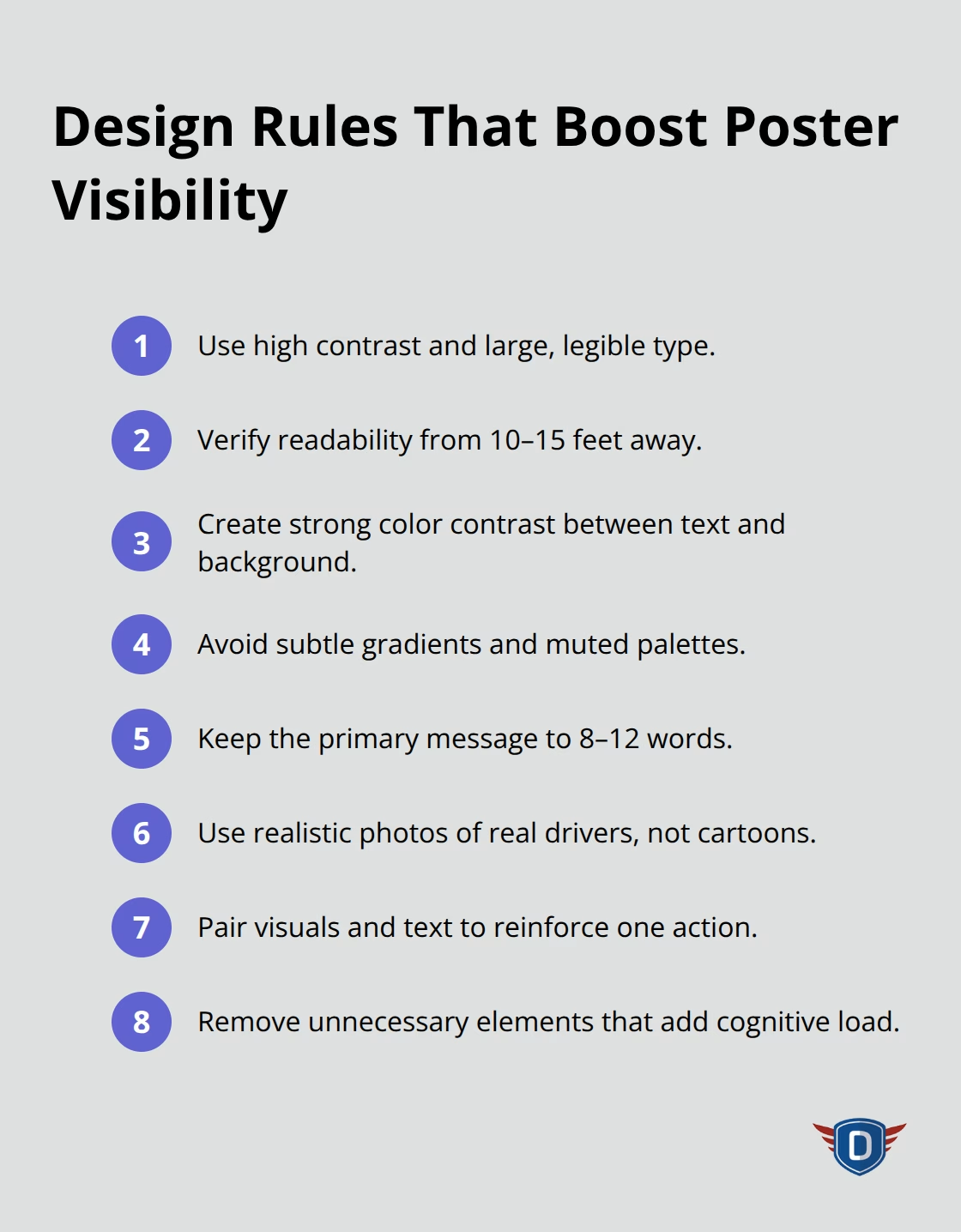
Include realistic imagery of actual drivers and passengers, not cartoons or generic stock photos. A photo of a teenager checking a phone while gripping the wheel resonates far more than an illustrated icon.
Keep copy to 8 to 12 words maximum for the primary message. Oviedo-Trespalacios’s systematic review of 90 documents found that roadside signs act as environmental clutter, adding cognitive demands to the driving task. This means every unnecessary word or visual element competes with the actual driving information drivers need to process. Simpler posters reduce eye movement and cognitive load, making them safer and more effective.
Placement decides whether anyone sees your poster
Position posters at driver eye level in locations where people have time to absorb the message: rest areas, fuel stations, fleet facilities, and driving schools. A poster on a highway billboard at 60 miles per hour reaches drivers with only seconds to read it; a poster in a waiting room reaches captive audiences who can actually absorb it. High-traffic areas matter less than strategic areas. A single poster in a commercial fleet depot, where drivers gather before shifts, reaches the exact audience most likely to change behavior.
Add QR codes linking to resources from NHTSA or the AAA Foundation so drivers curious enough to scan can access deeper information. Rotate poster placements every 4 to 6 weeks to maintain attention; drivers stop noticing static messages after repeated exposure. Update your posters when new crash statistics emerge or when laws change. A poster citing 2019 data loses credibility in 2025.
Why message content matters as much as design
The most effective posters address the leading crash risk factors: distracted driving, impaired driving, speeding, and fatigue. Research from NHTSA confirms that seat belts remain the single most effective protection against fatal injury. Distracted driving posters that warn about texting or phone use resonate because drivers recognize the behavior in themselves. Impaired driving prevention campaigns that emphasize designated-driver messaging work because they offer a practical alternative, not just a warning.
Your poster’s content must reflect current laws and real crash data. A message about texting bans carries weight only if your state actually enforces texting bans. Include statistics from credible sources (NHTSA, WHO, AAA Foundation) to build trust. Drivers dismiss posters that feel outdated or generic; they respond to messages backed by evidence and tied to their own driving environment.
What Crashes Actually Teach Us About Driver Safety Campaigns
Distracted driving demands specificity, not vague warnings
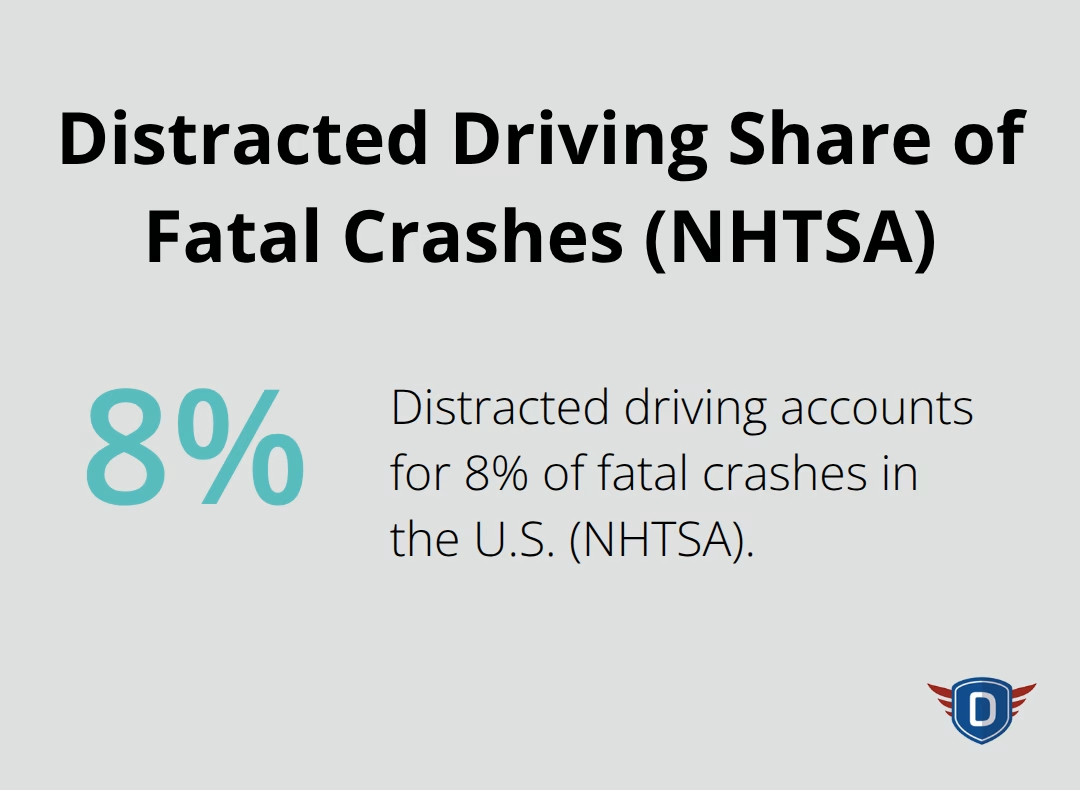
The three behaviors that dominate crash statistics are distracted driving, speeding, and impaired driving. NHTSA data shows that distracted driving accounts for 8 percent of fatal crashes, with phone use representing the most persistent culprit among younger drivers. A poster about texting while driving works because it addresses a behavior drivers recognize in themselves; the specificity matters far more than generic warnings about attention.
Your poster should cite actual numbers. Stating that texting while driving increases crash risk by 23 times according to NHTSA research creates urgency that vague language cannot match. This concrete figure transforms an abstract warning into a personal threat that resonates with drivers who text behind the wheel.
Speed amplifies injury risk exponentially
Speeding kills differently than distraction. The Insurance Institute for Highway Safety confirms that speed amplifies crash severity exponentially, not linearly. A 10-mile-per-hour increase in impact speed dramatically increases injury and death risk. Your poster should show this relationship clearly through visuals or simple data, not just warn drivers to slow down. A visual that contrasts a 30-mph crash with a 50-mph crash-showing the difference in vehicle damage and injury outcomes-communicates the stakes far more effectively than text alone. Drivers understand that speed matters; they need to see why it matters in their specific driving context.
Impaired driving prevention requires practical alternatives
Impaired driving prevention requires a different approach entirely. Messages that shame drivers fail; messages that offer practical alternatives succeed. A poster emphasizing designated-driver services or rideshare apps gives drivers an actionable path forward rather than a prohibition they may ignore. MADD research shows that designated-driver campaigns increase the likelihood that drivers will plan ahead and arrange safe transportation. The most persuasive posters don’t just say “don’t drive impaired”-they show drivers how to avoid that choice before they face it.
Tailor messages to audience and environment
The mistake most organizations make is treating these three behaviors as equally urgent for every audience. Distracted driving messaging resonates powerfully with drivers aged 16 to 35, where phone use peaks. Speeding campaigns gain traction in commercial fleets where liability concerns align with safety messaging. Impaired driving prevention hits hardest during holiday periods when crash risk from alcohol spikes measurably. Your poster placement and timing should match the audience and behavior. A poster about impaired driving placed at a gas station near bars on Friday nights reaches the exact driver who needs to see it at the moment when the message matters most. A distracted driving poster in a high school parking lot reaches learners before habits calcify.
The most effective campaigns recognize that one-size-fits-all posters waste resources. Instead, tailor your visual design, statistics, and call-to-action to the specific behavior and the specific environment where drivers will encounter your message. This targeted approach sets the stage for understanding how education programs amplify poster effectiveness far beyond what static signage alone can accomplish.
How Education Programs Multiply Poster Impact
Posters alone change nothing. A driver sees a seat belt message at a rest stop, nods mentally, and forgets it by the time they reach their car. Education programs transform that momentary exposure into lasting behavior change. When drivers encounter consistent messaging in a classroom setting, online course, and physical signage simultaneously, retention and behavior adoption increase measurably.
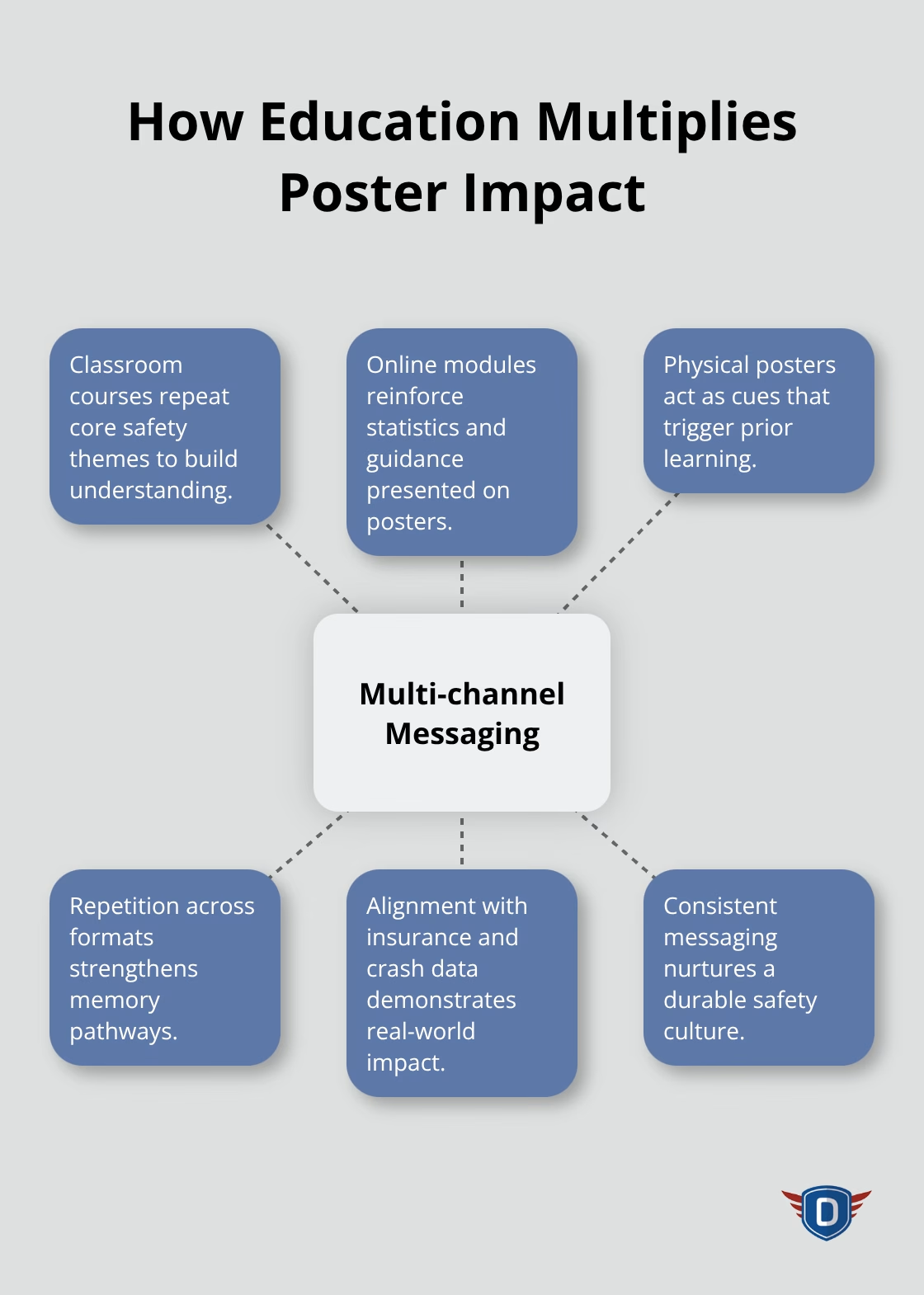
Research from the AAA Foundation confirms that multi-channel safety messaging produces stronger outcomes than isolated campaigns. Traffic safety courses integrate poster themes directly into curriculum modules, ensuring students engage with the same core messages in different contexts. A student learning about distracted driving in a driver improvement course sees the identical statistics and behavioral warnings on posters they encounter afterward, creating cognitive reinforcement that isolated posters cannot achieve.
How repetition locks in safety lessons
Drivers process information differently in structured learning environments versus roadside exposure. In a classroom or online module, drivers have time to absorb data, ask questions, and connect abstract risk to personal driving habits. A poster reinforces that learning when encountered later, triggering memory of the deeper context already established. This repetition works because the brain strengthens neural pathways through multiple exposures to the same concept across different formats. A driver who completes an eight-hour course examining impaired driving prevention, speeding consequences, and distracted driving risks encounters a poster months later addressing one of those topics. That poster functions as a memory cue rather than a cold message to a stranger. The driver’s brain activates the knowledge already stored from the course, making the poster far more persuasive than it would be to someone encountering the message for the first time.
Measuring actual behavior change, not just awareness
The most effective programs measure actual behavior change, not just awareness. Tracking whether drivers who complete a safety course show reduced crash rates or violation records reveals whether education genuinely shifts behavior or simply checks a compliance box. Insurance companies have quantified this: drivers completing defensive driving courses through approved providers experience measurable reductions in claims and violations. This data proves that education programs produce real-world safety improvements beyond what posters alone accomplish.
Why comprehensive safety culture beats isolated campaigns
Organizations that combine safety education programs with strategic poster placement in high-traffic areas see sustained behavior improvements that neither intervention alone produces. The poster becomes part of a comprehensive safety culture rather than background noise on a wall. A driver who learned about distracted driving risks in a structured course recognizes that same message on a poster at a gas station and feels reinforced in the behavior change they already committed to. This alignment between education and environmental messaging creates momentum that persists long after the initial course completion.
Final Thoughts
Driver safety posters work best when they’re part of something bigger. A single poster at a gas station might catch a driver’s attention for five seconds, but when that same driver completed a safety course weeks earlier and learned the statistics behind distracted driving, that poster becomes a powerful reminder of lessons already internalized. This is where real behavior change happens-when education and environmental messaging reinforce each other across multiple touchpoints.
The most effective road safety strategies combine clear, focused messaging on posters with comprehensive driver education that builds knowledge and skills. Organizations that pair posters with structured education programs see measurable reductions in crashes and violations, while those relying on posters alone see only temporary awareness spikes. Drivers who complete defensive driving courses through approved providers experience documented reductions in insurance claims and traffic violations because education programs amplify what driver safety posters start.
At DriverEducators.com, we’ve built our approach around this principle by integrating the same safety messages drivers encounter on posters and in their communities into our comprehensive driver education programs. Whether through our Basic Driver Improvement course, Intermediate Driver Improvement program, or specialized courses for aggressive drivers and mature drivers, we focus on helping drivers adopt lifelong safe driving habits. Start with driver safety posters that grab attention and deliver one clear message, back them up with education programs that build understanding and skill, and measure what actually matters: whether drivers change their behavior and whether crashes decline.