Every year, over 42,000 people die in traffic crashes in the United States alone. Most of these deaths are preventable through proper driver education and training.
At DriverEducators.com, we know that driver education traffic safety isn’t just about passing a test-it’s about building habits that protect you and everyone on the road. The skills you develop behind the wheel directly impact whether you arrive home safely.
Why Distracted and Aggressive Driving Dominate Today’s Roads
The Scale of Distraction on American Roads
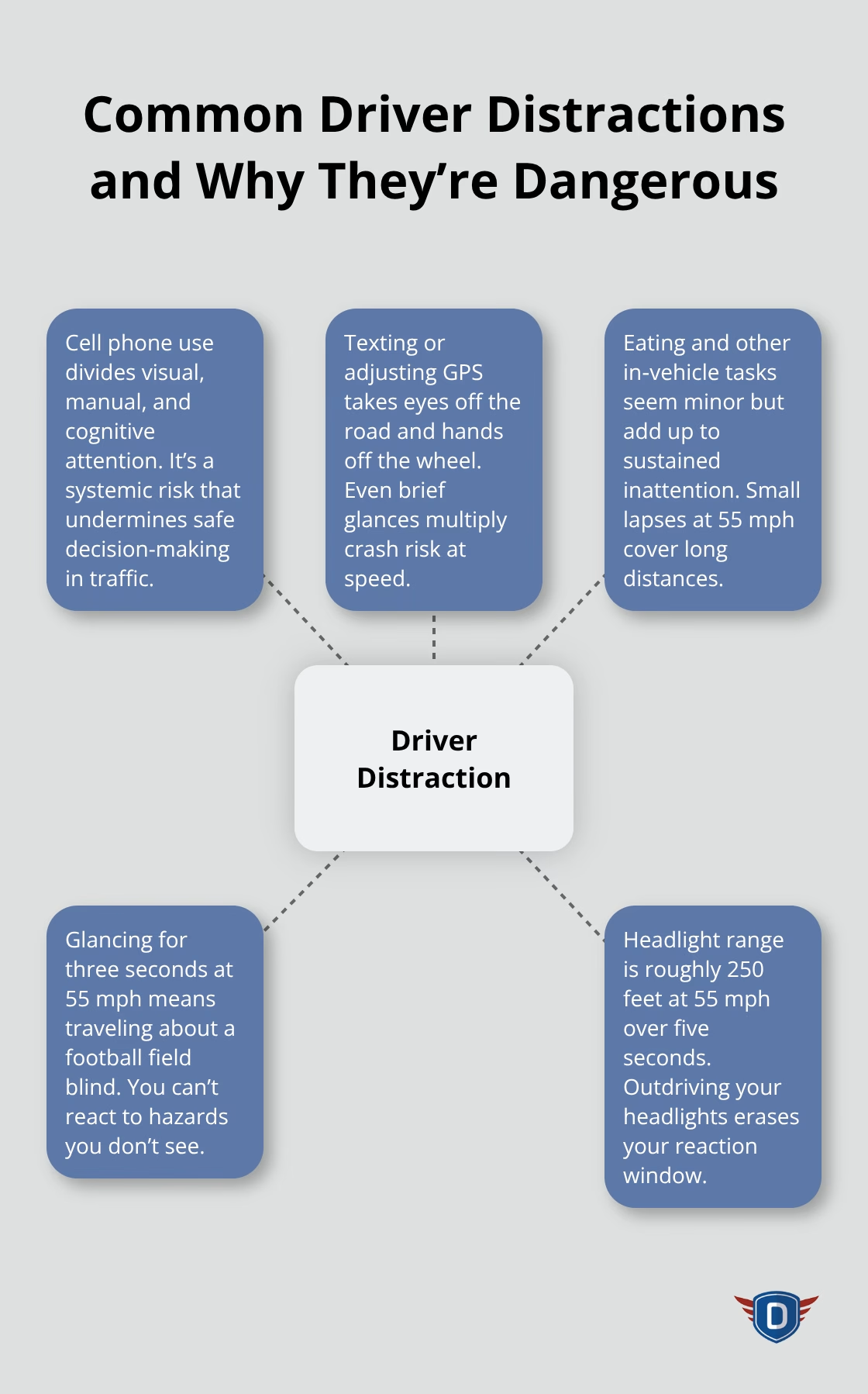
The National Safety Council reports that cell phone use affects a significant portion of traffic crashes, making distraction one of the most preventable causes of serious accidents. This isn’t a minor issue-it’s a systemic problem that directly contradicts the claim that driver education alone fixes road safety. Texting while driving, adjusting GPS, or eating behind the wheel splits your attention at precisely the moment you need it most. At 55 mph, your vehicle travels 250 feet every five seconds. That’s the distance your headlights illuminate at night. If you look at your phone for even three seconds, you’ve traveled the length of a football field blind.
How Aggressive Driving Reshapes Traffic Behavior
Aggressive driving-which includes speeding, tailgating, and hostile lane changes-accounts for roughly one-third of all traffic crashes according to the National Safety Council. These drivers create a cascade of danger: they force others to brake suddenly, they eliminate reaction time, and they fundamentally change how other drivers behave on the road. The problem isn’t that aggressive drivers don’t know the rules; they simply choose to ignore them. This is where traditional classroom driver education fails. You can teach someone the speed limit, but you cannot force them to follow it. You can explain the three-second following distance rule, but you cannot make someone apply it when they’re running late for work.
Why Knowledge Alone Doesn’t Change Behavior
Real driver education must address the behavioral and attitudinal barriers that prevent people from applying what they already know. The gap between knowledge and action is precisely why comprehensive driver education programs focus on scenario-based training and behavioral change rather than memorization. When you practice defensive driving techniques through real-life scenarios-managing speed on wet pavement, recognizing when another driver is about to merge unsafely, deciding whether to engage with an aggressive driver-you develop habits that actually stick. Research published in IATSS Research in 2024 found that higher safety skills are directly associated with stronger disapproval of rule violations and risky behaviors, demonstrating that the right kind of training reshapes how drivers think about their choices on the road.
Practical Tools That Actually Work
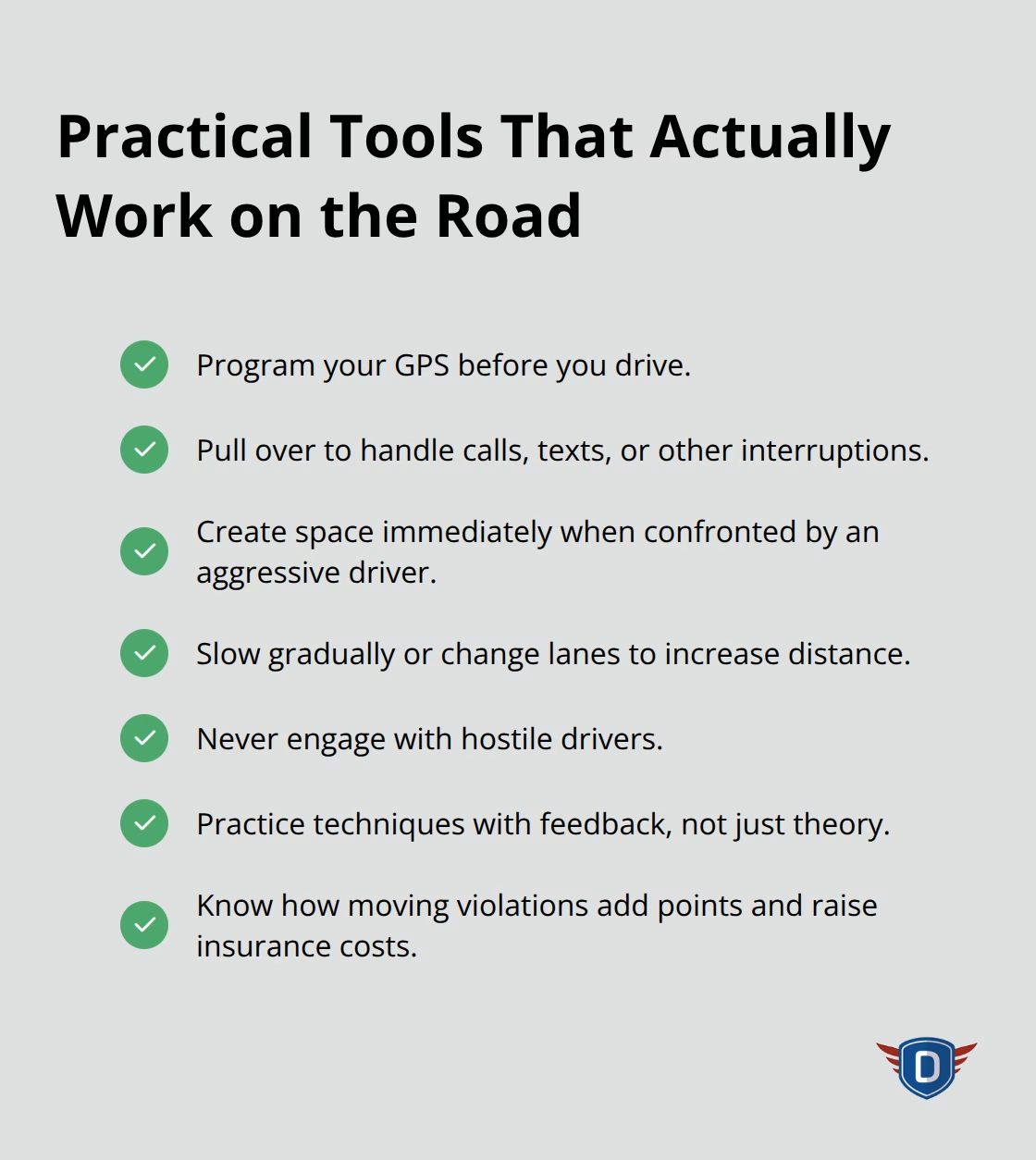
Programs that address distraction awareness teach practical strategies-like programming your GPS before you drive and pulling over if you need to handle interruptions-giving drivers actionable tools instead of vague warnings. Similarly, courses that focus on de-escalation and space management teach drivers what to actually do when confronted with an aggressive driver: create distance immediately (slow gradually or change lanes), and never engage. These aren’t theoretical concepts. They’re specific techniques that work because they’re based on how people actually behave and how vehicles actually respond in traffic.
What Skills Separate Safe Drivers from Everyone Else
Defensive driving starts with one fundamental skill: predicting what other drivers will do before they do it. The National Safety Council reports over 38,000 U.S. roadway deaths annually, with a fatality rate of about 12.4 deaths per 100,000 people. Most of these deaths stem from drivers who react to danger instead of anticipating it. Safe drivers constantly scan the road 12 to 15 seconds ahead, check mirrors every 10 seconds, and turn their head to perform blind-spot checks before any lane change. At 55 mph, 12 to 15 seconds of road ahead equals roughly 200 feet of visibility. This scanning habit gives you time to identify hazards: a car drifting between lanes, brake lights illuminating three cars ahead, a pedestrian stepping toward the curb. Casual drivers skip this step entirely. They glance occasionally and hope nothing goes wrong. That approach fails constantly.
The Three-Second Rule Isn’t Optional
Following distance determines whether you stop before hitting the car ahead. The baseline is three seconds at normal speeds on dry pavement. Count the seconds between when the car ahead passes a fixed point-a sign, a tree, a road marker-and when your car reaches that same point. If you reach it in fewer than three seconds, you’re too close. In rain, fog, or darkness, increase to four seconds. At 55 mph on wet pavement, stopping distance reaches about 196 feet. Most drivers maintain one second or less, which means they cannot stop safely. Reducing speed by just 10 mph cuts stopping distance by roughly 25 percent. This isn’t theoretical math-it’s the physics that determines whether you walk away from a crash or don’t.
Speed management means matching your velocity to actual conditions, not just the posted limit. Visibility matters more than the speed sign. If headlights illuminate only 250 feet at 55 mph on a dark road, you have roughly five seconds to react to an obstacle before impact. Slow down accordingly.
Right-of-Way Rules Exist to Prevent Collisions
Understanding who has the right of way prevents the crashes that happen at intersections, parking lots, and merges. But knowing the rule and applying it under pressure are different skills. At a four-way stop, the first car to arrive has the right of way. If two cars arrive simultaneously, the car on the right proceeds first. Most drivers either don’t know this or ignore it because they’re distracted or impatient. When merging onto a highway, you yield to traffic already on the road. This doesn’t mean creeping onto the shoulder and hoping someone lets you in-it means matching the speed of traffic and finding a gap where you can merge smoothly without forcing another driver to brake.
Yielding to pedestrians means stopping completely, not rolling through crosswalks. The rule is absolute: pedestrians in crosswalks have the right of way, period. Yet countless drivers slow slightly and proceed if the pedestrian pauses. That hesitation kills people. Treating right-of-way rules as absolute rather than suggestions keeps intersections functioning and prevents the collisions that happen when drivers guess about who should go first.
How Hazard Recognition Separates Skilled Drivers
Safe drivers spot danger before it becomes a crisis. They notice a car with a broken taillight (potential brake failure), a truck drifting slightly (tired driver), or a child’s ball rolling into the street (child follows). These observations take seconds but save lives. Hazard recognition requires active attention-not passive observation. You train your eyes to scan for movement, unusual vehicle behavior, and environmental clues that signal risk. Poor visibility, wet roads, and heavy traffic all demand heightened awareness. Drivers who master this skill adjust their position, speed, and following distance before a hazard becomes a collision. This proactive approach contrasts sharply with reactive driving, where drivers slam on brakes only after danger appears. The difference between these two approaches determines crash outcomes. As you develop these core skills-scanning, following distance management, right-of-way mastery, and hazard recognition-you build the foundation for handling the specific violations and behavioral patterns that put drivers at risk.
Scenario-Based Training Works Better Than Memorization
Why Real-Life Scenarios Change How Drivers Think
Scenario-based training forces your brain to make decisions under pressure, which is exactly what happens on actual roads. Classroom instruction teaches rules, but scenario-based programs teach you to apply those rules when distractions compete for your attention, visibility drops, or another driver forces an unexpected choice. A 2024 study published in IATSS Research found that drivers who developed stronger safety skills showed significantly higher disapproval of rule violations and risky behaviors, meaning the training actually changed how they think about driving decisions. This matters because knowledge alone fails repeatedly-research shows that driver education can improve knowledge and self-perceived ability, yet these gains rarely translate into fewer crashes or injuries.
The Knowledge-Action Gap That Most Programs Miss
The disconnect exists because most programs treat driving as a knowledge problem when it’s actually a behavioral problem. You don’t crash because you don’t know the three-second rule; you crash because you didn’t apply it when you were running late. Effective programs address this gap by placing you in simulated situations where you must manage speed on wet pavement, recognize when a vehicle is about to merge unsafely, or decide whether to engage with an aggressive driver. These repetitions build neural pathways that activate automatically when real danger appears, replacing reactive panic with practiced response.
Tailored Courses for Different Driver Profiles
Different drivers need different content because a teen driver faces different hazards than a mature driver, and a driver with multiple violations needs behavioral intervention, not just a refresher. The Basic Driver Improvement course targets drivers with a single violation and focuses on the specific behaviors that caused the incident. The Intermediate Driver Improvement program serves court-ordered drivers and digs deeper into attitude and decision-making, recognizing that repeat violations signal behavioral patterns. The Aggressive Driver Course directly addresses road rage and hostile driving, which are perceived to be serious threats to public safety-these drivers don’t need more facts about speed limits; they need explicit training in de-escalation and impulse control. The Mature Driver Course recognizes that drivers aged 55 and older face different challenges: declining vision, medication interactions, and physical limitations require specific strategies for safe driving at this life stage.
How Curriculum Updates Keep Training Current
Curriculum updates matter because Florida statutes change, new vehicle technologies introduce unfamiliar safety features, and road conditions evolve. Updated materials reflect current law, ensuring that what you learn aligns with what enforcement officers actually enforce and what the Florida Department of Highway Safety and Motor Vehicles requires. This isn’t theoretical updating-when Florida introduces new traffic laws or safety campaigns, your education should reflect those changes immediately, not years later.
Final Thoughts
Certified instructors at DriverEducators.com tailor feedback to your specific mistakes-whether you follow too closely, scan inadequately, or hesitate at intersections-so you correct those patterns immediately rather than repeating them for months. This personalized approach accelerates skill development far beyond what generic online content achieves because the instructor recognizes your learning pace, adjusts explanations when concepts don’t land, and builds confidence through targeted practice. Driver education traffic safety depends on behavioral change, not just information transfer, and direct feedback from a qualified instructor makes that transformation happen.
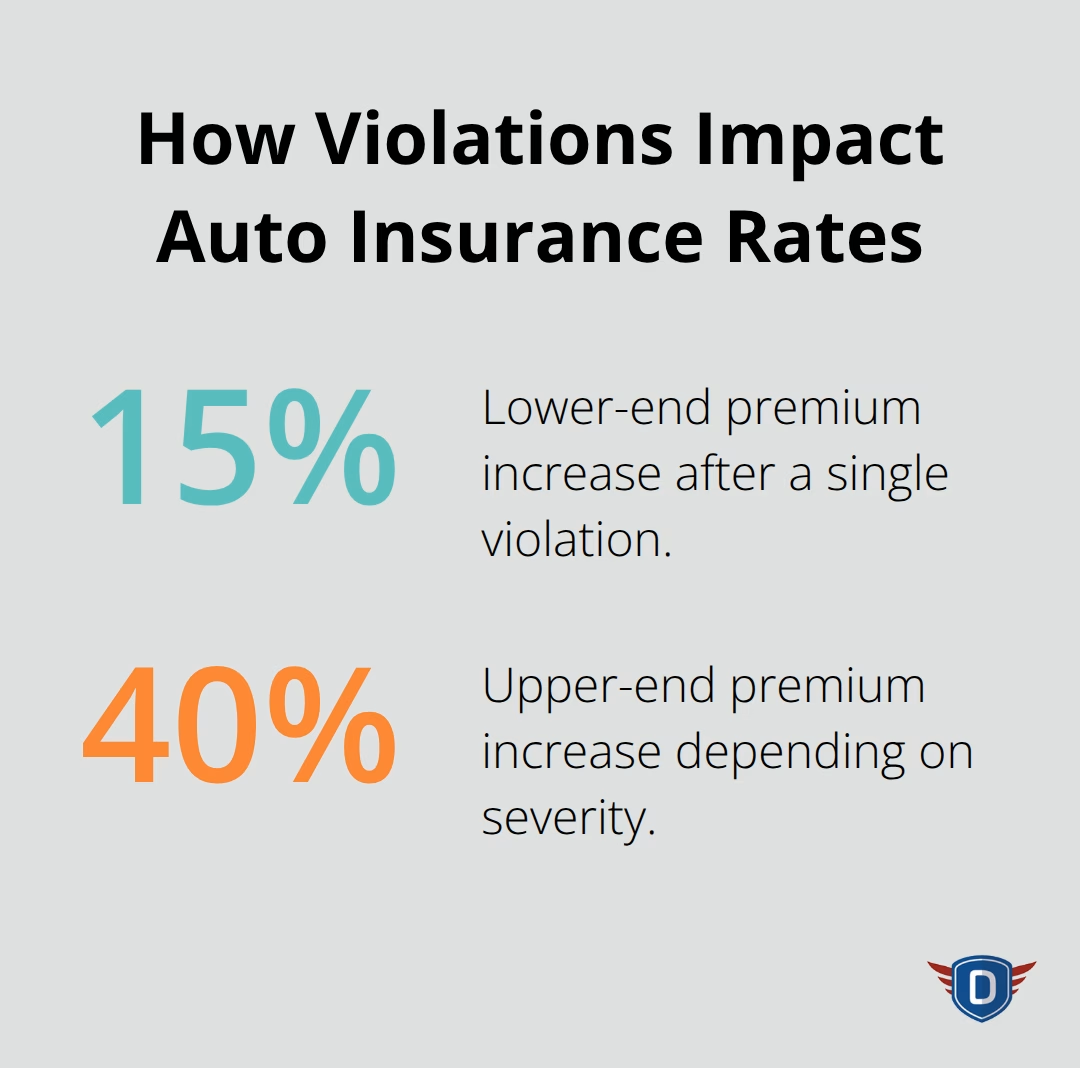
Safe driving habits compound over time, and drivers who maintain three-second following distances, scan 12 to 15 seconds ahead, and manage speed according to conditions avoid crashes while reducing insurance premiums, accumulating fewer points, and maintaining clean driving records. Insurance companies recognize this reality-completing an approved traffic safety course qualifies you for discounts that often exceed the course cost within a single policy year. A single violation can raise your rates by 15 to 40 percent depending on severity, making point removal through driver education a direct investment in your wallet.
Our Florida-approved courses at DriverEducators.com address the specific violations and behavioral patterns that generate costly consequences, whether you complete a Basic Driver Improvement course for a single violation or an Aggressive Driver Course to address habitual offenses. Every course updates to reflect current Florida statutes and safety campaigns, ensuring you learn what actually matters on today’s roads. The result is safer driving habits, lower insurance costs, fewer points, and roads where everyone arrives home.