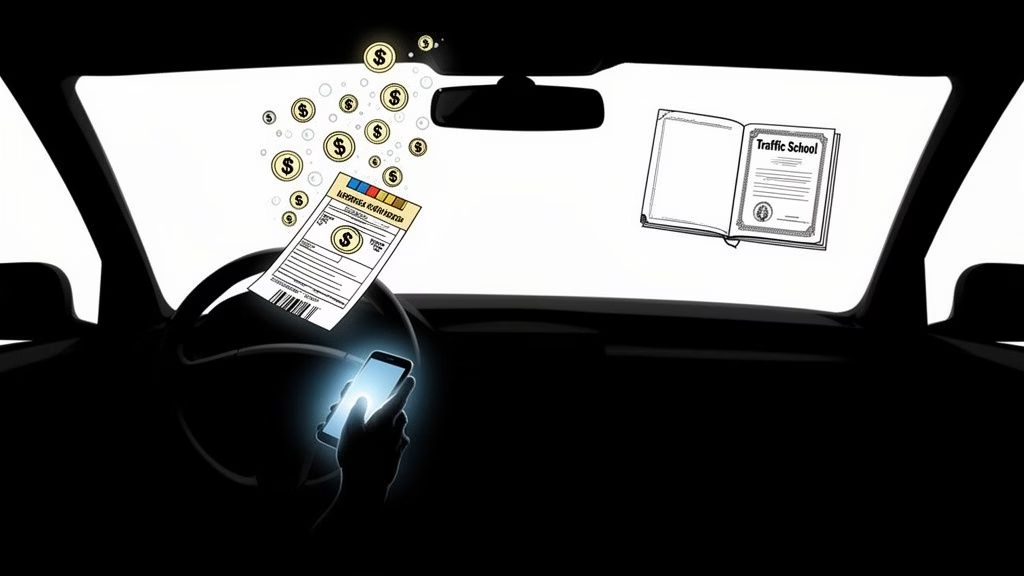

A distracted driving citation can create a second problem fast – figuring out whether you need a course, which course counts, and how to prove completion on time. Distracted driving course requirements are not one-size-fits-all. They can depend on your state, your age, the type of violation, whether a court is involved, and whether the course is meant for compliance, ticket resolution, or general driver improvement.
For most drivers, the goal is simple: complete the right approved course the first time and avoid delays, extra fees, or a rejected certificate. That starts with understanding what the requirement actually says, not just the course title.
What distracted driving course requirements usually include
In plain terms, distracted driving course requirements are the rules that determine whether you must take a course and what that course must look like to be accepted. A requirement may come from a court order, a state agency, a licensing rule, or part of a citation resolution process.
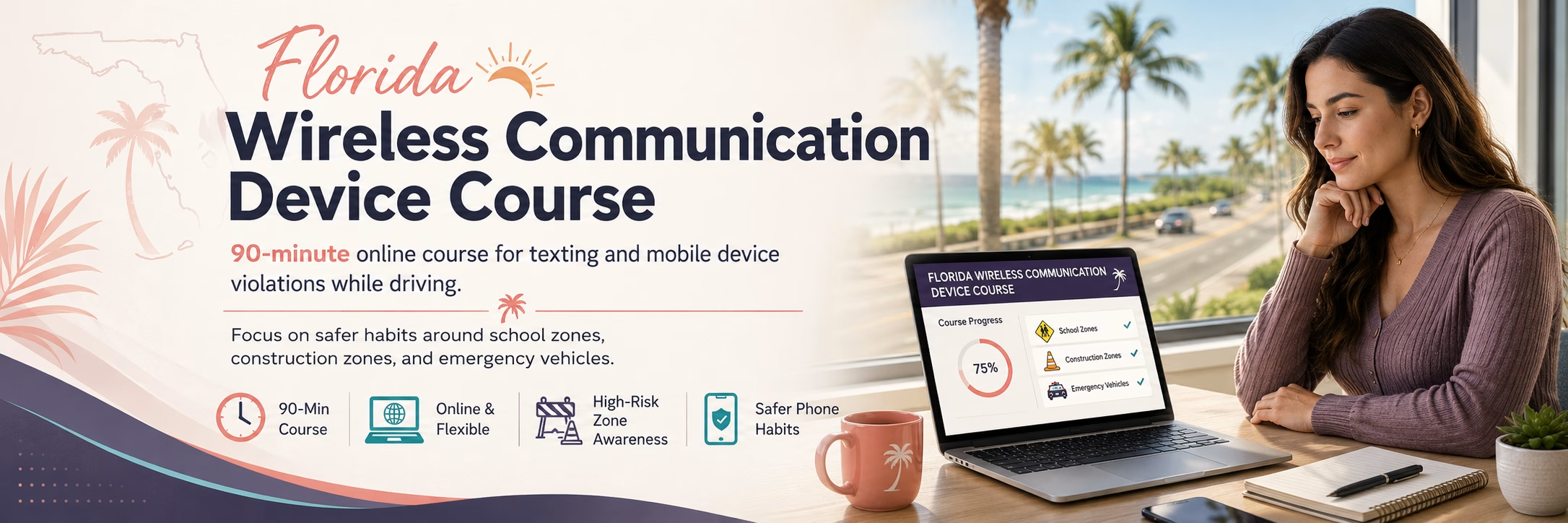
Some requirements are very specific. You may be told to complete a wireless communications device course, a distracted driving awareness program, or a driver improvement course with distracted driving content. Other times, the notice is broader and only says you must complete an approved traffic safety or defensive driving course.
That distinction matters. A driver improvement course is not automatically interchangeable with a phone-use or distracted driving course. If your paperwork names a specific program type, format, or provider approval standard, you should match those details exactly.
Who may be required to take a distracted driving course
The most common group is drivers cited for using a phone or electronic device illegally while driving. In some states, that includes texting, emailing, holding a phone, or using certain apps while a vehicle is in motion or stopped in traffic.
Teen and novice drivers may face stricter rules. Many states apply broader device restrictions to learners, permit holders, and intermediate license holders. In those cases, a course may be part of licensing consequences, point reduction options, or a court response.
Adults can also be assigned a course after a moving violation, especially if the offense involved crash risk, repeated behavior, or a local court program focused on driver safety education. In some situations, the course is optional but beneficial because it may support reduced penalties or satisfy a diversion requirement.
Commercial drivers face a different issue. Even when a course is allowed, it may not erase the underlying compliance impact. If you hold a CDL, always verify whether the course affects only court handling or also interacts with employer, insurance, or licensing consequences.
State-by-state distracted driving course requirements
State rules vary more than many drivers expect. One state may require a course only for younger drivers. Another may authorize it as an alternative to points or part of a court-supervised outcome. A third may not have a standalone distracted driving course at all and instead use a broader traffic safety program.
Approval rules also differ. Some states maintain an official list of approved online providers. Others allow local courts to decide whether a particular course will be accepted. In a few cases, the name of the course matters less than the number of hours, the curriculum topics, and the certificate details.
This is why the safest approach is to verify four things before enrolling: who ordered the course, the exact course type required, whether online completion is allowed, and where your completion record must be sent. Convenience matters, but approval matters first.
What a qualifying course may need to cover
A compliant course usually includes core distracted driving topics such as visual, manual, and cognitive distraction. It may also explain state phone-use laws, crash statistics, reaction-time effects, texting risk, passenger distraction, in-vehicle technology issues, and strategies for reducing unsafe habits.
Some programs go further by including decision-making, hazard recognition, defensive driving, and consequences for repeat violations. If the requirement comes from a court or state agency, the curriculum may need to follow a prescribed outline rather than a provider’s general safety material.
Course length can vary. Some distracted driving programs are relatively short, while others are bundled into a longer driver improvement course. More time does not always mean better acceptance. What matters is whether the course meets the stated requirement.
Online versus in-person requirements
Many drivers prefer online education because it is faster to schedule and easier to complete on a phone, tablet, or computer. In many cases, that option is allowed. But not always.
Some courts or agencies accept online courses only from approved providers. Others may require identity checks, timed modules, quiz minimums, or a final assessment. A few may still require in-person attendance for certain cases or repeat offenses.
If flexibility is your top concern, check the format rule early. An online course that is convenient but not approved does not solve the problem. A legitimate provider should clearly explain whether its course is state-approved, court-accepted where applicable, and designed for the specific requirement you need to satisfy.
Timing, deadlines, and proof of completion
Most course problems are not about the class itself. They are about timing. You may need to complete the course by a court date, before a license action takes effect, or within a diversion window. Missing that deadline can cancel the benefit of taking the course at all.
Pay attention to processing time too. Some completions are reported electronically, while others require you to submit a certificate yourself. If mailing or court filing is involved, build in extra time.
Keep copies of everything. Save your receipt, confirmation email, completion certificate, and any instructions showing where the certificate must go. If there is a dispute, documentation matters.
Common mistakes drivers make
The biggest mistake is assuming any traffic course will work. Drivers often enroll in a general defensive driving program when the notice actually requires a distracted driving or wireless device course. That can mean paying twice and racing a deadline.
Another common mistake is relying on a provider’s general marketing language instead of reading the approval details. “Accepted” and “approved” are not always the same thing in legal or administrative settings.
The third issue is waiting too long to confirm reporting. Some drivers finish the course and assume the provider will send the certificate automatically. Sometimes that is true. Sometimes the responsibility remains with the driver.
How to verify a course before you enroll
Start with the document that created the requirement. That may be your citation, court order, DMV notice, probation instruction, or diversion paperwork. Look for the exact course name, number of hours, due date.
Then confirm the provider’s status. Ask whether the course is approved for your state or accepted for your court matter, whether online completion is permitted, and how proof of completion is handled. A dependable provider should answer those questions directly.
If your case has any complexity – such as an out-of-state license, CDL status, repeat offense, or teen-driver condition – confirm the requirement with the issuing authority as well. A five-minute verification call can prevent a much larger problem later.
FAQ
What are distracted driving course requirements?
They are the rules that determine whether you must take a course and what type of course will be accepted. The requirement may come from a court, DMV, state law, or citation program.
Is a distracted driving course the same as defensive driving?
Not always. A defensive driving course is broader, while a distracted driving course focuses on phone use, in-vehicle distractions, and attention-related risk.
Can I take the course online?
Often yes, but it depends on the state or court. Some require an approved online provider and specific completion standards.
How do I know which course I need?
Check your notice first. The exact wording on your citation, court order, or DMV letter controls what course will count.
Will the course remove points from my record?
Sometimes, but not automatically. Point reduction, dismissal, or compliance credit depends on state law and the terms of your case.
Do teen drivers face different distracted driving course requirements?
Yes, in many states. Teens, permit holders, and intermediate drivers often have stricter device rules and may face different education requirements.
What if I take the wrong course?
It may be rejected. That can lead to extra cost, lost time, and missed deadlines.
What proof do I need after finishing?
Usually a completion certificate. You may also need a receipt, case number, or confirmation that the provider reported completion to the proper agency.
If you are dealing with a distracted driving violation, treat the course requirement like any other legal or licensing obligation – specific details matter. The right course can be straightforward to complete when the approval, format, and reporting steps are clear from the start.