Every year, defensive driving prevents thousands of accidents and saves lives on American roads. The skills behind defensive driving basics aren’t complicated-they’re practical techniques that any driver can learn and apply immediately.
At DriverEducators.com, we’ve seen firsthand how these fundamentals transform the way people drive. This guide walks you through the essential skills, common hazards, and actionable steps to become a safer driver.
What Defensive Driving Actually Means
Defensive driving means predicting what other drivers will do before they do it. It’s not about following traffic laws perfectly-it’s about staying alive when others don’t. The National Safety Council confirms that over 38,000 people die annually in crashes on U.S. roadways, and the traffic fatality rate sits at 12.4 deaths per 100,000 inhabitants. These aren’t small numbers, and they’re not going away by accident. Road crashes remain the leading cause of death for people aged 1 to 54 in the United States.
Defensive driving directly counters this reality. It trains you to manage emergencies, anticipate hazards, and reduce stress behind the wheel. The core principle is straightforward: assume other drivers will make mistakes and prepare yourself to avoid the consequences. This means you scan the road constantly, maintain proper following distances, control your speed, and eliminate distractions. When you drive defensively, you protect not just yourself-you protect everyone sharing the road.
The Core Techniques That Work
Defensive drivers employ specific, measurable techniques that reduce collision risk. You maintain a safe following distance (the 3–4 second rule works well) and adjust it higher in poor conditions or at higher speeds. You scan your mirrors and surroundings every 10 seconds to spot hazards early. You control your speed to match road conditions, traffic flow, and visibility. You signal turns and lane changes well in advance, and you check blind spots before moving. These techniques aren’t optional-they form the foundation of accident prevention.
Why Insurance Companies Reward This Approach
Insurance companies reward defensive driving because the numbers prove it works. Completing a defensive driving course can lower your insurance premiums significantly, and many providers offer discounts specifically for course completion. If you’ve received a traffic violation, completing defensive driving training can also reduce points on your license in many states, which directly prevents your insurance rates from climbing.
The financial impact matters: fewer accidents mean lower repair costs, fewer medical bills, and fewer fines over time. Beyond the immediate savings, defensive driving builds confidence and reduces driving anxiety, which translates into calmer decision-making on the road. You invest in a safer version of yourself that insurance companies recognize as a lower-risk driver.
What Happens When You Master These Skills
Drivers who practice defensive techniques report fewer close calls and greater peace of mind. They anticipate problems before they develop and react calmly when unexpected situations occur. They understand their vehicle’s capabilities and limitations, know their blind spots, and respect the unpredictability of other road users. This mindset shift-from passive rule-following to active hazard management-separates safe drivers from those who simply avoid getting caught.
The techniques you’ve just learned form the foundation, but real mastery requires understanding how to apply them in specific situations. Road conditions change, other drivers behave unpredictably, and distractions multiply. The next section walks you through the key defensive driving techniques you need to master and shows you exactly how to execute them when it matters most.
Master These Three Skills Before Your Next Drive
The gap between knowing defensive driving and executing it under pressure separates competent drivers from truly safe ones. Three specific skills determine whether you’ll avoid accidents or become another statistic: controlling your following distance and speed, scanning for hazards before they materialize, and eliminating distractions that steal your attention. These aren’t theoretical exercises-they’re measurable techniques with direct outcomes you can verify in your own driving within days.
The 3-4 Second Rule That Actually Works
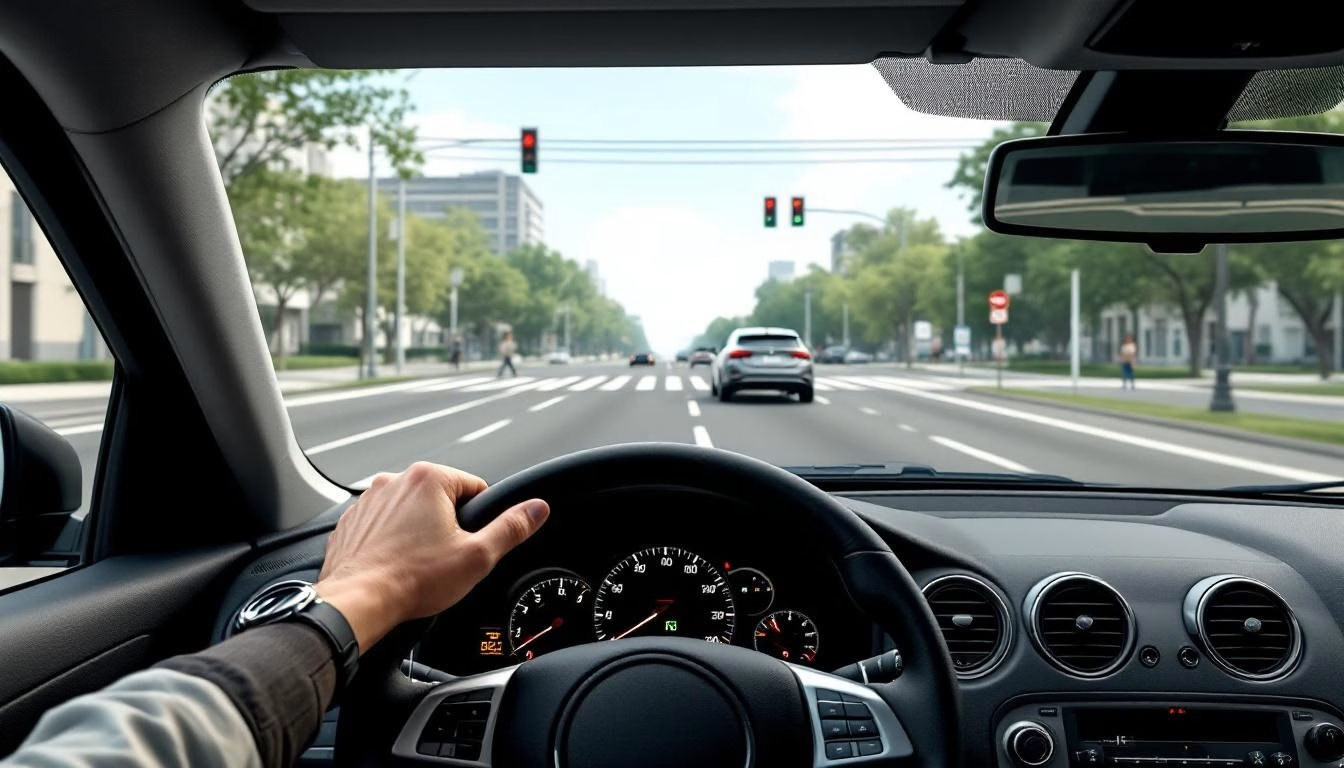
Your following distance determines whether you stop safely or become the second vehicle in a collision. The 3-second rule gives you a concrete method: pick a fixed object ahead (a sign, tree, or road marking), note when the vehicle in front passes it, and count how many seconds pass before you reach it. Three seconds provides baseline safety in normal conditions; four seconds becomes mandatory when rain, fog, or darkness reduces visibility. Most drivers fail this test spectacularly-studies show the average driver maintains only 1-2 seconds of separation, which explains why rear-end collisions account for nearly 30% of all crashes.
When you increase your following distance to four seconds in poor conditions, you’re not being cautious; you’re being realistic about your vehicle’s stopping distance. At 55 mph on wet pavement, your car needs 300 feet to stop completely-that’s longer than a football field. A four-second gap at highway speeds provides roughly that distance. Speed control directly amplifies this advantage. Reduce your speed by just 10 mph and you cut your stopping distance by roughly 25%, which is why speed limits exist in construction zones and school areas. The physics of stopping change dramatically at different velocities.
Scanning Defeats Surprises
Hazard anticipation begins with a structured scanning pattern, not random glancing. Every 10 seconds, check your mirrors and scan 12-15 seconds ahead of your vehicle-that’s roughly 200 feet at highway speeds. This forward scan reveals brake lights lighting up, debris in your lane, pedestrians stepping toward crosswalks, and stopped vehicles before they become emergencies. Your peripheral vision catches movement in parked cars and driveways where drivers might suddenly pull out.
The blind spot check happens before every lane change: turn your head to actually see the space your mirror doesn’t cover rather than assuming it’s clear. Aggressive drivers and unpredictable road users require heightened vigilance. When you spot someone tailgating or weaving through traffic, increase your following distance even further and avoid making eye contact or gestures that escalate tension. Your goal is to create space between yourself and their chaos, not to engage. Nighttime driving demands more aggressive scanning because visibility drops dramatically-your headlights only illuminate about 250 feet ahead at 55 mph, which means you operate with less reaction time. Reduce speed at night to match your actual visibility, not the posted limit.
Distractions Are Lethal, Not Inconvenient
Texting for five seconds at 55 mph means you travel the length of a football field with your eyes off the road. That’s not a statistic designed to scare you-it’s the actual distance covered while your attention is elsewhere. The National Safety Council documents that cell phone use while driving leads to 1.6 million crashes annually in the United States. Your phone isn’t the only culprit. Eating, adjusting the radio, talking to passengers, and even daydreaming pull your attention from the driving task.
The solution isn’t willpower; it’s engineering your environment before you drive. Program your GPS before departing, not while moving. Set your music and climate control before shifting into drive. If you need to make a call, pull over safely or use a hands-free system that keeps your eyes forward. Passengers create distraction too, especially teenage passengers who increase crash risk for young drivers. This isn’t judgment-it’s documented. Limiting passengers reduces fatal crashes for drivers under 20 according to research on teen driving behavior. If you’re driving with others, establish ground rules: no sudden loud noises, no reaching across to grab things, no animated conversations that demand your visual attention.
What Happens When Hazards Combine
Real-world driving rarely presents one hazard at a time. Rain falls while you navigate heavy traffic. Darkness arrives as you drive through construction zones. Tired drivers operate vehicles in all conditions. When multiple hazards stack together, your defensive skills face their true test. The techniques you’ve mastered-proper following distance, active scanning, and distraction elimination-work together to handle these complex situations. Your next challenge involves applying these fundamentals to specific road scenarios where other drivers behave unpredictably and conditions shift rapidly.
Common Road Hazards and How to Handle Them
Aggressive Drivers Demand Immediate Distance
Aggressive drivers create immediate danger because their behavior is unpredictable and escalating. When someone tailgates you, weaves through traffic, or makes aggressive gestures, your instinct might be to match their intensity or brake-check them. That’s exactly wrong. The moment you engage with an aggressive driver, you’ve surrendered control of the situation to someone who’s already demonstrated poor judgment.
Instead, create distance immediately. If they’re behind you, slow down gradually and let them pass, or change lanes to let them around. If they’re ahead, drop back further and reduce speed. Your only goal is separation, not teaching them a lesson or proving you’re right. Road rage escalates because both drivers feed the conflict, and you control only your own behavior.
When you encounter someone driving recklessly, avoid eye contact, don’t gesture, and never block their path intentionally. These actions trigger confrontation. If someone follows you aggressively or you feel threatened, drive to a police station or well-lit public area rather than heading home, which reveals your location. The National Safety Council documents that aggressive driving contributes to roughly one-third of all traffic crashes, which means your decision to de-escalate directly prevents accidents.
Weather Conditions Strip Away Your Safety Margins
Bad weather removes your safety margins faster than any other condition. Rain reduces tire grip, increases stopping distance, and limits visibility simultaneously. Fog creates a wall of obscurity where your headlights reflect back at you, actually reducing what you can see ahead. Snow and ice transform every maneuver into a physics problem where your vehicle responds differently than it does on dry pavement.
Most drivers fail to adjust their behavior accordingly. They maintain highway speeds in rain, assume their headlights work in fog, and drive on ice as if conditions were normal. This is why weather-related crashes spike dramatically during storms.
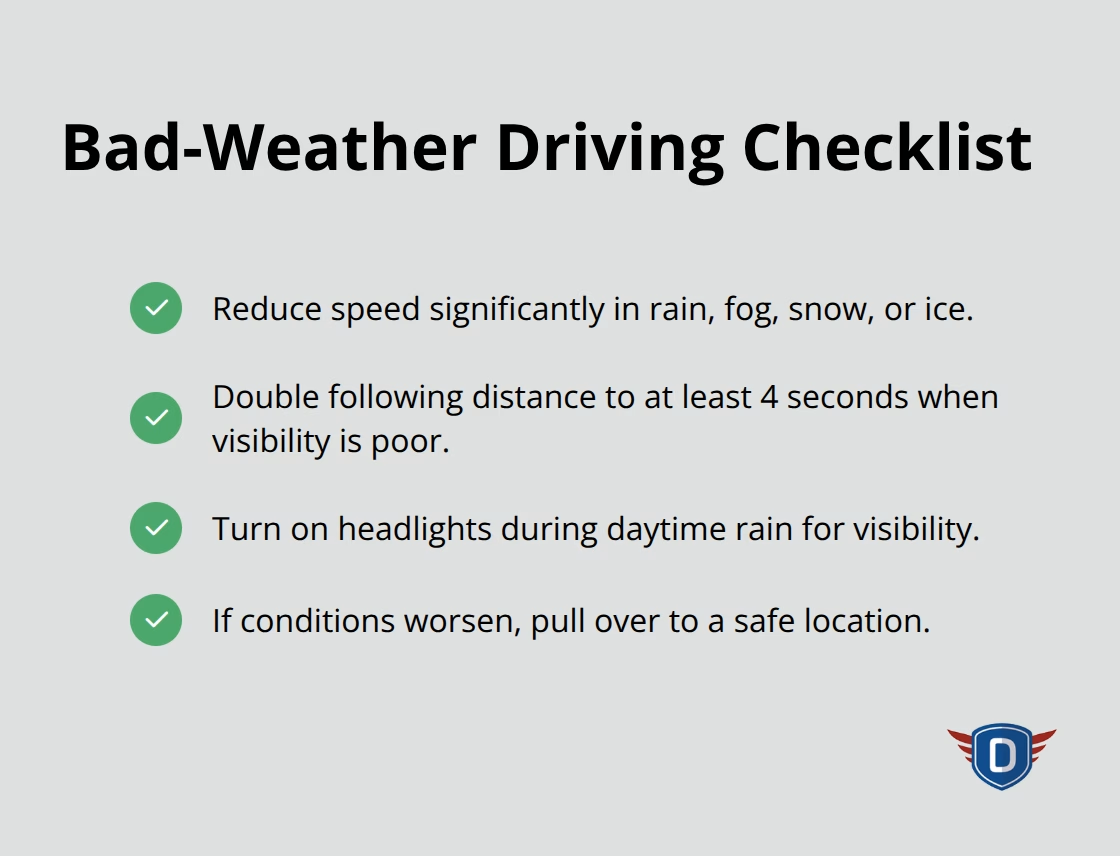
Your response must be aggressive and immediate: reduce speed significantly, double the following distance to a minimum of 4 seconds in poor visibility, and use headlights even during daytime rain to make your vehicle visible to others.
If conditions deteriorate to dangerous levels, pull over completely rather than continuing. Your safety matters more than reaching your destination on schedule.
Obstacles and Nighttime Hazards Require Specific Tactics
Unexpected obstacles like debris, animals, or stopped vehicles require a different response than weather hazards. Never swerve violently to avoid an object without checking your blind spots first, as swerving into another vehicle causes worse crashes than hitting the obstacle. If you encounter something in your lane, brake firmly first to slow your vehicle, then steer around the hazard if it’s safe.
Nighttime driving combines multiple hazards: reduced visibility, increased drowsiness, and higher speeds from drivers who assume darkness means empty roads. Your headlights illuminate only about 250 feet at 55 mph, which gives you roughly five seconds to react at highway speed. This is why reducing speed at night isn’t optional. Adjust your speed down from what conditions alone would suggest because darkness compounds every other hazard simultaneously. Avoid driving during peak sleepiness periods between midnight and 6 a.m., as this is when drowsy driving risk peaks, transforming nighttime into the highest-risk driving period.
Final Thoughts
Defensive driving basics rest on three core actions: you maintain proper following distances, you scan constantly for hazards, and you eliminate distractions. These fundamentals work because they reflect physics and human behavior, not wishful thinking. When you apply them consistently, you transform from a driver who hopes nothing goes wrong into one who actively prevents accidents.
The road will not become safer on its own, and other drivers will continue making mistakes while weather deteriorates without warning. You control what matters: your speed, your attention, your following distance, and your response to the chaos around you. DriverEducators.com offers Florida-approved courses designed to build these defensive driving skills through real-life scenarios and clear instruction that moves you beyond simply passing a test.
Start today by committing to the 3-4 second following distance rule, then add scanning every 10 seconds after one week. Your safety and the safety of everyone sharing the road depends on the decisions you make right now.