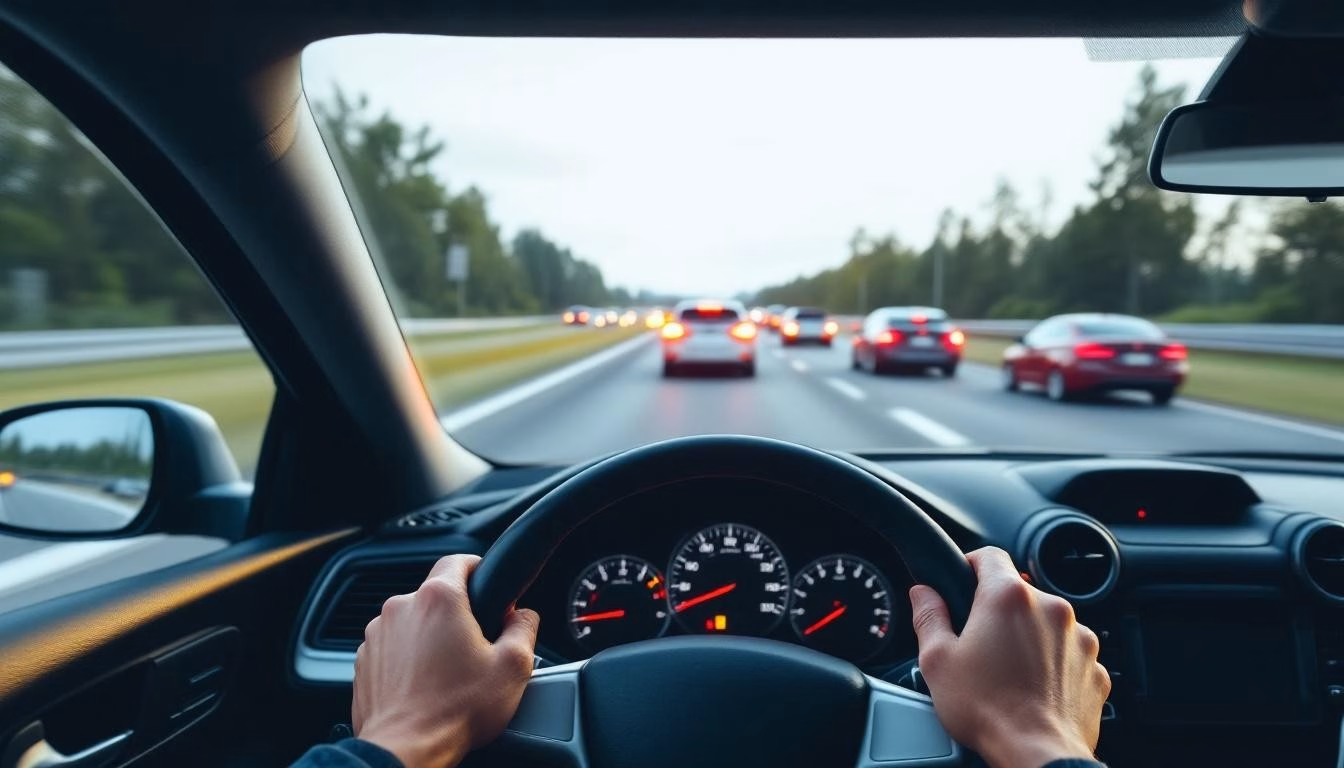
Most drivers think they’re safe until a crash happens. The truth is that crash avoidance strategies separate experienced drivers from those who get caught off guard.
At DriverEducators.com, we’ve seen firsthand how defensive driving techniques stop accidents before they start. This guide shows you exactly how to spot danger, react faster, and stay in control on every road.
Where Most Crashes Actually Happen
Rear-End Collisions and the Following Distance Problem
Rear-end collisions dominate crash statistics because drivers misjudge following distance constantly. At highway speeds above 40 mph, a loaded tractor-trailer needs about 196 feet to stop compared to 133 feet for a passenger vehicle, according to the Large Truck Crash Causation Study. This means if you tailgate a truck at 55 mph, you set up a collision. The Three-Second Rule works: maintain at least one second of following time for every 10 feet of vehicle length below 40 mph, then add one more second above 40 mph. In wet conditions, double that distance immediately. Most drivers know this rule exists but ignore it, treating it as optional rather than non-negotiable.
Intersection Crashes and Right-of-Way Failures
Intersection crashes happen because drivers either misunderstand right-of-way rules or assume other drivers will follow them. Running red lights and stop signs causes thousands of crashes annually, with many resulting in high-speed side-impact collisions that cause severe injuries. These crashes occur when drivers fail to respect the rules that protect everyone at intersections. The consequences intensify when speed plays a role in the equation.
Lane Changes, Merging, and Blind Spot Errors
Lane changes and merging accidents occur when drivers fail to check blind spots or signal properly. The SMOG method prevents these: Signal at least 100 feet before turning or changing lanes, check your Mirrors every 5-8 seconds, look Over the Shoulder to verify your blind spot is clear, then Go. This four-step process takes seconds but eliminates the most common errors that lead to sideswipe collisions and loss-of-control crashes.
Speed as the Amplifier of All Crash Risk
High speeds make a crash more likely because drivers have less time to react and because it requires a longer distance to stop or slow down. You cannot react faster than physics allows, so adjusting speed downward is your most powerful crash avoidance tool. These three crash types are preventable when you apply specific, measurable techniques consistently rather than hoping other drivers behave predictably. Understanding where crashes happen is only the first step-what matters next is how you respond when hazards appear on the road ahead.
How to Scan the Road Before Hazards Become Emergencies
Your Eyes Control Your Survival Rate
Defensive driving starts with your eyes, not your reflexes. Most drivers look at the road directly ahead, missing 80% of the information that could save their lives.
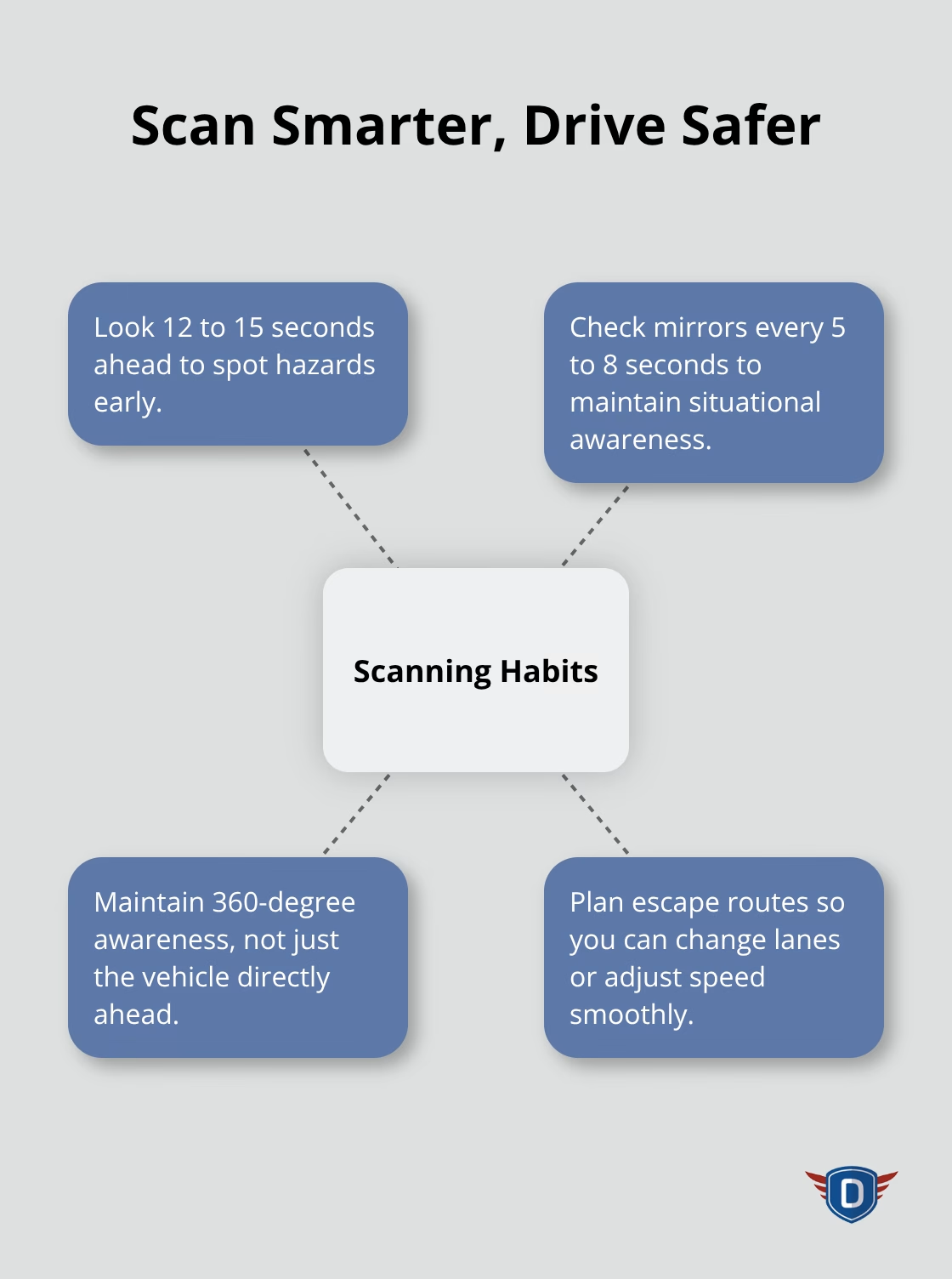
You need 360-degree awareness and mirror checking every 5 to 8 seconds and scanning 12 to 15 seconds ahead to spot hazards before they force you to react. This forward vision window gives you time to adjust speed, change lanes, or plan your escape route. The difference between a near-miss and a crash often comes down to whether you spotted the problem early enough to respond smoothly rather than panic.
Children playing near streets, erratic drivers drifting between lanes, debris blocking your path, and stopped vehicles ahead all become visible when you actively scan instead of passively stare. Many drivers only look where their car is heading right now, which means they encounter problems when it’s too late to avoid them. Your scanning pattern should include side mirrors every few seconds, a quick glance at your speedometer to verify you’re within safe limits for conditions, and constant forward observation beyond the car directly in front of you.
Processing Hazards Faster Than Panic
When you see a potential hazard, your brain needs time to process it, decide on a response, and execute that response. Scanning ahead compresses that timeline and moves hazard recognition from reactive to proactive. Weather reduces visibility instantly, so your scanning becomes even more critical during rain, fog, or darkness when other drivers rely on your headlights and brake lights to understand your intentions.
Distance and Speed Determine Your Reaction Window
Speed and following distance are inseparable from scanning because they determine whether you can stop or maneuver when you identify a hazard. The Three-Second Rule applies below 40 mph with one second added above 40 mph, but these are minimums in ideal conditions. In rain, double your following distance. On snow or ice, extend it even further because your tires lose grip and your stopping distance increases dramatically. A loaded tractor-trailer at 55 mph requires 196 feet to stop according to the Large Truck Crash Causation Study, while a passenger vehicle needs only 133 feet. This gap explains why you cannot tailgate larger vehicles safely at any speed.
Distractions Erase Your Scanning Ability
Distractions destroy your scanning ability because your attention shifts from the road to your phone, food, passengers, or the dashboard. Cell phone use while driving reduces your ability to detect hazards, and texting takes your eyes off the road for an average of 4.6 seconds at 55 mph. Eating, adjusting climate controls, or having intense conversations with passengers all fragment your focus. The most dangerous distraction is the one you don’t notice happening. You think you’re still paying attention while your mind processes something else entirely.
Fatigue Disengages Your Brain While Your Eyes Stay Open
Fatigue operates the same way, creating drowsy driving where your eyes stay open but your brain disengages. The NSC reports nearly 800 deaths annually from drowsy driving crashes, with most occurring between midnight and 6 a.m. If you drive after working a full day, taking a 15 to 20 minute nap before driving is more effective than coffee. Long drives require breaks every two hours or 100 miles to reset your mental state and physical alertness. Your crash avoidance toolkit only works when your mind is sharp and your eyes are moving constantly across the road environment, which is why the next section focuses on how you translate what you see into immediate action.
Adapting Your Tactics When Conditions Change
How Weather Transforms Your Stopping Distance
Weather transforms how you drive, and pretending it doesn’t leads directly to crashes. Rain increases stopping distance, which means slowing down by 5 to 10 mph from your normal speed is the bare minimum adjustment. Snow and ice demand far more aggressive changes: halve your speed and extend your following distance to at least 10 seconds because your tires lose traction and your vehicle stops twice as far. A loaded tractor-trailer at 55 mph needs 196 feet to stop in ideal conditions, but that distance stretches substantially on wet pavement and becomes unpredictable on ice. The moment rain starts falling, your scanning pattern must intensify because visibility shrinks and other drivers become less predictable. Fog operates the same way, forcing you to slow further and rely on your headlights and brake lights to communicate your position and intentions to drivers behind you.
Night Driving Requires Speed Reduction Below Posted Limits
Night driving nearly doubles crash risk compared to daytime driving, so reducing speed below posted limits is the only rational response when darkness falls. Your headlights illuminate only a limited distance ahead, and other drivers may not see you until you’re too close for them to react. Fatigue compounds this risk because your body naturally wants to rest at night, making drowsy driving more likely during evening and late-night hours. An estimated 6,400 people die annually in crashes involving drowsy driving, with most occurring between midnight and 6 a.m. If you drive after working a full day, a 15 to 20 minute nap before driving proves more effective than coffee. Long drives require breaks every two hours or 100 miles to reset your mental state and physical alertness.
Refusing to Engage With Aggressive Drivers
Aggressive drivers and road rage situations demand that you refuse to engage, regardless of how infuriating their behavior becomes. An aggressive driver tailgating you at highway speed, flashing lights, or making obscene gestures wants a reaction, and giving one transforms a dangerous situation into a collision. Your response is counterintuitive: slow down gradually, increase your following distance ahead of you to create an escape route, and let the aggressive driver pass. Never match their speed, never brake-check them, and never return gestures or horn honks because these actions escalate the situation toward violence. If you feel threatened, drive toward a police station or busy public area rather than leading them to your home or a secluded location.
Executing Emergency Maneuvers With Practiced Precision
Emergency maneuvers like sharp lane changes or sudden braking work only when you practice them in safe conditions and understand exactly how your vehicle responds. The push-pull steering technique (hands positioned at 9 and 3 on the wheel) enables quicker directional changes without crossing your arms and losing control. If you must execute a quick lane change to avoid a collision, check your mirrors and blind spot first, steer sharply in your intended direction, countersteer to stabilize the vehicle, and match your speed to surrounding traffic. Practicing these maneuvers in an empty parking lot builds muscle memory so your hands and feet respond correctly under stress rather than freezing or overreacting.
Decision-Making Speed Matters More Than Physical Reflexes
Your decision-making speed matters more than your physical reflexes because the fastest hands in the world cannot save you if your brain takes three seconds to recognize danger when you had only two seconds to act. Weather conditions, aggressive drivers, and emergency situations all compress your reaction timeline, which is why the scanning techniques and speed adjustments covered earlier form the foundation of crash avoidance. Your brain processes information faster when you’ve already anticipated hazards and positioned your vehicle to escape them.
Final Thoughts
Crash avoidance strategies work because they transform how you process information on the road. The Three-Second Rule, the SMOG method, and the push-pull steering technique give you concrete actions to practice rather than vague principles to hope work when danger appears. Safe driving habits stick when they become part of your identity rather than rules you follow reluctantly.
The difference between reading about these techniques and actually changing how you drive comes down to practice and commitment. You cannot master emergency maneuvers by reading about them, and you cannot develop the scanning habit by watching videos alone. Real learning happens when you apply these techniques on actual roads, starting in low-stress situations and building toward more complex conditions (every time you check your mirrors, adjust speed for rain, or let an aggressive driver pass without reacting strengthens the neural pathways that make safe driving automatic).
DriverEducators.com courses help you build that identity by connecting knowledge to real-world application. Your goal is not to pass a test-it is to arrive home safely every single day for the rest of your life.
![Teen Driver Licensing Requirements in Florida [2026]](https://drivereducators.com/wp-content/uploads/emplibot/florida-license-requirements-hero-1773544196.avif)