You can take Colorado driver education online, as long as the course is approved by the Colorado Department of Revenue. Starting January 1, 2027, every permit applicant ages 15 to 17 needs a 30-hour driver education course first. Applicants ages 18 to 20 can take either the 30-hour course or a shorter 4-hour driver awareness program. This guide covers who needs what, how to confirm a course is approved, how to document it at the DMV, and what to do with the 6-month clock.
Key Takeaways
- Ages 15 to 17: a 30-hour driver education course is required before a learner’s permit, starting January 1, 2027.
- Ages 18 to 20: you can choose the 30-hour course or the 4-hour driver awareness program.
- Online is allowed, but only through a course the Department of Revenue has approved. Verify before you pay.
- Completion is valid for 6 months. Plan your DMV appointment so the certificate does not lapse.
- Already hold a permit before January 1, 2027? The new education requirement does not apply to you.
Table of Contents
- What Colorado’s new driver education rule says
- Does an online course count?
- What a good online course looks like
- From course to permit: the full path
- After the permit: supervision and the road to a license
- Online versus in-person: how to decide
- Other reasons Coloradans take an online driving course
- Our perspective
- Our online courses
- A checklist before you enroll
- A sample timeline for a 15-year-old
- FAQ
- Sources
What Colorado’s new driver education rule says
Colorado is changing how new drivers qualify for a permit. Under HB24-1021, applicants ages 15 to 17 must complete a 30-hour driver education course, while applicants ages 18 to 20 may complete a 30-hour course or a 4-hour driver awareness program. Both options may include an online course. The permit requirements apply on or after January 1, 2027, and the bill itself is the place to read the exact legal language.
That is a real change for families. Until now, many teens could get to the permit stage without a full course. From 2027 on, the course becomes the first step on the road to a license, not an optional extra.
Here is the rule at a glance:
| Your age when applying for a permit | What you need before the permit | Online allowed? |
|---|---|---|
| 15 to 17 | 30-hour driver education course | Yes, if the course is state approved |
| 18 to 20 | 30-hour course or 4-hour driver awareness program | Yes, if the course is state approved |
| 21 and older | Not covered by this rule | Not applicable |
Who is grandfathered in
If you already hold a learner’s permit before the effective date, the new education requirements do not apply to you. That matters for teens who are planning to test in the coming weeks. If your teen is 15 and ready to apply now, the permit date decides which rules you follow, not the date of the license later.
Does an online course count?
Yes. The law allows the 30-hour course to include online instruction, with one condition: online courses count if the Department of Revenue approves them. A course that calls itself “DMV approved” on a sales page is not proof. The approval has to be real, and you can check it yourself.
How to verify a provider before you pay
- Go to the Colorado DMV’s driver education page and look for the list of approved providers.
- Find the provider by its exact business name. Look-alike names exist, so match the name and website.
- Confirm the course you plan to buy is the one that is approved: the 30-hour driver education course for teens, or the 4-hour driver awareness program for ages 18 to 20.
- Ask what proof of completion you will receive and how fast you get it.
- Read the refund policy before you enter a card number.
The DMV also publishes a list of state-approved driving schools. Those are private providers that offer the required courses, behind-the-wheel training and the driving skills test, so it is a useful cross-check for any provider you are considering.
What a good online course looks like
The approval is the baseline. Past that, these are the things that decide whether a teen actually finishes and actually learns:
- Works on any device. Teens do coursework on phones and tablets as much as laptops. Make sure lessons and quizzes work on mobile.
- Self-paced with saved progress. Thirty hours is a lot. A course that saves your place lets a student fit it around school, sports and work.
- Clear pricing. You should see the full price before you enter payment details, with no surprise add-ons for the certificate.
- Real instruction, not just slides. Look for video, short readings, activities and knowledge checks that move the student along, rather than a timer to wait out.
- Accessibility. If English is a second language for the student or a parent, read-along and multilingual features make a real difference.
- Quick completion records. The certificate is what you bring to the DMV, so you want it delivered promptly and in a form you can print or show on a phone.
From course to permit: the full path
The online course is one step. Here is the sequence the Colorado DMV lays out for first-time drivers under 21, based on its permit and license page:
- Be at least 15 years old. That is the minimum age for a Colorado learner’s permit.
- Complete the required driver education. For 2027 and after, that means the 30-hour course for ages 15 to 17, or the 30-hour course or 4-hour program for ages 18 to 20.
- Pre-register online with the DMV.
- Pass the written knowledge test.
- Schedule an appointment at a DMV office.
- Bring your documents. That means proof of identity and residency, plus your course completion confirmation, printed or on your phone.
The Colorado Driver Handbook and practice quiz are free from the DMV, and they are the best way to prepare for the written test.
The written test and retest fees
If you fail the written permit test, each retest costs $11.50, and you can take a maximum of two tests per day. That is a good reason to finish the course, read the handbook and take the practice quiz before you book. Passing the first time saves money and a second trip.
Watch the 6-month window
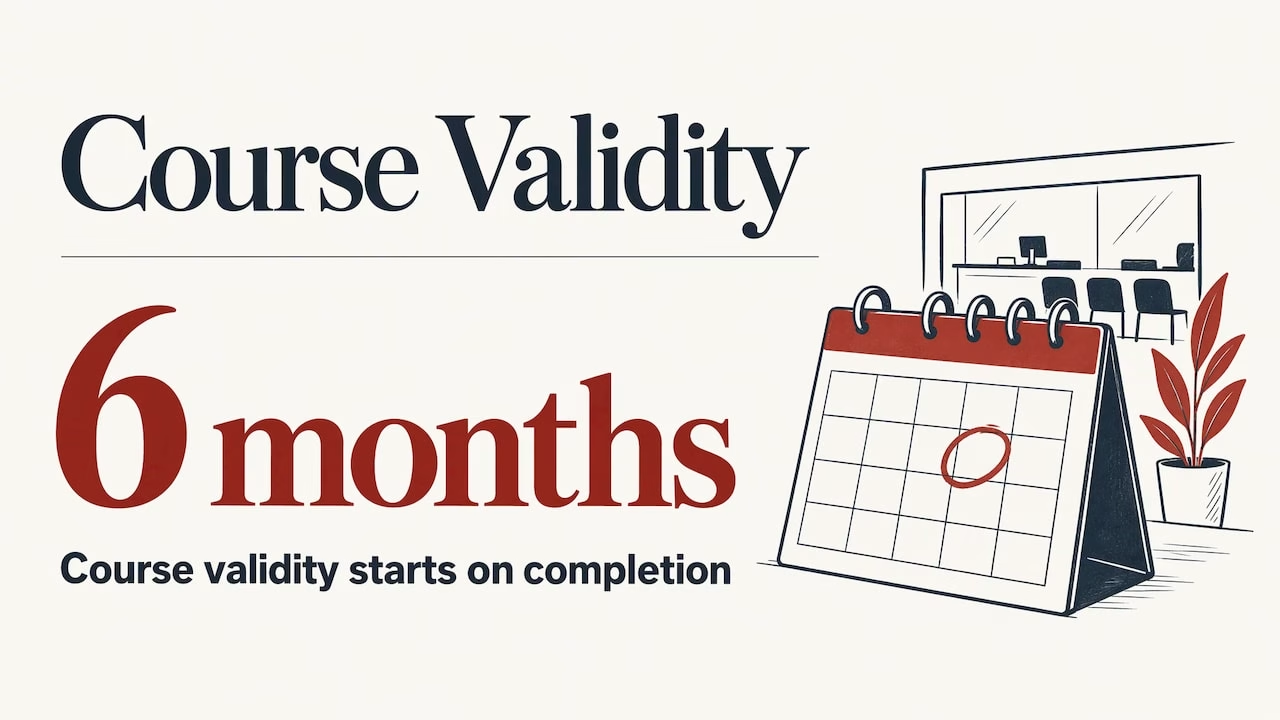
Driver education and driver awareness courses in Colorado are valid for 6 months from the date of completion. A teen who finishes the course in January and waits until the following fall to apply could be asked to start over. A simple rule: do not start the 30 hours until you can get a DMV appointment within a few months of finishing. Appointment availability varies by office, so look at the calendar before you enroll.
After the permit: supervision and the road to a license
The course gets you the permit. The permit period is where the real learning happens, and Colorado sets firm expectations for it.
- Supervision. A permit holder must be accompanied by a licensed driver age 21 or older in the front passenger seat, according to the Colorado DMV. Under HB24-1021, authorized supervisors include parents, stepparents, grandparents with power of attorney, and approved driver education instructors.
- Time on the permit. Teens under 18 must hold the permit for at least 12 months from the issue date before applying for a minor license.
- Logged practice. During that period, the DMV expects at least 50 hours of supervised driving logged. Start the log on day one rather than reconstructing it later.
If you are a parent, the best use of those 50 hours is variety. Drive in rain, at night, on the highway, in town and on Colorado mountain roads in winter conditions. A parking lot lap is not the same as merging onto I-25 at rush hour, and teens need both.
Online versus in-person: how to decide
Both formats can meet the requirement when the provider is approved. The choice comes down to the student.
| Factor | Online course | In-person class |
|---|---|---|
| Schedule | Self-paced, any time of day | Fixed class times |
| Location | Anywhere with internet | Travel to a school |
| Best for | Busy families, rural areas, self-motivated teens | Students who learn best with a live instructor |
| Pace control | Go faster or slower | Set by the class |
| Proof of completion | Delivered electronically | Delivered by the school |
For a student who lives far from a driving school, plays a sport or works after school, online is usually the practical choice. A teen who struggles to stay on task without a teacher in the room may do better with a live class. Either is fine, provided it is on the state’s approved list.
Other reasons Coloradans take an online driving course
Searches for online driver education in Colorado come from more than teens. Drivers also look for courses to deal with a ticket, satisfy a court, or lower insurance costs. The rules differ, and they differ more by situation than by format.
- Traffic ticket. Whether a course can help with a ticket depends on the court handling it and on the violation. Your citation and the court’s instructions state what is allowed. Call the court clerk before you buy anything.
- Court order. If a judge ordered a course, the order says exactly which course type and deadline apply. Ask the court or probation officer whether an online format is accepted and what proof they need.
- Insurance discounts. Discounts are set by each insurer, not by the state. Ask your insurance company which course it recognizes, how large the discount is, and how long it lasts before you pay for a course.
- Fleet training. Employers can build training around their own vehicles, routes and risks. Our custom fleet safety course is built for that kind of program.
In every case, the pattern is the same: ask the organization that will accept the certificate before you choose the course. It takes one phone call and prevents buying the wrong thing.
Our perspective
A driver education course should do two jobs. It should satisfy the state, and it should leave the student a better driver than before. Those goals do not compete. A course built on current statute and real road risks does both.
We develop our courses in-house, with certified educators and safety specialists, because the content has to follow the law as it changes. Colorado’s move to a 30-hour requirement is exactly the kind of change that makes this matter. When the rules shift, the course should shift with them.
We also think the experience of taking a course matters. Learners should see the full price up front, work on whatever device they own, and have read-along and multilingual options when English is not their first language. A money-back guarantee should be there for the rare case where a course is not the right fit.
Our advice to any family is simple. Verify approval with the state, check the 6-month window, and pick a course your teen will actually finish. Everything else follows from that.
the author
Our online courses
We offer state-approved online courses with transparent pricing, a money-back guarantee and mobile-friendly lessons that you can complete at your own pace, with multilingual read-along features. Our catalog covers defensive driving, traffic school, first-time driver education, mature driver insurance discounts and more. Courses are tied to specific states, so browse the full course list to see what we offer and which state each course applies to.
For first-time drivers, our guide to online drivers ed for teenagers walks through how an online course fits into the permit process. It is written around Florida’s rules, so use it for the general approach and rely on the Colorado DMV for Colorado requirements.
A checklist before you enroll
Use this list before you pay for any Colorado driver education course:
- [ ] I confirmed the provider on the Colorado DMV’s approved list.
- [ ] The course is the right one for my age: 30-hour for 15 to 17, 30-hour or 4-hour for 18 to 20.
- [ ] I know the full price, and I know the refund policy.
- [ ] I checked that the lessons work on the device I will use.
- [ ] I know how the completion confirmation will be delivered.
- [ ] I have a DMV appointment window within 6 months of when I will finish.
- [ ] I have the identity and residency documents ready.
- [ ] I have read the Colorado Driver Handbook and tried the practice quiz.
A sample timeline for a 15-year-old
It helps to see the steps with rough pacing. This is an example, not a rule:
- Weeks 1 to 2: Check the approved provider list, choose a course and enroll. Book a DMV appointment for a date a few months out.
- Weeks 2 to 8: Work through the 30 hours in short sessions of an hour or so. Thirty hours across six weeks is under an hour a day.
- Week 8: Download or print the completion confirmation. Pre-register with the DMV online.
- Weeks 8 to 10: Study the handbook and run through the practice quiz until the scores are consistent.
- Week 10: Attend the DMV appointment with the confirmation, identity and residency documents. Take the written test.
- After the permit: Start the driving log and keep it up for the 12-month permit period and 50 supervised hours.
With this pacing, the course certificate is only a few weeks old when you reach the DMV, well inside the 6-month window.
FAQ
Do I need driver education to get a Colorado learner’s permit?
Starting January 1, 2027, yes for everyone under 21. Ages 15 to 17 need a 30-hour course, and ages 18 to 20 need either the 30-hour course or a 4-hour driver awareness program, per the Colorado Department of Transportation. If you already hold a permit before that date, the new requirement does not apply to you.
Can I take the 30-hour course entirely online?
The law allows online courses to count as part of the 30 hours when the Department of Revenue has approved them, according to HB24-1021. Always confirm that the specific provider and course appear on the DMV’s approved list before you enroll.
How long is my course completion good for?
A Colorado driver education or driver awareness course is valid for 6 months from the completion date. Schedule your DMV appointment so you use it within that window, and keep a printed or digital copy of the confirmation.
What do I bring to the DMV appointment?
Bring your course completion confirmation, printed or on your phone, along with identity and residency documents, as listed on the Colorado DMV permit page. You will also have pre-registered online and be ready to take the written knowledge test.
How long must a teen keep the permit before getting a license?
Teens under 18 must hold the permit at least 12 months from the issue date, per the Colorado DMV. They also log at least 50 hours of supervised driving during that period.
Sources
- Updates to Colorado’s Motor Vehicle Minor Driver Education Standards, Colorado Department of Transportation
- HB24-1021 Motor Vehicle Minor Driver Education Standards, Colorado General Assembly
- HB24-1021: Motor Vehicle Minor Driver Education, Colorado DMV
- Get Your Colorado Permit and Driver License (Under 21), Colorado DMV
- Driver Education, Colorado DMV
- Driver Education School Locations, Colorado DMV
Recommended
- Drivers Ed Online: Your Florida Guide to Fast, Affordable Courses
- Driver Education Traffic Safety Course Guide
- Your Guide to Online Driving School and Traffic Safety
- Defensive Driving Course Online: What to Know
This article is provided for general information and is not a professional advice.