Your attitude behind the wheel directly shapes whether you arrive safely or become another statistic. At DriverEducators.com, we’ve seen firsthand how mindset determines who gets home and who doesn’t.
An attitude impact driving course isn’t about lectures-it’s about rewiring the mental patterns that lead to crashes. The drivers who transform their thinking transform their safety records.
How Your Attitude Determines Your Crash Risk
Your attitude shapes every decision you make behind the wheel, and the data proves it. Research from the World Health Organization shows that human factors drive roughly one-third of all crashes. This isn’t about luck or random bad timing. Drivers with aggressive attitudes, impatience, or a dismissive view of traffic laws crash more often and more severely.
A Moldova road safety study involving 257 drivers found that those with safety-conscious attitudes reported significantly fewer accidents than drivers who viewed speed limits as suggestions or saw defensive driving as unnecessary. The difference between arriving home safely and becoming a statistic often comes down to a single mental choice made in the seconds before impact.
The Attitudes That Kill
Overconfidence tops the list of deadly attitudes. Drivers who believe they’re better than average-that they can text and drive safely, speed in rain, or skip the seatbelt-operate with false confidence that narrows their attention and slows their reactions. Impatience destroys just as effectively. A driver rushing to work who tailgates, cuts off other vehicles, or runs yellow lights gambles with lives.
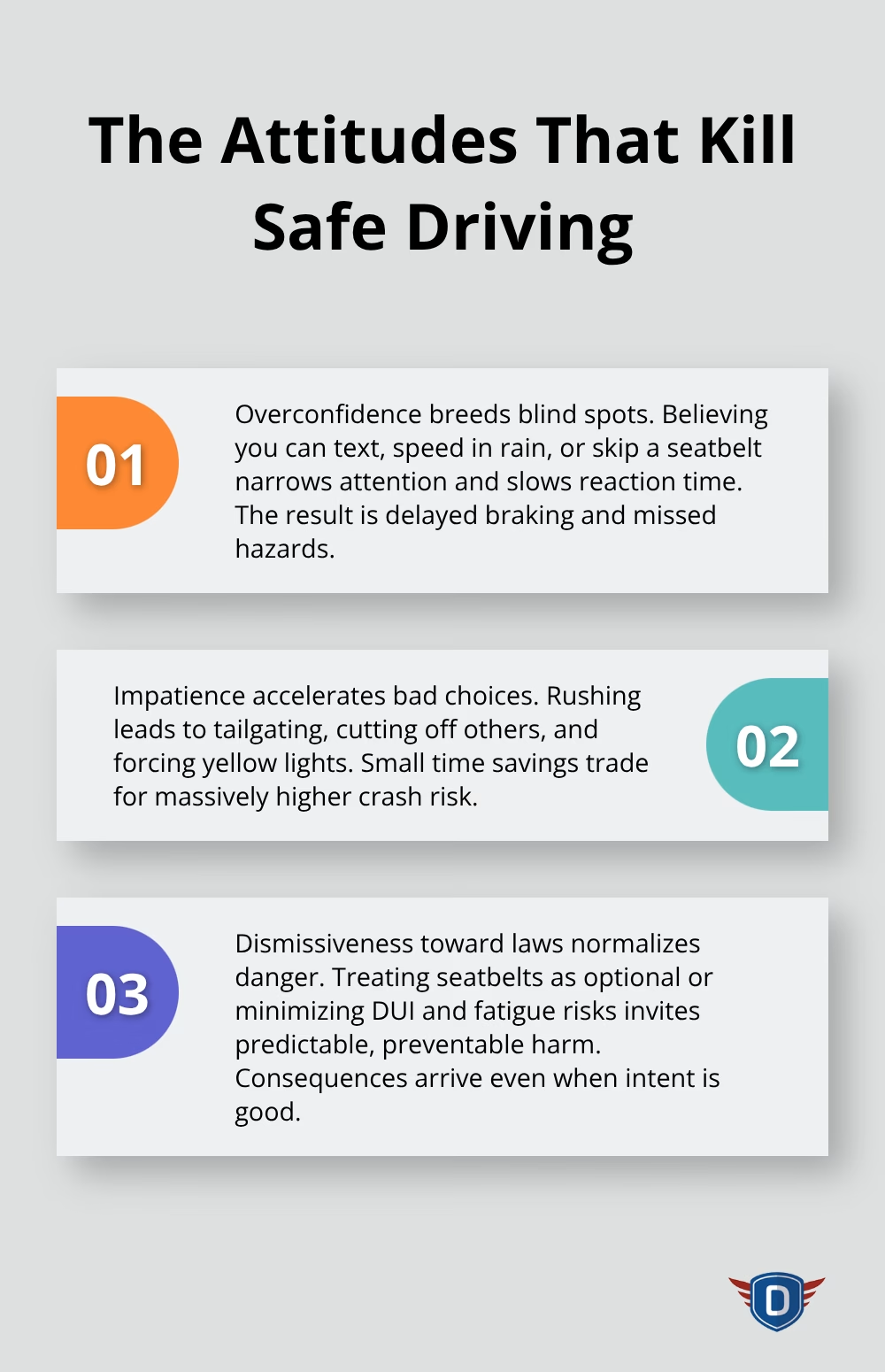
The WHO identifies speeding linked to roughly one-third of fatal crashes globally. Speeding almost always stems from an attitude that time matters more than safety. Dismissiveness toward traffic laws creates a third dangerous pattern. Drivers who view seatbelts as optional, think drunk driving is overblown, or ignore fatigue warnings treat the road like it owes them forgiveness-it doesn’t.
The Moldova study showed that 71.2% of respondents were very concerned about accidents, yet many of those same drivers admitted to behaviors that directly caused crashes. The disconnect between what drivers know is safe and what they actually do reveals an attitude problem, not a knowledge problem.
When Attitude Becomes a Crash
Real crashes tied to attitude happen constantly. A driver with an aggressive attitude weaves through traffic at 65 mph in a 45 mph zone, frustrated by slower drivers. When a car changes lanes unexpectedly, the aggressive driver has no time to react-the crash happens at high speed, injuries follow, and insurance rates spike.
Another driver, impatient at a red light, accelerates through the intersection before it fully turns green. A pedestrian crossing legally gets hit. A third driver, overconfident in their ability to multitask, glances at their phone for three seconds. In that time, their vehicle travels 132 feet-plenty of distance to drift into another lane or miss a stopped car ahead.
These aren’t freak accidents. They’re predictable outcomes of attitudes that prioritize speed, convenience, or ego over focus and safety. The patterns repeat across every driver population, which is why attitude-focused programs target mental patterns directly rather than just teaching rules. Understanding how your mindset shapes your actions on the road sets the stage for the practical strategies that actually shift behavior.
Developing a Safety-First Mindset Behind the Wheel
Identify Your Personal Danger Zones
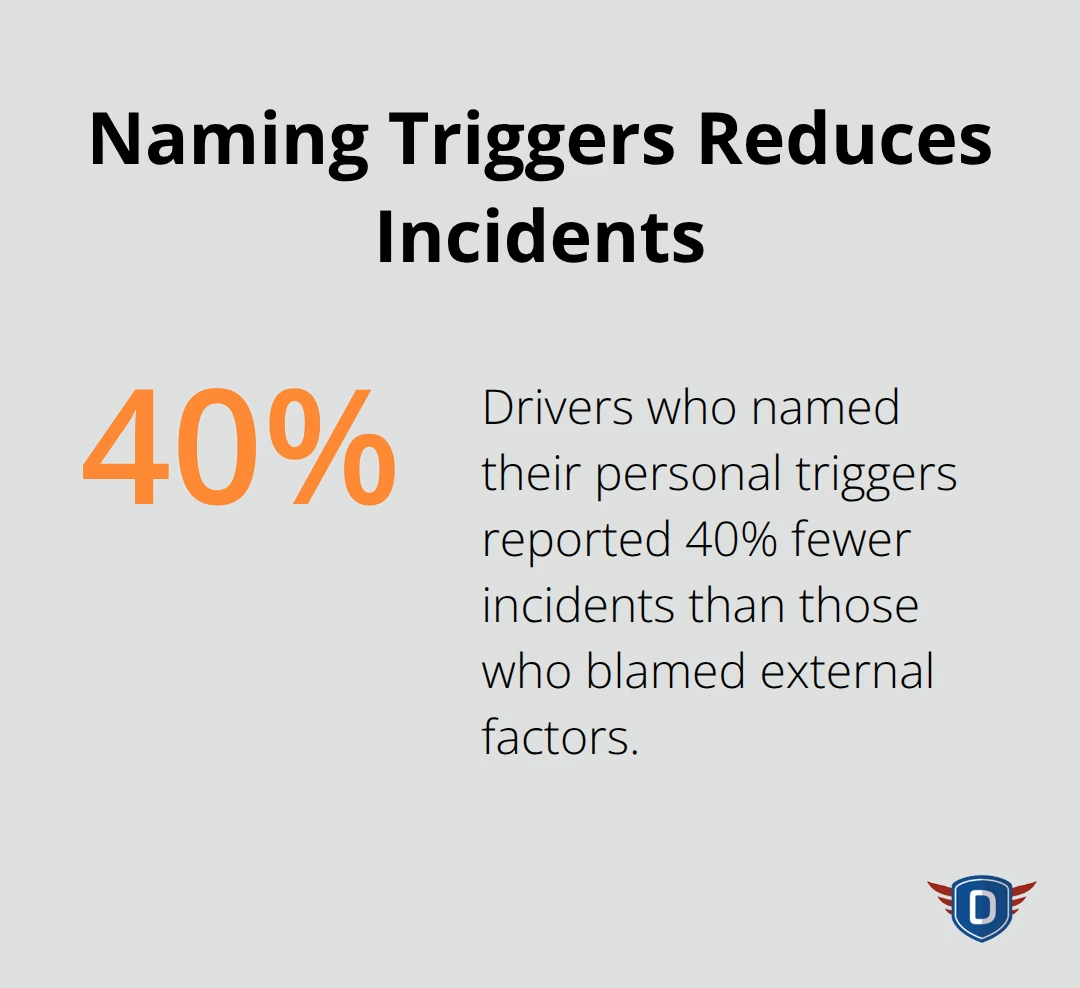
Recognizing what triggers your worst driving impulses is the first step toward controlling them. Most drivers never pause to identify their specific danger zones. One driver loses focus when running late; another becomes aggressive in heavy traffic; a third takes unnecessary risks when driving alone. The Moldova road safety study found that drivers who named their personal triggers reported 40% fewer incidents than those who blamed external factors like bad luck or other drivers.
Your triggers are predictable. Identify whether you drive recklessly when tired, frustrated, rushed, or distracted by passengers. Once you know your pattern, you can plan around it. Leave 15 minutes earlier to eliminate the time pressure that makes you speed. If heavy traffic triggers aggression, take a different route or listen to content that keeps you calm. If fatigue is your weak point, take a 20-minute nap before long drives or switch drivers entirely. The goal isn’t willpower-it’s environmental design. You remove the situation that activates your worst self.
Reframe Risk With Real Numbers
Shifting your perspective requires concrete mental resets that work during actual driving, not just in theory. When you feel impatience building at a red light, ask yourself whether saving 30 seconds is worth a crash that costs thousands and kills someone. When you’re tempted to check your phone, calculate that three seconds of distraction means your vehicle travels 132 feet blind (farther than a football field). When you want to speed because you’re running late, accept that arriving five minutes late beats arriving in an ambulance.
These aren’t motivational phrases; they’re factual trade-offs that reframe the cost-benefit calculation in your brain. Research on driver behavior shows that drivers who regularly practice this mental shift reduce their crash involvement significantly. You train your brain to run the real numbers every time you’re tempted to take a shortcut with safety.
Build Automatic Safety Habits
Habits reinforce this thinking through consistent practice. Set a phone reminder that pops up during your commute with a single question: Is this action worth the risk? After two weeks of this practice, the mental reset becomes automatic. Your perspective doesn’t change because you want it to; it changes because you’ve trained your brain to respond differently to the same situations.
The drivers who transform their safety records aren’t the ones with more willpower-they’re the ones who structure their environment and habits so that safe choices become the default. This foundation of personal awareness and deliberate practice sets the stage for understanding how a structured program can accelerate this transformation.
Why Structured Programs Transform Attitudes Faster Than Solo Effort
The Failure of Isolated Awareness
Most drivers attempt attitude change alone and fail. They read an article about road safety, feel motivated for a week, then slip back into old patterns when stress returns. The problem isn’t their intention-it’s that isolated awareness doesn’t rewire the neural pathways that control split-second decisions. A structured program works because it combines three elements that solo effort cannot replicate: accountability, repeated exposure to behavioral triggers, and measurable progress tracking.
Research on driver behavior interventions shows that programs combining scenario-based learning with real-time feedback reduce crash involvement compared to drivers who receive only traditional classroom instruction. This gap exists because your brain needs practice, not just information.
How Real-Life Scenarios Rewire Decision-Making
Rather than telling a driver that tailgating is dangerous, a structured course walks them through what happens physiologically when they tailgate: their vision narrows, reaction time slows, and their decision-making becomes reactive instead of proactive. A driver practicing the mental reset technique during simulated scenarios where a phone buzzes, a passenger talks, or fatigue sets in trains the brain to respond automatically when those same triggers appear on actual roads.
This repeated practice under controlled conditions creates neural pathways that activate during real driving. The difference between classroom lectures and scenario-based training is the difference between reading about swimming and actually entering the water. Your brain learns through experience, not explanation.
Florida-Specific Training for Local Conditions
Florida drivers face distinct traffic patterns, laws, and enforcement priorities that generic courses miss. A driver in Miami dealing with aggressive lane-changing and high-speed traffic encounters different hazards than a driver in a rural area. Curriculum that reflects Florida statutes on aggressive driving, the specific sight-line challenges on Florida highways during high-traffic periods, and the insurance discount eligibility requirements unique to Florida’s system addresses what drivers actually face.
At DriverEducators.com, our Florida-approved courses cover defensive driving techniques, safe following distances, right-of-way rules, and the dangers of aggressive or distracted driving. The underlying attitude shifts-patience, humility about driving ability, and respect for consequences-transfer across all driving environments, but the scenarios reflect local conditions.
Self-Paced Learning That Fits Your Life
The online format removes friction that causes drivers to delay or skip programs altogether. A driver can complete coursework from any device without scheduling around a classroom, and certificates issue electronically upon completion. This flexibility also allows drivers to revisit specific scenario modules weeks or months later as reinforcement, something impossible in a one-time classroom session.
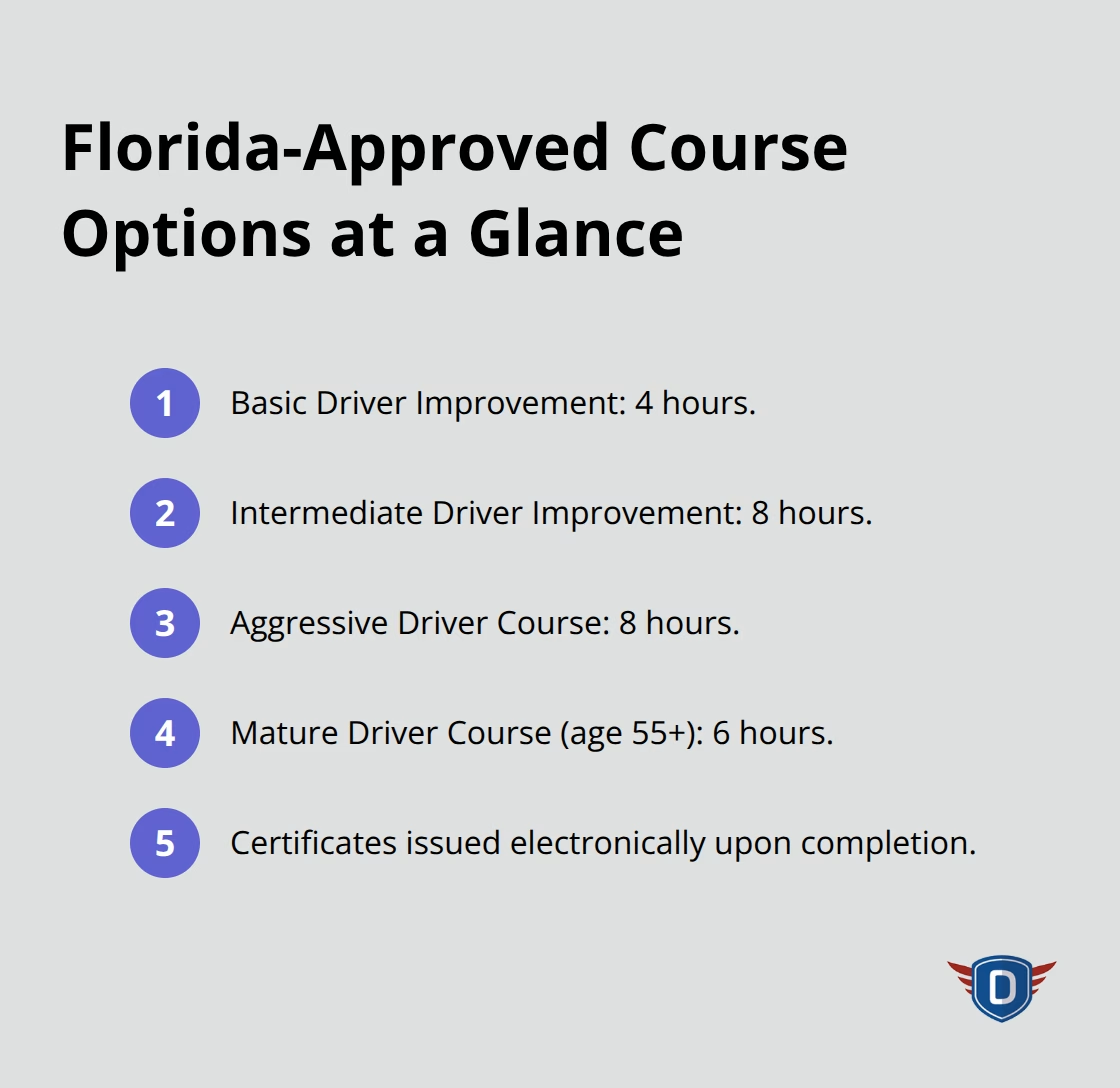
DriverEducators.com offers multiple programs tailored to different needs. The Basic Driver Improvement course runs four hours for drivers who received a moving violation. The Intermediate Driver Improvement extends to eight hours for court-ordered drivers or those seeking deeper understanding. The Aggressive Driver Course spans eight hours for habitual offenders involved in road rage. Drivers aged 55 and older can access the Mature Driver Course, a six-hour refresher that acknowledges changing vision, medication effects, and technology changes on modern roads-not generic safety advice, but content specific to how aging affects driving performance and decision-making.
Measurable Outcomes That Build Momentum
The measurable outcome is what separates structured programs from motivation alone. A driver completes the course, receives a certificate, and knows their record has been updated with the state. They can track insurance impacts, understand exactly which violations their improved attitude prevented, and build on that concrete success rather than guessing whether their mindset shifted. This accountability creates a feedback loop that sustains behavior change long after the course ends.
Final Thoughts
Your attitude behind the wheel determines whether you arrive home safely or become part of a crash statistic. The drivers who transform their mindset transform their safety records, and that transformation starts with recognizing that every decision on the road flows from how you think about risk, time, and responsibility. The Moldova study showed that drivers who identified their personal triggers and actively managed their attitudes reported significantly fewer incidents-this is sustained behavioral change that compounds over years of driving.
Taking control of your mindset means accepting that you are responsible for the outcomes on the road. You cannot control other drivers, weather, or road conditions, but you control your response to them. When you feel impatience building, you pause and ask whether saving 30 seconds is worth a crash. When fatigue sets in, you pull over instead of pushing through. When your phone buzzes, you ignore it.
An attitude impact driving course provides the accountability, scenario-based practice, and measurable outcomes that solo effort cannot replicate. Visit DriverEducators.com to enroll in a program that fits your needs and schedule, and your certificate will be issued electronically and reported directly to the Florida Department of Highway Safety and Motor Vehicles.