That letter from the Florida Highway Safety and Motor Vehicles (FLHSMV) can really throw you for a loop. But before you start to worry, the most important thing you can do is figure out exactly why your license was suspended. That reason is the key to everything that comes next.
What to Do When Your Florida License Is Suspended
A license suspension feels like a major roadblock, but it’s not always the end of the road. Your first move is to get the facts straight. Don’t guess—find out the specific reason for the suspension, because your entire game plan depends on it.
Was it for too many points? A DUI? Unpaid tickets? Each scenario has its own rules, waiting periods, and requirements to get back behind the wheel.
You can usually find this information by checking your license status on the FLHSMV website. The official notice you got in the mail is also gold—it will have the suspension’s start date and the violation code. For a deeper dive into how different offenses are handled, our guide on what happens with a suspended license in Florida is a great resource.
Business vs. Employment Privileges
One of the first things people get mixed up is the type of hardship license they can get. Florida has two main kinds, and you need to know which one fits your situation.
- Business Purposes Only (BPO): This is the one most people get, and it’s more flexible. It lets you drive for anything necessary to keep your life running. Think driving to work, school, church, or even essential trips like doctor’s appointments and grocery runs.
- Employment Purposes Only: This one is much more restrictive. It literally only allows you to drive to and from your job, and for tasks required while you are on the clock. No stopping for groceries or picking up the kids.
Key Takeaway: The hearing officer at your administrative review makes the final call. They’ll look at your offense, listen to your case, and decide which license—if any—you qualify for based on your proven need.
Getting this right from the start is a huge advantage. It helps you build a stronger case for the hearing officer and keeps your expectations realistic. Arguing that you need a “Business Purposes Only” license to take your kid to school is a solid point; saying you just want to drive for convenience won’t get you very far. Be clear and honest about why you need to drive—that’s what they want to hear.
Checking If You’re Eligible for a Hardship License
When your Florida driver’s license gets suspended, the first thing on your mind is probably, “Can I get a hardship license?” It’s a common assumption that a restricted license is an automatic option, but that’s not quite how it works. Florida has strict, mandatory waiting periods you have to get through first.
This non-negotiable waiting period is called a hard suspension. During this time, you absolutely cannot drive for any reason. How long you have to wait depends entirely on why your license was suspended in the first place, and it’s the first hurdle you need to clear before applying.
What Is My Waiting Period?
Think of the hard suspension as a state-mandated “time out” from driving. For some violations, the wait is short. For others, it’s a long haul. Knowing your specific waiting period is key—otherwise, you’ll just waste time and money applying too early.
Here’s a look at a few common situations:
- First-Time DUI Conviction: If you took the breathalyzer, you’re looking at a 30-day hard suspension. If you refused it, that wait triples to 90 days.
- 12-Point Suspension: Good news here. If you racked up 12 points in 12 months, there is no hard suspension period. You can apply for a hardship license right after you enroll in an Advanced Driver Improvement (ADI) course.
- Habitual Traffic Offender (HTO): This one is serious. If you’re labeled an HTO and get a five-year revocation, you must wait a full one-year with no driving before you can even think about applying for a hardship license.
This flowchart can help you visualize whether you’re on the right track from the get-go.
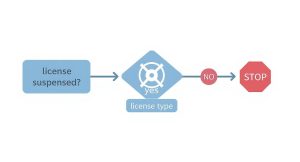
The bottom line is simple: your eligibility is completely tied to the reason for your suspension. That single fact determines what you need to do next.
Required Courses and Knowing Your Driving Record
Getting through the hard suspension is just part of it. Your eligibility also hinges on completing certain state-required courses.
If you’re dealing with a DUI, you’ll need proof of enrollment in a DUI School Level I or Level II program. For a suspension due to too many points, it’s a 12-hour Advanced Driver Improvement (ADI) course.
Before spending money on a course, I always recommend pulling a complete copy of your driving history. To make sure there are no surprises, you can learn more about how to see your driving record and confirm exactly what led to the suspension.
Completing the right course isn’t just busywork. It proves to the Florida Highway Safety and Motor Vehicles (FLHSMV) that you’re serious about getting back on the right track. If you show up to a hearing without proof of enrollment, they’ll send you right back out the door. Have that confirmation in hand before you do anything else.
Gathering the Right Documents for Your Application
Walking into your administrative hearing unprepared is the fastest way to get your application denied. Think of it this way: you’re trying to prove you’re responsible enough to be trusted on the road again, and that starts with showing you can handle your own paperwork.
Your entire case hinges on presenting a complete and organized application. Let’s break down exactly what you’ll need to have in hand.
First Things First: The Official Application
The core of your packet is the Application for Administrative Hearing, also known as form HSMV 78306. This is the official document that kicks off the process, but just filling it out isn’t enough. You need to back it up with solid proof that you’re meeting every single requirement the state has set for you.
What to Bring to Your Hearing
Getting this part right is non-negotiable. If you’re missing even one of these items, the hearing officer can turn you away on the spot.
- Proof You Are Who You Say You Are: You’ll need a valid, state-issued ID or a passport. Interestingly, your suspended driver’s license often works for this. The ID standards are pretty much the same as the general requirements to renew a driver’s license.
- Proof You’re Taking the Right Class: This is a big one. If you’re suspended for too many points, you must show you’re enrolled in a 12-hour Advanced Driver Improvement (ADI) course. For a DUI, you need proof of enrollment in a state-approved DUI School. A simple receipt or an official letter from the school is what they’re looking for.
- The Application Fee: Don’t forget the money. There are fees for the hearing itself and for the license reinstatement if you’re approved. Make sure you’re ready to pay these when you show up.

The SR-22 Insurance Requirement
For more serious offenses like a DUI, the state requires an extra layer of proof that you’re insured. This comes in the form of an SR-22 certificate.
It’s not actually an insurance policy, but a form your insurance company files directly with the FLHSMV. It basically tells the state, “We guarantee this person has at least the minimum required liability coverage.”
Pro Tip: Don’t wait on this. The SR-22 must be filed and active before you walk into your hearing. Showing up and promising you’ll get it later won’t cut it. Contact your insurance agent the moment you know you need one, as it can take a few days for them to process it and get it on file with the state.
Having that SR-22 sorted out shows the hearing officer you’re taking this seriously. It’s a tangible step that demonstrates you’re financially responsible and ready to comply with the rules, which can make all the difference in their decision.
Florida Hardship License Document Checklist
To make things easier, here’s a quick-reference table outlining what you’ll likely need based on the reason for your suspension.
| Document or Requirement | DUI Suspension | Points Suspension | Unpaid Fines |
|---|---|---|---|
| Application (HSMV 78306) | ✅ | ✅ | ✅ |
| Proof of Identity | ✅ | ✅ | ✅ |
| Proof of DUI School Enrollment | ✅ | ❌ | ❌ |
| Proof of ADI Course Enrollment | ❌ | ✅ | ❌ |
| SR-22 Certificate Filed | ✅ | Sometimes | ❌ |
| Proof of Paid Fines | ✅ | ✅ | ✅ |
| Hearing/Reinstatement Fees | ✅ | ✅ | ✅ |
This checklist is a great starting point, but always double-check with the Bureau of Administrative Reviews office handling your case to confirm the exact requirements for your specific situation.
Your Administrative Review Hearing: Making Your Case
Once you have all your paperwork gathered, it’s time for the administrative review hearing. This isn’t a full-blown courtroom trial, so you can leave the images of a judge and jury behind. Instead, think of it as a formal, one-on-one meeting with a hearing officer from the Florida Highway Safety and Motor Vehicles (FLHSMV). This is your shot to state your case.
You’ll need to book this meeting at a Bureau of Administrative Reviews office. There are locations all over Florida, so find the one nearest you to get the ball rolling. A word of advice from experience: show up on time and dress professionally. It shows you’re taking this seriously and respect the hearing officer’s time.
The officer’s role is simple: to decide if your need to drive is real and if you’ve checked all the state’s boxes. Trust me, they’ve heard every story in the book, so being upfront and clear is your best strategy.
How to Explain Your Need to Drive
This is the heart of your hearing. You need to clearly and convincingly explain why you absolutely need to drive. The hearing officer isn’t interested in convenience—they want to hear about necessity. Your entire argument should revolve around travel you can’t avoid.
Build your case around these essential areas:
- Your Job: Explain that you need a car to get to and from work. If your job itself involves driving (like making sales calls or visiting job sites), you absolutely need a letter from your boss on company letterhead that spells this out.
- School: If you’re a student, bring your class schedule. Show them how driving is the only practical way for you to get to campus and stay on track with your education.
- Medical Reasons: Do you or a family member have recurring doctor’s appointments? If so, documentation from the doctor can be a powerful piece of evidence.
- Essential Errands: This covers the basics of life—getting groceries, attending church, or dropping your kids off at school. Be specific, but be reasonable.
Your job is to paint a vivid picture of true hardship. You need to communicate that without this license, you could lose your job, fail out of school, or be unable to care for your family’s basic needs. That’s the kind of impact that gets an application approved.
Remember, the path to a hardship license often starts with a serious violation, like a DUI or racking up too many points. For a first-time DUI, this hearing is usually the last hurdle after finishing DUI school and waiting out the “hard” suspension period. But don’t get complacent—Florida’s laws are tough. For example, some offenses, like a fourth DUI, lead to a permanent revocation with zero chance of a hardship license. It’s worth taking a moment to understand the specific Florida DUI laws that apply to your situation.
Fees and Final Outcomes
You’ll get a decision on the spot, so be prepared for a definitive answer before you walk out the door. You also need to be ready to pay any required fees right then and there. This usually includes an administrative fee plus a reinstatement fee, which together can easily be over $150. It’s a good idea to call your local office beforehand to confirm the exact amount and what payment methods they take.
The hearing will end in one of two ways:
- Approved: Congratulations! If the officer gives you the green light, you’ll likely walk out with your restricted “Business Purposes Only” or “Employment Purposes Only” license that very day. They will go over every restriction with you, so listen closely.
- Denied: If it’s a no, the hearing officer has to tell you why. The most common culprits are missing paperwork, not proving a genuine hardship, or simply not being eligible yet.
If you are denied, pay close attention to the reason. That’s your roadmap for what to fix. Whether you leave with a new license or a denial, you will have a clear understanding of where you stand and what you need to do next.
Life After the Hardship License Hearing
So, you’ve had your hearing. Whether you walked out with an approval or a denial, the process isn’t quite finished. Getting a hardship license is a huge weight off your shoulders, but it’s a privilege that comes with some very strict rules.
If you were approved, that’s fantastic news! But it’s critical to remember what this restricted license actually means. You are now legally bound by the terms of either a “Business Purposes Only” or “Employment Purposes Only” license.

This isn’t a suggestion; it’s the law. No casual trips to a friend’s house, no quick runs to the beach, and absolutely no driving that falls outside your specific, approved activities.
Getting pulled over while driving for a non-approved reason is a big deal. A single traffic stop could lead to the immediate revocation of your hardship license. That puts you right back at square one, and it could even lead to new criminal charges for driving with a suspended license.
What to Do If Your Application Was Denied
It’s incredibly frustrating to get a denial, but don’t just walk away defeated. The most important thing you can do is listen to why the hearing officer made that decision. They have to give you a reason, and that reason is your roadmap to success next time.
Most denials boil down to a few common issues:
- Missing Paperwork: You forgot to include a form or didn’t bring proof of enrollment in a required course.
- Unproven Hardship: You didn’t provide strong enough evidence that you absolutely need to drive.
- Bad Timing: You applied before your mandatory “hard suspension” period was over.
Pay close attention to what the officer tells you. Their feedback is a checklist of exactly what you need to fix before you can re-apply, assuming your offense allows for another attempt.
Expert Tip: A denial often isn’t a permanent “no.” Think of it as a detailed correction notice. Use the reason they give you to strengthen your application, gather better proof of your hardship, and double-check that you meet every single requirement before trying again.
The Final Stretch: Reinstating Your Full License
Remember, the hardship license is just a temporary bridge to get you through your suspension period. Once that time is officially up, you can finally take the steps to get your full, unrestricted driving privileges back.
This last part of the process involves settling any outstanding reinstatement fees and making sure your record is clear of any other holds. For example, if points on your license caused the suspension, you’ll want to make sure your record is in good shape. For a full breakdown, you can learn how to remove points from your driving record and get a fresh start. Once you clear these final hurdles, you’ll be back on the road for good.
Answering Your Top Questions About Florida Hardship Licenses
Trying to figure out the rules for a Florida hardship license can feel like you’re untangling a knotted fishing line. There are a lot of specific timelines and legal terms that can easily trip you up. To make things a little clearer, I’ve put together some straightforward answers to the questions I hear most often from people just starting this process.
Getting these details straight from the beginning can save you a ton of time, money, and headaches down the road. It’s all about setting the right expectations so you can prepare your application and walk into that hearing feeling confident.
How Long Does This Whole Process Take?
This is usually the first thing everyone wants to know. While every situation is unique, a good rule of thumb is to expect the entire journey—from the day your license is suspended to having a hardship license in hand—to take about one to two months.
That timeline includes serving any mandatory “hard suspension” period (where you can’t drive at all), getting enrolled in your required courses, pulling together all your paperwork, and then waiting for your hearing date to pop up on the calendar.
Honestly, the biggest factor here is you. Procrastination is your worst enemy. For instance, a first-time DUI conviction (where you took and failed a breath test) comes with a mandatory 30-day hard suspension. If you’re smart, you’ll use that month to enroll in DUI school and schedule your hearing. That way, you’re ready to go the very day that hard suspension ends.
I Refused the Breathalyzer—Can I Still Get One?
Yes, you can, but refusing the breathalyzer definitely complicates things and makes the wait longer. It doesn’t automatically disqualify you, but the state takes refusals pretty seriously.
A first-time refusal to submit to a breath test triggers a one-year license suspension. But here’s the kicker: you first have to serve a 90-day hard suspension period. That’s three times longer than the wait for a typical first-offense DUI. During those 90 days, there is absolutely no driving allowed, no exceptions.
Once you’ve completed that 90-day waiting period and can show you’re enrolled in a DUI program, you can then move forward with applying for a hardship license for the rest of your one-year suspension.
What’s the Difference Between “Business” and “Employment” Privileges?
This is a really important distinction that confuses a lot of people. The terms “Business Purposes Only” (BPO) and “Employment Purposes Only” sound almost the same, but they mean very different things to the FLHSMV.
- Employment Purposes Only: This is the tighter restriction of the two. It literally means you can only drive to and from your job, and for any driving that is a required part of your job duties. That’s it.
- Business Purposes Only (BPO): This is the more common and more flexible option. A BPO license lets you drive for anything necessary to “maintain livelihood.” This umbrella covers driving to work, school, and church, but also includes crucial errands like going to the grocery store, picking up prescriptions, or taking yourself or a family member to a doctor’s appointment.
The hearing officer will look at the specifics of your case to decide which restriction is appropriate for your situation.
Do I Really Need to Hire a Lawyer for This?
Legally, no, you are not required to have an attorney to apply for a hardship license. If your suspension is for something straightforward, like accumulating too many points, you can probably navigate the process on your own just fine.
However, if you’re dealing with a more serious offense like a DUI or have been labeled a habitual traffic offender (HTO), hiring a lawyer is a very smart move. An experienced attorney knows exactly what hearing officers are looking for. They can help you build the strongest possible case and dramatically increase your odds of getting approved on your first try, which is what everyone wants.
At BDISchool, we make it simple to complete your state-required driver improvement courses online and on your schedule. Whether you need to fulfill a court order for an ADI course or want to remove points from your license, our fully online, state-approved programs are designed for busy Floridians. Learn more and enroll today at https://bdischool.com.